Onimusha and Yotsuya Kaidan: The Meaning of the Name Iemon
How Onimusha's villain name Iemon quietly invokes Yotsuya Kaidan, the Edo ghost play whose echo Japanese viewers pick up the moment they hear the name.

Tokyo-born, 3rd-generation Edokko · writing on Japanese culture from outside Japan
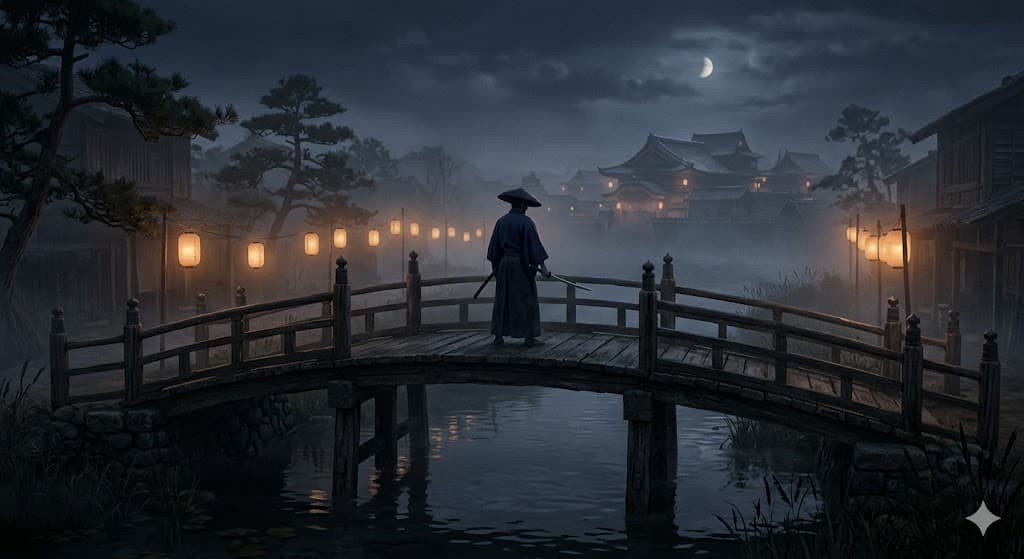
Spoiler-Free Cultural Analysis
This article explores the cultural and historical layers behind a character name in the new Onimusha anime, focusing on the Edo-period theater tradition the name draws from. No plot developments beyond the official premise are revealed — only the shared cultural memory that shapes how Japanese audiences hear the name.
Key Takeaways
- The name 伊右衛門(Iemon) is one of the most loaded male names in Japanese popular culture because of its connection to a famous Edo-period ghost play, where its bearer is the archetypal treacherous husband.
- 東海道四谷怪談(Tōkaidō Yotsuya Kaidan), first staged in 1825, has shaped Japan's image of betrayal and vengeful spirits for two centuries, and its lead character's name still carries that weight today.
- For Japanese audiences, hearing a villain in a samurai-era story called Iemon functions as a kind of cultural shorthand — a built-in spoiler — that does not transfer to English-speaking viewers without explanation.
Key Terms Explained
- 四谷怪談(Yotsuya Kaidan) / The Yotsuya Ghost Story — An 1825 kabuki play by 鶴屋南北(Tsuruya Nanboku), centered on a samurai husband who betrays and poisons his wife, who returns as a vengeful spirit.
- 民谷伊右衛門(Tamiya Iemon) / The Husband-Villain — The dishonored 浪人(rōnin: a masterless samurai) in Yotsuya Kaidan, the source of the name's villainous association.
- お岩(Oiwa) / The Wronged Wife — The poisoned wife of Iemon, whose disfigured face and vengeful return are among the most recognized images in Japanese horror.
- 怪談(Kaidan) / Strange Tales — A category of traditional Japanese ghost stories, often tied to summer entertainment and to themes of unjust death and lingering resentment.
- 謀反(Muhon) / Treason — A rebellion or betrayal against one's lord, the specific crime attributed to Iemon in the new Onimusha story.
The Summer Television That Taught Me Who Iemon Was
I did not learn about Yotsuya Kaidan from a literature class or a trip to a kabuki theater. I learned about it the way most people of my generation did — through the summer ghost-story specials that filled Japanese television every August when I was a child growing up in Tokyo. Around お盆(Obon: the midsummer festival for the spirits of the dead), the broadcast schedule shifted. Variety shows became séances. Drama slots became hour-long horror anthologies. And almost every year, somewhere on the dial, the disfigured face of お岩(Oiwa) appeared again, with the name of her husband 伊右衛門(Iemon) attached to it in narration.
 Summer ghost-story specials were how a generation of Japanese viewers first learned the name Iemon.
I did not know in those years that the original story was a 歌舞伎(Kabuki: traditional Japanese theater) work from 1825. I did not know it had a playwright with a name worth remembering, or that it had become one of the foundational ghost stories of the entire Edo aesthetic. I only knew, in the way a child knows things by repetition, that 伊右衛門 was the name of a man who did something terrible to his wife, and that her face was the reason adults sometimes turned the television off.
When the new Onimusha anime introduces its central antagonist as a man named 伊右衛門, accused of 謀反(muhon: treason) against his lord, the Japanese viewer does not arrive at that name neutrally. The summer broadcasts did their work decades ago. The name itself is a cultural fuse, lit before the story even gets going.
What is striking about this kind of naming is how invisible it is to anyone outside the language. An English-speaking viewer hears "Iemon" as a sound — distinctive, perhaps, but blank. The Japanese viewer hears a sentence the writer never had to write: this man will betray someone he should have protected. That sentence is what I want to unpack.
Related: GeGeGe no Kitaro and Hyakumonogatari: Why Japan Saves Its Ghost Stories for Summer explains this in detail.
The 1825 Play That Made the Name a Warning Label
The play in question is 東海道四谷怪談(Tōkaidō Yotsuya Kaidan), written by 鶴屋南北(Tsuruya Nanboku), one of the most important kabuki playwrights of the late Edo period. It premiered in 1825 at the 中村座(Nakamura-za) theater in Edo, and almost immediately became a sensation. Two centuries later, its core scenes are still staged regularly, its imagery still seeps into film, manga, anime, video games, and television, and its central male character — Tamiya Iemon — still carries an unshakable association with marital betrayal.
 The 1825 kabuki play that fused the name Iemon to the archetype of the treacherous husband.
Related: Kimi ni Todoke and the Ritual of Kimodameshi: Why Japanese Teens Walk Into the Summer Dark explains this in detail.
The Story in Outline
I will keep the plot summary deliberately thin, because the cultural code matters more here than the narrative beats. Tamiya Iemon is a dishonored 浪人(rōnin: a masterless samurai), unable to support his wife お岩 in any honorable way. When a wealthy neighbor's family takes an interest in him as a potential husband for their daughter, Iemon arranges for Oiwa to be poisoned with a disfiguring medicine, then disowns and ultimately discards her. Oiwa dies wronged. She returns. The hauntings that follow have been frightening Japanese audiences since the Tokugawa shogunate was still in power.
The specifics of how she returns — the famous hair-combing scene, the lantern scene, the river scene — are part of the visual grammar of Japanese horror to this day. The name Iemon is attached to all of it.
Why This Name Stuck
Plenty of villainous characters appear in Edo-period theater. Most of their names did not become permanent warning labels. Iemon's did. A few reasons converge.
First, the play landed at a particular moment in Edo culture, when 怪談(kaidan: strange tales) were having a long popular wave, and audiences had developed an appetite for stories about ordinary domestic betrayal punished by supernatural retribution. Iemon's crime is not exotic; it is intimate. He poisons the woman who shared his life. That intimacy is what gave the play teeth.
Second, the play was rapidly absorbed into other media. There were 浮世絵(ukiyo-e: woodblock prints) of Oiwa's ruined face. There were Meiji-era adaptations into novels and early cinema. By the time television arrived, 四谷怪談 had been retold so many times that the name 伊右衛門 had been heard, in some context, by nearly every literate Japanese person.
Third — and this is the piece that interests me most — the Japanese tradition of summer ghost-story programming kept the name in active circulation long after the original play had become a museum piece for most people. You did not need to have seen a kabuki performance to know what 伊右衛門 meant. The television specials did the teaching, year after year, generation after generation.
The Name as Cultural Shorthand
There is a kind of efficiency in this kind of naming that fiction writers in any language use when they can. A Western writer who names a villain "Judas" is not asking the audience to wait and see; they are tipping their hand on purpose, betting that the cultural memory of betrayal will color every line that character speaks. Naming a treacherous samurai-era character 伊右衛門 works the same way for a Japanese audience. The betrayal is announced in advance, even if the story has not gotten there yet.
This is why translation is so easy to underestimate. Subtitles can render dialogue word for word, but they cannot easily render the resonance of a name. When a Japanese viewer hears 伊右衛門 in a samurai-era story, they hear an echo of an 1825 play. When an English viewer hears it, they hear two clean syllables. Both viewers are watching the same anime, but they are not, in any meaningful sense, watching the same story.
I should be honest about one wrinkle: even among Japanese viewers, the recognition is uneven. I have written elsewhere about how I myself do not always catch name-based foreshadowing in the instant; sometimes I notice only after the fact, when the betrayal arrives, that the writer had been telegraphing it all along through the name. But the cultural signal is in the air either way. Even if the recognition takes a beat, it lands. That delayed recognition is itself part of how this code works.
What Modern Japan Does With the Name
Walk into any コンビニ(konbini: convenience store) in Japan today and you will see a green tea bottle labeled 伊右衛門, produced by 福寿園(Fukujuen) and サントリー(Suntory). The brand draws its name from 福井伊右衛門(Fukui Iemon), the founder of the Kyoto tea house in 1790. For modern Japanese consumers, the name does double duty: it evokes a serene, refined Kyoto tradition every time the commercial airs, while still — somewhere in the back of the cultural mind — carrying the older theatrical association of betrayal.
 The same name lives a quiet second life on convenience-store shelves, layered over its older theatrical echo.
I find this kind of doubling fascinating. The same name can be a calm, tasteful tea brand and a centuries-old marker for the worst kind of husband, and Japanese consumers carry both meanings at once without contradiction. This is one of the things that makes Japanese naming culture worth slowing down to look at. Names are not single-purpose labels. They are layered, and the layers do not cancel each other out.
Living abroad for many years now has sharpened my sense of how rare this kind of layering is. In environments where I have spent the past decade and more, names tend to be more functional. They identify, they do not necessarily allude. When I try to explain to non-Japanese friends why a particular character name in an anime or a 時代劇(jidaigeki: period drama) made a Japanese audience react instantly, the conversation usually requires a long detour through Edo theater history before the original moment makes any sense. The detour is the entire point of articles like this one.
There is also a quieter loss to notice. The chain that connects an 1825 play to a 2024 anime via decades of summer television specials is fraying. Younger viewers grow up with streaming on demand rather than broadcast schedules. The reliable August horror-anthology slot that taught my generation the face of Oiwa and the name of Iemon is not what it once was. The name still works as a code, for now, but only because earlier generations encountered it so many times in so many places. Whether the next generation will hear 伊右衛門 the way mine does is genuinely uncertain.
FAQ
Q: Does every Japanese viewer instantly recognize the name Iemon as a villain marker?
A: Recognition varies. Older generations, viewers familiar with kabuki or summer ghost-story television, and readers of classical literature pick up the reference more reliably than younger viewers raised on streaming. The name is a strong cultural signal, but not a universal one.
Q: Is the green tea brand Iemon related to Yotsuya Kaidan?
A: No. The 伊右衛門 tea brand from Fukujuen and Suntory takes its name from 福井伊右衛門(Fukui Iemon), the founder of the Kyoto tea house in 1790, decades before the kabuki play premiered in 1825. The two share a name but no narrative link, and modern Japanese consumers hold both associations simultaneously.
Q: How would I best explain this naming code to someone who does not read Japanese?
A: Compare it to naming a Western villain "Judas" or "Iago." The audience does not need the plot explained — the name itself carries the weight of prior cultural memory. With 伊右衛門, the prior memory comes from an 1825 kabuki play that has been adapted, retold, and televised for two centuries.
Key Insights to Remember
- Naming is its own form of foreshadowing in Japanese popular culture, and 四谷怪談 has provided one of the most durable villain-name templates in the language for two hundred years. A samurai-era character named 伊右衛門 enters the story with a cultural warning attached, even before any plot evidence arrives.
- The path by which most modern Japanese viewers absorbed Yotsuya Kaidan was not through high theater but through repeated television exposure during the summer ghost-story season. This means the cultural code lives in popular memory, not academic knowledge, and works on viewers who could not name the playwright or recite a single line.
- Cross-cultural translation of anime and 時代劇 routinely loses this layer, because subtitle systems can only render words, not the resonance of names. Articles, footnotes, and supplementary writing exist precisely to recover the meaning that the audio track quietly carries for native viewers and quietly drops for everyone else.
Sources
About the author

Spoiler-free cultural deep-dives into anime, manga & live-action Japanese drama
- ●Tokyo-born, 3rd-generation Edokko (江戸っ子)
- ●Lifelong manga reader & anime viewer since the kaiju era
- ●Writes from outside Japan — distance as a cultural lens
- ●Spoiler-free · sourced · Kanji + Romaji + English
A Tokyo-born, 3rd-generation Edokko writer who has spent years living outside Japan. I use the anime, manga, and live-action Japanese drama you already love as a doorway into the folklore, language, religion, and everyday history behind them — written so even first-time fans can follow along, with sources for every claim.
Enjoy this article?
Get the next spoiler-free cultural deep-dive straight to your inbox.
Related Articles

Spirited Away and Kamikakushi: The Folklore Behind the Title
Spirited Away's Japanese title ends in kamikakushi. Learn who villages said took children away, why dusk was the dangerous hour, and how they searched for them.
10/25/2026
Fruits Basket and the Zodiac Cat: The Real Japanese Folktale of the Cat Who Missed the Banquet
How Fruits Basket builds its outsider cat on the real Japanese folktale of the rat tricking the cat out of the zodiac, and what eto still means in Japan today.
10/20/2026

March Comes in Like a Lion and Tsukimi: Why Japan Watches the Moon With Rice Dumplings and Pampas Grass
How March Comes in Like a Lion opens onto tsukimi, Japan's moon-viewing harvest observance, and why dumplings, pampas grass and a shifting date belong to it.
8/17/2026

Summer Time Rendering and the Shoryo-uma: The Cucumber Horse That Carries the Dead Home
How Summer Time Rendering's Obon homecoming opens onto shoryo-uma, the cucumber horse for returning ancestors, and why it is only one of many regional forms.
8/16/2026

GeGeGe no Kitaro and Hyakumonogatari: Why Japan Saves Its Ghost Stories for Summer
How GeGeGe no Kitaro connects to hyakumonogatari, the hundred-candle ghost game, and the Edo custom of staging horror in summer to chill the audience.
8/11/2026

Demon Slayer Infinity Castle and the Biwa: Heike and Hōichi
How the biwa that opens Demon Slayer's Infinity Castle leads to blind Heike reciters and Hōichi, who played night after night for a court that was not there.
8/7/2026