Gohan Meaning: Why Dragon Ball's Saiyan Boy Is Named 'Cooked Rice'
Gohan (ご飯) literally means cooked rice and 'a meal' in Japanese. Here's why Dragon Ball Z named Goku's son after a staple food — Japanese naming culture, food-words as names, and the grandfather whose name lives on.

Tokyo-born, 3rd-generation Edokko · writing on Japanese culture from outside Japan
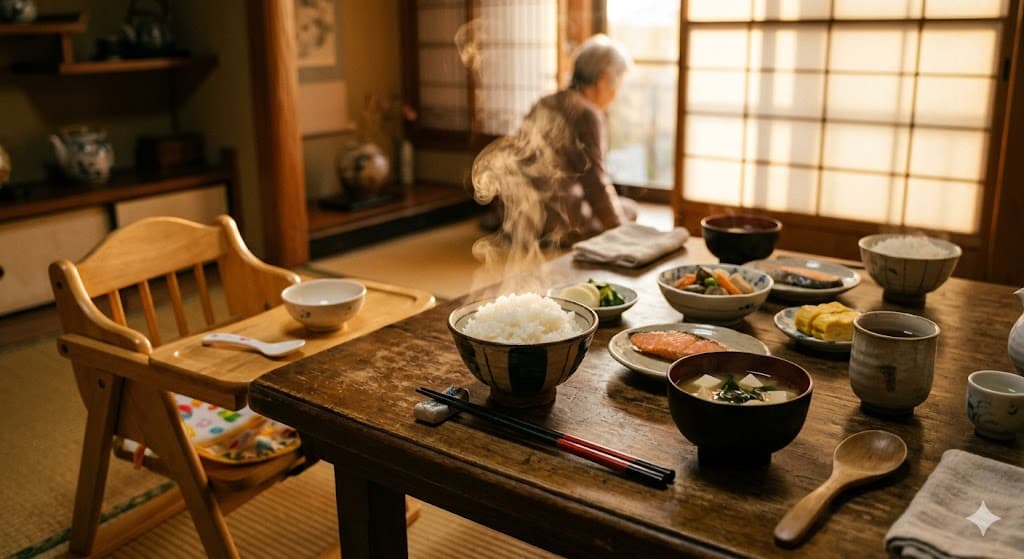
Spoiler-Free Cultural Analysis
This article looks only at the opening minutes of Dragon Ball Z — the cultural and linguistic background behind the name 孫悟飯(Son Gohan: the protagonist's young son). No later plot developments are discussed. Everything below is built from a single scene: a mother calling her child in for dinner.
Key Takeaways
- The name 悟飯(Gohan) is the same word as ご飯(gohan: cooked rice / a meal) — meaning the show's first emotional beat is literally a mother shouting "Rice! It's rice time!" while looking for her son named Rice. To English ears that sounds like a joke. To Japanese ears it is a layered choice that says something about how everyday Japanese words can become real human names.
- Goku names his son after his adoptive grandfather, 孫悟飯じいちゃん(Son Gohan Jiichan: Grandpa Gohan). This is a quiet act of generational naming — passing a beloved elder's name down to a grandchild — that Western audiences often miss because the name doesn't sound like a "family name" in their ear.
- The scene where Chichi calls "Gohan-chan! Gohan yo!" out the window is a small piece of Japanese family rhythm: the household meal-call. It is not universal in Japan, but it is iconic enough in anime that it has become part of how Japan tells the world what a family sounds like.
Key Terms Explained
- 悟飯 (Gohan) / Cooked Rice, A Meal — Written as 悟 (enlightenment) + 飯 (cooked rice). As a common noun ご飯, it simply means cooked white rice or, by extension, "a meal." As a personal name, the kanji 悟 is added to give it weight, but the sound is identical.
- 命名継承 (Meimei Keishō) / Name Inheritance — The practice of giving a child a name (or a single character from a name) inherited from a grandparent, parent, or revered elder. Strongest in old samurai and merchant families, weaker in modern urban households.
- 通字 (Tōji) / Generational Character — A specific kanji passed down through generations of the same family line, often appearing in the names of every male heir. A formal version of name inheritance.
- ご飯ですよ (Gohan desu yo) / "Dinner's Ready" — The conventional Japanese phrase a mother uses to call the family to the table. The same syllables that name the child are also the syllables that summon him to eat.
- 江戸っ子 (Edokko) / A True Tokyoite — A person whose family has lived in Tokyo (formerly 江戸, Edo) for at least three generations, with associated cultural traits of plain speech and old-Tokyo neighborhood pride.
A Name I Was Never Told the Reason For
I will start with a small admission. I do not actually know why I was given my own name.
 A bowl of ご飯(gohan) — the same word that names Goku's son and summons him to the table.
My parents never sat me down to explain it. There was no story about a great-grandfather, no anecdote about a kanji chosen for its meaning, no姓名判断(seimei handan: a traditional fortune-telling practice based on the stroke counts of a name) consultation that I was told about. I grew up in 足立区(Adachi-ku: a working-class ward of Tokyo) in a family that simply did not narrate naming as a ceremony.
That detail matters when I sit down to watch Dragon Ball Z, because the cultural export version of Japan often says: "every Japanese name is a tiny poem; every parent agonizes over the kanji." That is real for many families. But it is not universally real. Plenty of us were just named, the way you might name a cat — affectionately, but without a written record of the meeting where the decision was made.
Watching the first episode of Dragon Ball Z again as an adult, what struck me was not the appearance of Raditz or the foreshadowing of Goku's past. It was Chichi standing at the window and shouting "Gohan-chan! Gohan yo!" And then, on the very next breath, "Gohan yo!" again — except this time meaning "Dinner's ready!"
That collision is the entire cultural lesson of the scene. A mother is calling her son's name. A mother is calling her son to eat. The name and the meal are the same word. And nobody in Japan finds this strange.
Related: My Happy Marriage and the Mukoyōshi System: When the Husband Takes the Wife's Name explains this in detail.
The Three Layers Hidden Inside "Gohan"
When 鳥山明(Toriyama Akira: Dragon Ball's creator) named Goku's son, he did three culturally specific things at once. Untangling them is what this article is really about.
 Generational name inheritance ties a grandchild to an elder the family has loved and lost.
Related: Jabami Meaning: The Snake-Eater Surname Behind Kakegurui's Yumeko explains this in detail.
Layer One: The Everyday Word as a Real Name
In Japanese, ご飯(gohan) is one of the most basic nouns in the language. It is what you say at every meal. It is the first food-word a child learns. To borrow it as a personal name is, on the surface, like an English-speaking parent naming their son "Toast" or "Cereal."
But Japan has a long, real tradition of using everyday and food-adjacent words as actual given names. In the Meiji and Taishō eras and into early Shōwa, names like ミノル(Minoru: "to ripen / to bear fruit"), シゲル(Shigeru: "to grow lush"), カオル(Kaoru: "fragrance"), and even イネ(Ine: "rice plant") and ヨネ(Yone: "rice grain") were ordinary, unremarkable names. Grandparents had them. Farmers had them. Shop-owners had them. Nobody snickered.
I want to be honest here: by the time I was in school in 1970s Tokyo, those names had already become rare among my classmates. I cannot recall a single boy in my class actually named ミノル(Minoru) or イネ(Ine). They lived on as the names of grandparents, in family registers, in old novels — but among my generation, urban Japanese parents had largely shifted to more abstract, more poetic kanji combinations.
So 悟飯(Gohan), as a name, sits in a particular cultural pocket. It is a callback to an older Japanese naming aesthetic where life's basic things — rice, fragrance, growth, harvest — could be a person's name without irony. To a Japanese ear it does not sound like "Toast." It sounds like a name your great-grandfather might have actually had.
Related: My Hero Academia and the Quiet Cruelty of Japanese School Nicknames: How Deku Carries Two Insults at Once explains this in detail.
Layer Two: The Grandfather's Name, Passed to the Grandson
The second layer is the easiest one for a Japanese viewer to feel and the hardest one for a foreign viewer to see. Goku did not invent the name 悟飯(Gohan) for his son. He inherited it.
In the original Dragon Ball series, Goku is raised by an adoptive grandfather, 孫悟飯じいちゃん(Son Gohan Jiichan: Grandpa Gohan). Grandpa Gohan finds the infant Goku, names him, raises him in the mountains, and dies before the main story really begins. When Goku grows up, marries Chichi, and has a son of his own, he gives that son his beloved adoptive grandfather's name in full. Not a single shared character. The whole name.
This is 命名継承(meimei keishō: name inheritance) in its most direct form. It is the gesture of a man saying: the person who raised me is gone, but I carry his name forward through my child. In samurai and old merchant families, a more formal version of this exists called 通字(tōji: a generational character), where a single specific kanji is woven through every generation of male heirs.
I should say plainly: in my own family, in my own neighborhood in Adachi-ku, in my own generation of classmates and friends — I almost never saw this happen. Children were named fresh. Parents thought up new combinations of kanji. The idea that a grandfather's full name would simply be reissued to a grandson would have struck most urban Tokyo households of my era as old-fashioned, almost rural, almost samurai-coded.
That is what makes Goku's gesture quietly heavy. He is not picking a fashionable name. He is reaching backwards, into a more traditional emotional register, and tying his son to a man the audience already loved and lost.
Layer Three: "Gohan yo!" — The Family Meal-Call
The third layer is the scene itself. Chichi stands at the window. She shouts the boy's name. Then she shouts, on the same breath, that dinner is ready. The two utterances rhyme because they are the same word.
The household meal-call — 「ご飯よ〜!」 — is one of those things foreign audiences absorb from anime as quintessentially Japanese, and I have to be honest about the gap between fiction and life. In my own childhood home, my mother did not stand at a window and shout "ご飯よ〜!" across the rooftops. People drifted to the table when the smells changed. The family-summoning yell is more an anime convention than a daily reality in many real Tokyo homes.
But it persists in fiction for a reason. The mother's voice calling her child to eat is, in Japanese storytelling, the most compressed possible image of "home is safe, home is warm, the family is whole." And in this specific scene, Toriyama uses that image to plant a tiny ticking clock. Within a few minutes, Goku's brother Raditz will arrive, the boy will be kidnapped, and the warmth will end. The "Gohan yo!" we hear in episode one is the last completely unbroken meal-call in this child's early life.
What This Looks Like From Outside Japan
Living away from Japan for many years now, I notice that Japanese naming culture is one of the things that gets translated worst at the airport. Westerners who grew up with anime tend to absorb the names — Goku, Gohan, Naruto, Sakura — phonetically, as exotic syllable strings. They rarely stop to ask: wait, what does the name mean as a regular word?
 The household meal-call — fiction's most compressed image of a family still whole.
Sakura is cherry blossom. Naruto is the swirl-pattern fish cake on a bowl of ramen. Gohan is the rice on the table. The names are not invented fantasy syllables. They are the most ordinary nouns in the language, lifted into proper-noun status with a small kanji adjustment.
There is a good reason this gets lost. In English-speaking cultures, food-words as real names tend to read as nicknames or jokes — Cookie, Sugar, Pumpkin. They are diminutives, never legal names. The Japanese tradition of 実名(jitsumei: real, registered name) drawn from food, plants, and growth-words is a structurally different relationship between everyday vocabulary and personal identity. The everyday word is not demoted to a pet name; the everyday word is elevated to a person's name, and it stays there for life.
I think a part of what I have lost, living outside Japan, is the daily background hum of names that are also nouns. Among the older generation in Japan, you still meet a Mr. ミノル(Minoru) or a Mrs. カオル(Kaoru), and the noun-meaning of their name is never far from the surface. In my present life, surrounded by names that are mostly just sounds, I have come to appreciate the Japanese version more than I did when I was inside it.
The name 悟飯(Gohan) is doing all of this at once. It is reaching back to an older naming aesthetic. It is carrying a dead grandfather forward into a new generation. And it is the same word a mother shouts across a yard at dinner time. Three layers, one syllable.
FAQ
Q: Did Goku name Gohan after his grandpa?
A: Yes. Goku's son Gohan is named after Goku's adoptive grandfather, Son Gohan (孫悟飯), the old martial artist who raised Goku. This mirrors a real Japanese custom: passing a grandparent's name — or one of its characters — down to a grandchild as a mark of respect and continuity. So the name carries two layers at once: the everyday word ご飯 ('cooked rice / a meal') and a family tribute to the grandfather whose name lives on.
Q: What does the name Gohan mean in Japanese?
A: ご飯 (gohan) is the everyday Japanese word for cooked white rice and, by extension, 'a meal.' As a personal name for the Dragon Ball character it is fictional rather than common in real Japan, but it follows a real Japanese tradition: family names and given names are often built from food-words, plant-words, and household nouns. Goku's son inherits the name from his grandfather Son Gohan, a quiet nod to the Japanese practice of naming a grandchild after a grandparent.
Q: Does the name "Gohan" really just mean "cooked rice" in Japanese?
A: Yes. The sound ご飯 is the everyday Japanese word for cooked white rice and, by extension, "a meal." For the character's name, the kanji 悟 (enlightenment) is paired with 飯 (cooked rice) to give it a more dignified written form, but the spoken sound is identical to the dinner-table word. A Japanese viewer hears both meanings simultaneously.
Q: Is it common for Japanese grandchildren to be named after grandfathers?
A: It varies enormously by family, region, and era. Old samurai and established merchant families maintained 通字(tōji: a shared generational character) and direct name inheritance. In modern urban Tokyo households of the postwar generations, fully reusing a grandfather's name is rare; parents tend to choose a fresh combination of kanji. Goku giving his son his adoptive grandfather's name in full is closer to the older, more traditional pattern.
Q: Why are so many anime characters named after food or everyday words?
A: Because Japanese has a long-standing tradition of treating ordinary nouns — rice, blossoms, fragrance, growth — as legitimate personal names, especially in earlier generations. Anime creators draw on that tradition partly for warmth, partly for character signaling, and partly as a small joke that lands differently for Japanese and foreign audiences. To a Japanese ear, "Gohan" is an old-fashioned, almost grandfatherly name. To a foreign ear, it sounds like a punchline.
Key Insights to Remember
- A name in Japanese can be three things at once: a sound, a kanji on paper, and a common noun in daily life. "Gohan" stacks all three. Foreign viewers tend to hear only the sound; Japanese viewers cannot un-hear the noun. This is why the same scene plays as comedy abroad and as quiet warmth at home.
- Generational name inheritance — handing a grandfather's name to a grandchild — is not a uniform Japanese custom but a specific traditional gesture that survives more in samurai-coded and rural-coded families than in modern urban ones. When a fictional character does it, that gesture itself is a piece of characterization, signaling that the parent is reaching toward an older, more rooted version of family.
- The household meal-call is iconic in anime largely because it is iconic in anime. It is not a daily fact in every Japanese home, including the one I grew up in. But fiction has made it into the universal shorthand for the warmth that exists right before something is taken away. Episode one of Dragon Ball Z uses that shorthand precisely.
Sources
About the author
Spoiler-free cultural deep-dives into anime, manga & live-action Japanese drama
- ●Tokyo-born, 3rd-generation Edokko (江戸っ子)
- ●Lifelong manga reader & anime viewer since the kaiju era
- ●Writes from outside Japan — distance as a cultural lens
- ●Spoiler-free · sourced · Kanji + Romaji + English
A Tokyo-born, 3rd-generation Edokko writer who has spent years living outside Japan. I use the anime, manga, and live-action Japanese drama you already love as a doorway into the folklore, language, religion, and everyday history behind them — written so even first-time fans can follow along, with sources for every claim.
Enjoy this article?
Get the next spoiler-free cultural deep-dive straight to your inbox.
Related Articles
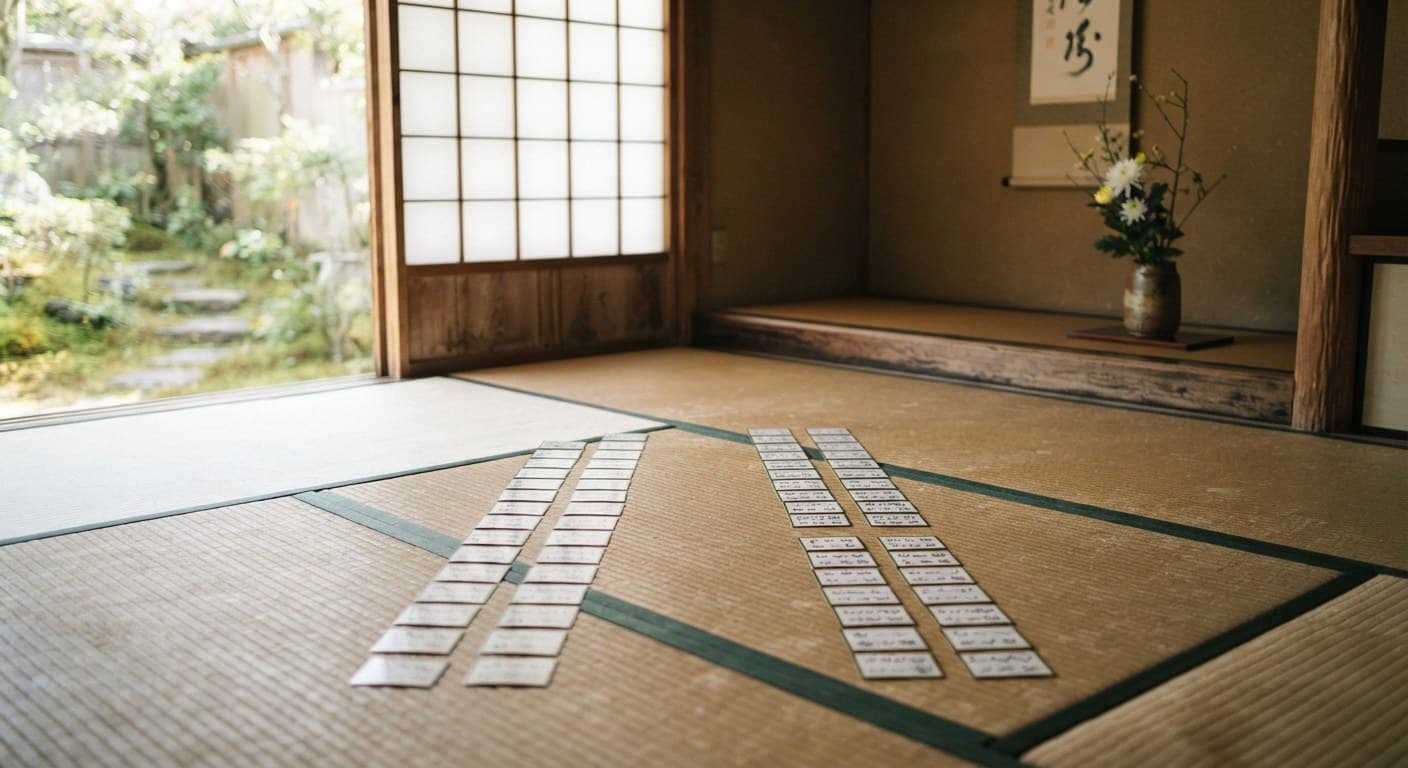
Chihayafuru and the World of Competitive Karuta: The Speed, Silence, and Poetry Behind Japan's Fiercest Card Game
How Chihayafuru reveals competitive karuta, where poems from the 13th-century Hyakunin Isshu meet athletic reflexes and matches turn on hundredths of a second.
7/28/2026
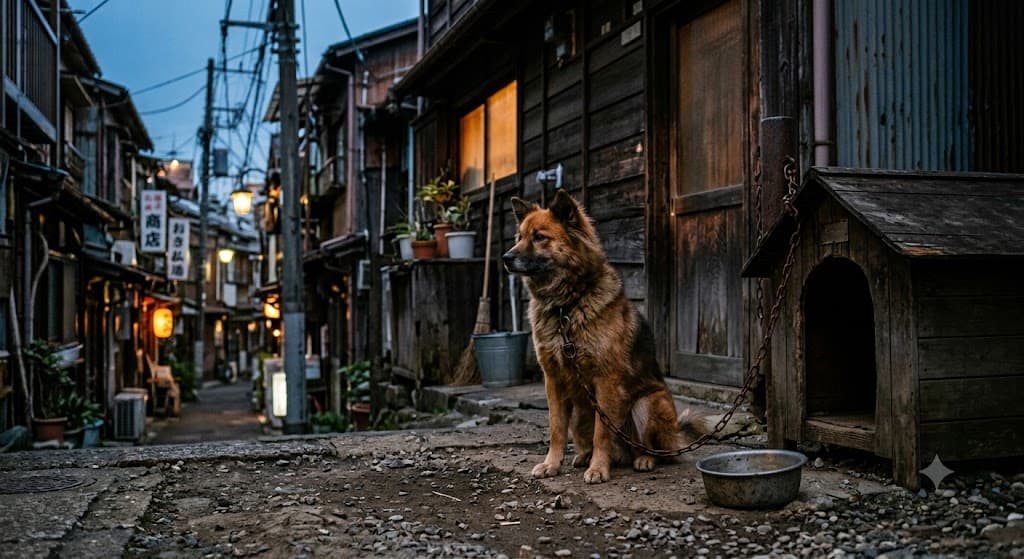
Chainsaw Man and Why Every Japanese Dog Is Named Pochi: The Hidden History Behind Pochita
How Chainsaw Man's Pochita carries the history of Pochi, the Meiji-era nickname that became Japan's default dog name — and what that says about loyalty.
7/11/2026

Naruto and Yakuwarigo: The Real Meaning of Dattebayo and Why Translators Invented Believe It!
How Naruto's famous verbal tic dattebayo opens the door to yakuwarigo, Japan's role language system, and why English translators had to invent Believe it!
7/4/2026

Evangelion's Angels and Japan's Decorative Christianity
How Neon Genesis Evangelion's enemies are 使徒 (apostle) in Japanese but Angel in English — and how Japan wears Christianity as aesthetic, not faith.
7/3/2026

Solo Leveling and Te-ate: Why the Japanese Word for Treatment Means Placing the Hand
How Solo Leveling's healing magic opens onto te-ate, the Japanese word for treatment whose root is the simple act of placing a hand on a wound.
6/26/2026
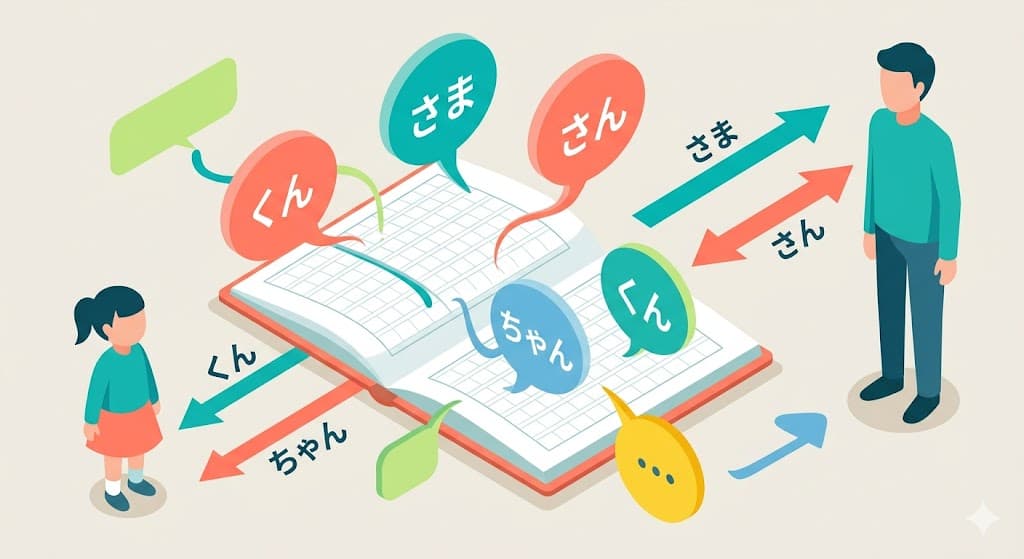
Detective Conan and the -kun You Didn't Expect: How Japanese Honorifics Really Work
How Detective Conan reveals that the honorific -kun is not male-only — an inspector calls teenage Ran 'Ran-kun', a hierarchy English subtitles quietly drop.
6/11/2026