My Hero Academia and the Quiet Cruelty of Japanese School Nicknames: How Deku Carries Two Insults at Once
How My Hero Academia's nickname Deku hides a double-edged Japanese pun rooted in school-yard mockery, and why the cultural weight rarely survives translation.

Tokyo-born, 3rd-generation Edokko · writing on Japanese culture from outside Japan

Spoiler-Free Cultural Analysis
This article explores the linguistic and cultural roots behind one of anime's most recognizable nicknames in 僕のヒーローアカデミア(Boku no Hīrō Akademia: My Hero Academia) — "デク"(Deku) — and the あだ名(Adana: nickname) culture of Japanese schools that produces names like it. No plot points, character arcs, or story developments are revealed. The focus is on the wordplay, its history, and the schoolyard tradition the name draws from.
Key Takeaways
- Deku is a deliberate double pun: it can be heard at once as a mock-reading of the protagonist's given-name kanji 出久(Izuku) and as a pointer to 木偶の坊(Deku no Bō: useless lump), so a single nickname lands two insults at once on a Japanese ear.
- The Japanese school custom of twisting a classmate's name into a mocking pun is not a fictional plot device but a long-running, often quiet form of group bullying that adults rarely see and victims rarely escape.
- Reclaiming a cruel nickname by re-anchoring its core sound in the affirmative 出来る(Dekiru: can do it) instead of the dismissive associations the bullies built around it is a culturally specific narrative move that depends on the kanji and sound system, which is why English subtitles can only gesture at the weight the original carries.
Key Terms Explained
- 出久(Izuku) / a male given name — The protagonist's actual given name. Read normally, it is Izuku; the same kanji can be force-read in playground style as Deku, which is where the nickname originates.
- 木偶の坊(Deku no Bō) / Useless Lump — A traditional insult in which 木偶(deku) refers to a wooden puppet or carved figure and the whole phrase means a person who stands around uselessly, contributing nothing.
- 出来る(Dekiru) / To Be Able / Can Do It — The affirmative verb that the protagonist eventually pulls under the same deki sound the bullies were using, allowing the nickname to be reread in a positive register.
- あだ名(Adana) / Nickname — In a Japanese school context this is rarely a casual pet name; it is a label the group decides for you, often impossible to refuse or shed.
- いじめ(Ijime) / Bullying — Specifically the Japanese pattern of group-based, low-visibility harassment that prioritizes social exclusion and verbal erosion over physical confrontation.
The Rabbit Cage and the One Word That Stuck to Me
I spent six years of elementary school and three of middle school in Tokyo without ever earning a real あだ名(Adana: nickname). I remember asking my homeroom teacher, in middle school, why nothing had stuck to me — not affectionately, almost as a complaint. Other classmates had names that twisted into smaller, sharper versions of themselves. Mine just stayed mine. It was only later that I understood how lucky that was.
 A quiet Japanese classroom after hours — where nicknames pass between desks long after teachers have left.
Two labels did briefly land on me, both born from a single embarrassing afternoon. In one case, I was responsible for the rabbits the school kept in a wooden hutch out behind the classroom block. Through some combination of an unlatched door and my own inattention, every single rabbit got loose. For a long stretch after that I was うさぎ逃がし(Usagi-Nigashi: rabbit-escaper). The other came from a more humiliating accident in class involving a sound the human body sometimes makes against its owner's wishes. From that day on I was ヘッタレ(Hettare: a useless, half-baked coward).
What I remember most clearly is not the laughter. It is the way one bad afternoon turned into a name I could not take off. In the Japanese schoolyard, a single moment of failure can be welded onto your identity for years. The teacher does not hear it because the teacher is never in the room when it is used. The pun gets passed from desk to desk in low voices, and you walk into the classroom the next morning already wearing it.
That is the soil out of which a name like Deku grows.
Related: Gohan Meaning: Why Dragon Ball's Saiyan Boy Is Named 'Cooked Rice' explains this in detail.
The Wordplay Behind Deku
The nickname Deku in 僕のヒーローアカデミア(Boku no Hīrō Akademia: My Hero Academia) is not, as some English-speaking viewers first assume, an arbitrary syllable. It is a piece of school-yard machinery doing two jobs at once.
 The two kanji of Izuku — the same characters a schoolyard bully can force-read as Deku.
Related: Jabami Meaning: The Snake-Eater Surname Behind Kakegurui's Yumeko explains this in detail.
The First Layer: A Mock-Reading of 出久 (Izuku)
The protagonist's given name is written 出久 and read Izuku. Japanese kanji often carry more than one possible reading, and on the schoolyard a malicious classmate can simply force a different one. The same two characters — 出 and 久 — can be re-pronounced as Deku if a reader insists on it. This is not a slip of the tongue; it is a deliberate misreading designed to humiliate. The bully picks the reading no adult would choose, plants it in the air, and lets the syllables do the rest.
This is one of the engines of Japanese school cruelty: the insult is engineered to slip through the gap between what is technically said and what is actually heard. A teacher who challenges the nickname will be told it is "just another way of reading the kanji."
The Second Layer: 木偶の坊 (Deku no Bō)
Once Deku is in the air, a second meaning arrives with it: 木偶の坊(deku no bō), an insult that predates anime by centuries. A 木偶(deku) refers to a wooden puppet or carved figure used in older Japanese performance traditions. The full phrase 木偶の坊 means a person who is large and visible but inert — a body taking up space, contributing nothing, just standing there like wood.
Calling someone a deku no bō in adult life is genuinely cutting. It is not the cartoon insult of "idiot." It is closer to "a placeholder shaped like a person," and it has the weight of a phrase that has been used to wound for a very long time.
Why the Two Layers Matter Together
In the original Japanese, both meanings are audible at once. A child hearing Deku on the schoolyard is told two things in one breath: that is not even your real name, it is the wrong reading of your kanji, and you are not really a person, just a wooden body in the way. English subtitles render the syllables phonetically and then run a glossary at the side of the screen. The double-edged structure of the original — that single sound delivering two ancient insults stacked on top of each other — does not survive the trip into English without footnotes.
The Schoolyard System That Builds These Names
The reason this kind of nickname works at all is because Japanese schools have a long, unspoken system for assigning them. A few features make the あだ名(Adana: nickname) culture distinct from the friendly pet-naming common in English-speaking schools.
 The back-stage half of Japanese school life, where a second vocabulary of nicknames quietly circulates.
Permanence and the Two-Layer Naming System
Once assigned, a school nickname is hard to lose. It survives across school years and sometimes follows the person into adulthood. It also operates inside a quiet two-layer system: in front of teachers, parents, and any adult, the child is called by their proper name. Among classmates, a different name is used. The adults often have no idea the second layer exists, which is precisely the design.
The Group Decides, Not the Person
A child cannot propose their own nickname and expect it to take. The class collectively settles on what to call you. This is partly why classmates whose names cannot easily be twisted into anything memorable — like mine — sometimes end up with no nickname at all, while classmates with phonetically convenient surnames or kanji carry whatever wordplay first lands on them all the way to graduation.
The Front-Stage Pun and the Back-Stage Pun
The most damaging nicknames in my own school years were not the ones used to a child's face. They were the ones whispered when the target was not present. I remember classmates who, in front of one another, were called by ordinary friendly contractions — and behind their backs, by puns that turned their names into "useless" or "slow." Outwardly the class looked like a peaceful place where everyone got along on a first-name basis. Underneath, an entirely separate vocabulary was circulating.
This is the structural shape of much いじめ(Ijime: bullying). Direct confrontation is rare. Erosion is the method. A nickname acts as the daily delivery mechanism — small, repeatable, plausibly deniable, impossible to formally complain about.
Who Actually Spreads Them
In the classes I watched, the children who spread cruel nicknames were almost never the obvious ringleader-type figures from manga. They were children who became sharper in groups than they ever were alone, and — more painfully — children who had once been the target's friend, whose teasing slowly hardened into something else without anyone naming the shift. The mechanism does not require a villain. It only requires a few mouths repeating the same syllables until the joke calcifies into a label.
What Reclamation Looks Like in Japanese
The arc that English-speaking audiences sometimes flatten into "the hero embraces his nickname" is doing more cultural work than it appears to in subtitles.
When the protagonist accepts Deku and re-anchors its core sound in 出来る(Dekiru: can do it), the move only works in Japanese. The bullies' nickname depended on hearing Deku as a forced misreading of his name and as a callback to deku no bō. The reclamation reuses the same opening syllable — deki — but ties it to a verb of capability instead. The body of the sound the bullies used to corner him stays exactly the same. He just lets it point at a different word.
In English, this requires a paragraph of explanation. In Japanese, it is a register shift carried by a single shared syllable. There is a long Japanese tradition of letting one sound carry more than one meaning, and the reclamation of Deku is the school-yard cousin of that habit — performed on the most ordinary of childhood weapons.
What I See Now, Looking Back from Outside Japan
I have lived outside Japan for many years now, and one of the small surprises of the distance has been watching how foreign audiences read Japanese school nicknames. From the outside, Deku looks like a friendly, slightly awkward shorthand. From the inside, it is the exact mechanism that quietly damaged children I sat next to. Both readings are real. They just happen on different sides of a translation gap.
When I revisit anime now, with adult eyes and from a place where no schoolyard works the way the Japanese one does, I notice how often the cruelty in these stories is delivered through language — through nicknames, suffixes, deliberately omitted honorifics, forced misreadings of someone's kanji — rather than through fists. A reader trained on stories where bullies push and shove can sometimes miss what the Japanese original is actually depicting: a culture where the most lasting damage in a classroom comes through repeated micro-pronouncements of a single twisted name.
What I find moving about the way this kind of story tends to resolve is not the spectacle. It is the stubbornness it takes to walk back into the room every morning still wearing the name, and slowly, syllable by syllable, change what the room hears in it.
FAQ
Q: Why is the nickname Deku considered an insult in Japanese when it sounds neutral in English?
A: Because it carries two simultaneous Japanese meanings — a forced mock-reading of the protagonist's given name 出久(Izuku) and a callback to 木偶の坊(Deku no Bō: useless lump). English subtitles preserve the sound but lose both layers of meaning, so foreign viewers naturally read it as a quirky name rather than a sharp pun.
Q: Is the kind of name-based bullying shown in My Hero Academia actually common in Japanese schools?
A: Twisting a classmate's name — including by force-reading their kanji in a humiliating way — is one of the most widespread forms of school いじめ(ijime: bullying) in Japan. It is so embedded in the あだ名(adana: nickname) culture that it often goes unnoticed by teachers and parents, because the cruel version of the name is reserved for use among classmates and rarely spoken in front of adults.
Q: Why does the protagonist reclaiming Deku feel more powerful in Japanese than in translation?
A: Because in Japanese, the bullies' nickname and the heroic re-reading share the same opening syllable, deki. Tying that sound to 出来る(dekiru: can do it) lets him reuse the bullies' own sound system against them, in a register flip that translation cannot reproduce in a single word.
Key Insights to Remember
- Japanese school nicknames are rarely pet names; they are labels the group decides on, often built from puns or forced kanji readings that can be denied as innocent if challenged. Understanding this changes the way an English-speaking viewer should read any anime scene where a character is "given" a name by classmates — what looks like teasing in subtitles is frequently a piece of long-running social machinery.
- The double-edged structure of Deku shows how Japanese cruelty often operates through stacked meaning rather than direct attack. A single syllable can deliver two insults at once, and the listener is expected to absorb both. This is why the language of Japanese school stories rewards close attention; the surface is rarely the whole sentence.
- Reclaiming a cruel nickname by reusing its core sound is a school-yard echo of a broader Japanese habit of letting one syllable point at more than one meaning. The arc plays as catharsis to international audiences but as something closer to a cultural homecoming for Japanese ones — a familiar move performed on the most familiar of childhood weapons.
Sources & References
- いじめ防止対策推進法 (Act on the Promotion of Measures to Prevent Bullying) — e-Gov Japanese Government Legal Database
- 木偶の坊 / でくのぼう — Kotobank (Shogakukan / Daijisen / Daijirin entries)
- 出来 / でき — Kotobank (Daijisen / Daijirin entries)
- いじめの状況及び児童生徒の問題行動等生徒指導上の諸課題に関する調査 — Ministry of Education, Culture, Sports, Science and Technology (MEXT), Japan
- 僕のヒーローアカデミア (Boku no Hīrō Akademia) — Shueisha Shōnen Jump Plus official series page
About the author

Spoiler-free cultural deep-dives into anime, manga & live-action Japanese drama
- ●Tokyo-born, 3rd-generation Edokko (江戸っ子)
- ●Lifelong manga reader & anime viewer since the kaiju era
- ●Writes from outside Japan — distance as a cultural lens
- ●Spoiler-free · sourced · Kanji + Romaji + English
A Tokyo-born, 3rd-generation Edokko writer who has spent years living outside Japan. I use the anime, manga, and live-action Japanese drama you already love as a doorway into the folklore, language, religion, and everyday history behind them — written so even first-time fans can follow along, with sources for every claim.
Enjoy this article?
Get the next spoiler-free cultural deep-dive straight to your inbox.
Related Articles
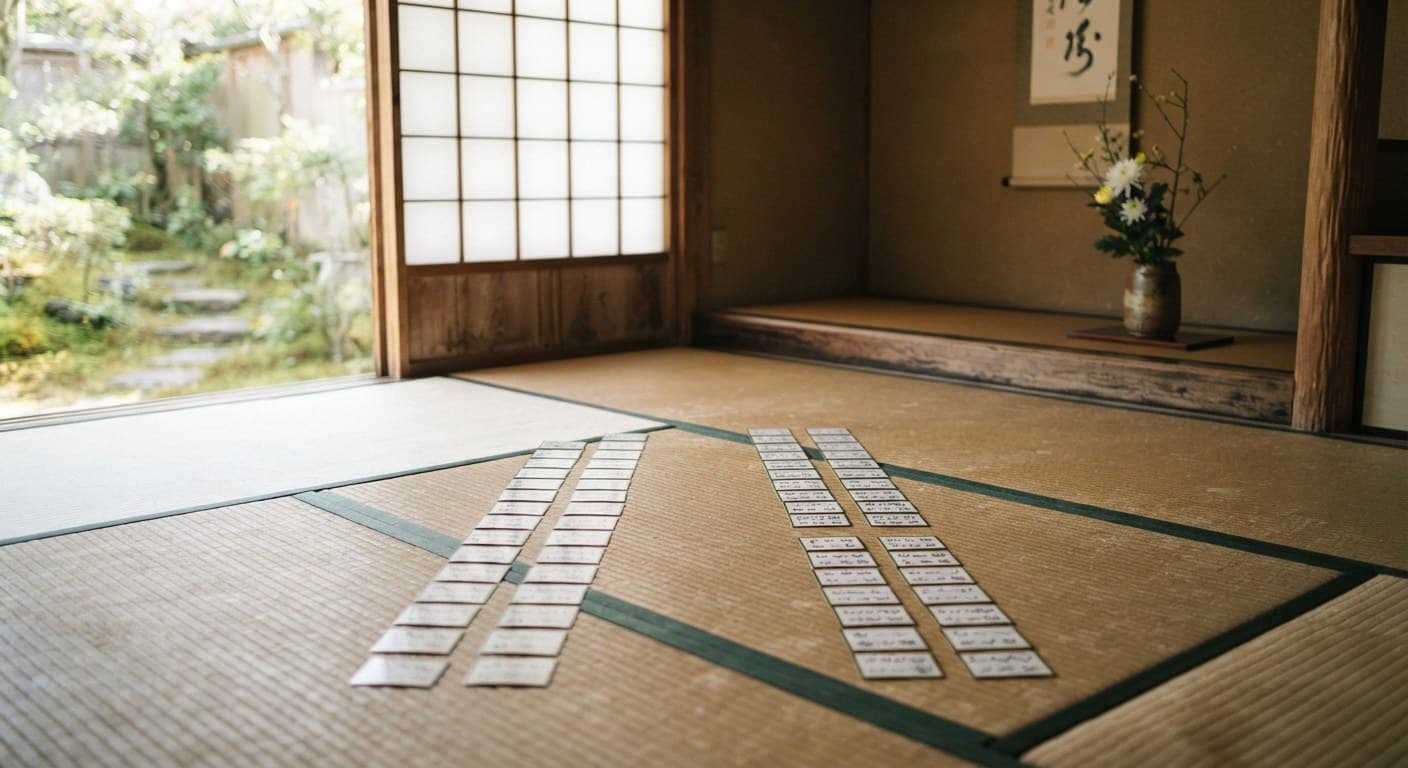
Chihayafuru and the World of Competitive Karuta: The Speed, Silence, and Poetry Behind Japan's Fiercest Card Game
How Chihayafuru reveals competitive karuta, where poems from the 13th-century Hyakunin Isshu meet athletic reflexes and matches turn on hundredths of a second.
7/28/2026
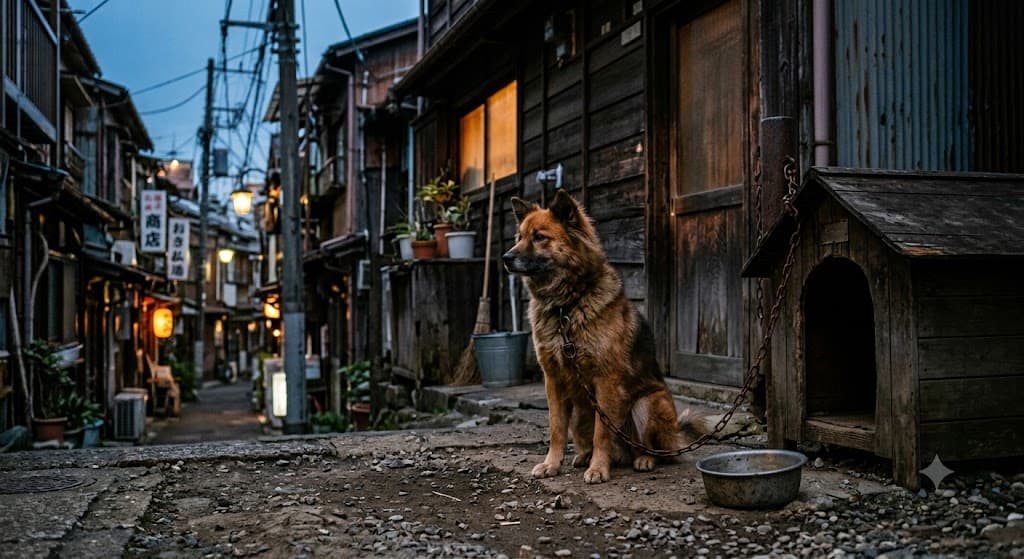
Chainsaw Man and Why Every Japanese Dog Is Named Pochi: The Hidden History Behind Pochita
How Chainsaw Man's Pochita carries the history of Pochi, the Meiji-era nickname that became Japan's default dog name — and what that says about loyalty.
7/11/2026

Naruto and Yakuwarigo: The Real Meaning of Dattebayo and Why Translators Invented Believe It!
How Naruto's famous verbal tic dattebayo opens the door to yakuwarigo, Japan's role language system, and why English translators had to invent Believe it!
7/4/2026

Evangelion's Angels and Japan's Decorative Christianity
How Neon Genesis Evangelion's enemies are 使徒 (apostle) in Japanese but Angel in English — and how Japan wears Christianity as aesthetic, not faith.
7/3/2026

Solo Leveling and Te-ate: Why the Japanese Word for Treatment Means Placing the Hand
How Solo Leveling's healing magic opens onto te-ate, the Japanese word for treatment whose root is the simple act of placing a hand on a wound.
6/26/2026
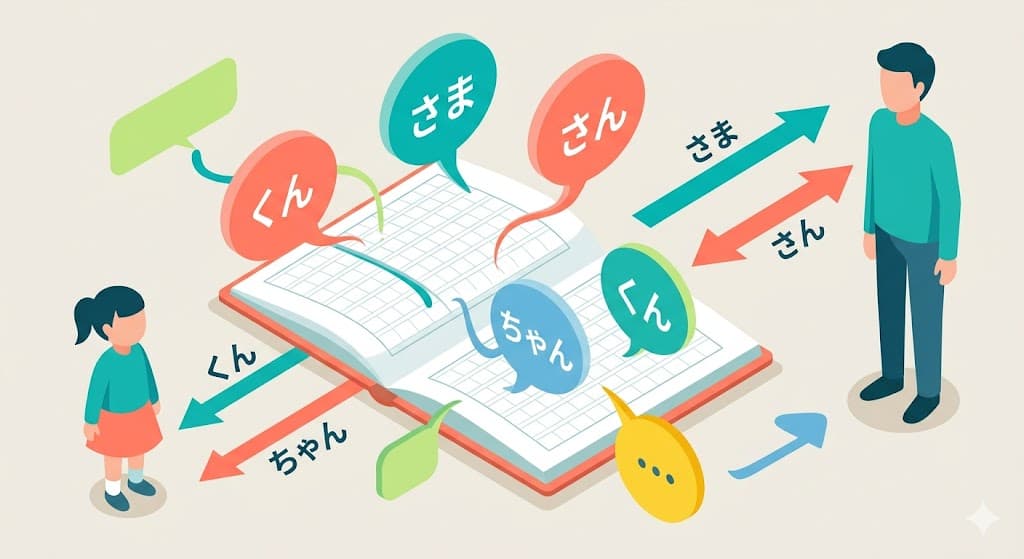
Detective Conan and the -kun You Didn't Expect: How Japanese Honorifics Really Work
How Detective Conan reveals that the honorific -kun is not male-only — an inspector calls teenage Ran 'Ran-kun', a hierarchy English subtitles quietly drop.
6/11/2026