The Apothecary Diaries and the Art of Playing Dumb: Why Maomao Hides Her Brilliance
How The Apothecary Diaries dramatizes deru kui wa utareru, the Japanese habit of hiding talent, and why Maomao's playing dumb feels so familiar in Japan.

Tokyo-born, 3rd-generation Edokko · writing on Japanese culture from outside Japan
Spoiler-Free Cultural Analysis
This article explores the Japanese cultural logic behind Maomao's habit of pretending not to know things — the proverb 出る杭は打たれる(Deru Kui wa Utareru: the nail that sticks out gets hammered down) and the older aesthetic of 能ある鷹は爪を隠す(Nō Aru Taka wa Tsume o Kakusu: a capable hawk hides its talons). No plot beats are revealed beyond what is shown in the opening scenes of episode one.
Key Takeaways
- Maomao's stated logic — that life is easier when you pretend not to know — is not personal eccentricity but a recognizable Japanese survival strategy with centuries-old proverbial backing.
- The aesthetic of hiding ability has deep roots in 武士道(Bushidō: the way of the warrior) and 江戸っ子(Edokko: true-Tokyoite) culture, where restraint and understatement were marks of refinement, not insecurity.
- The same logic still operates inside modern Japanese workplaces, schools, and online communities — and seeing it dramatized in a Chinese-imperial-court setting lets Japanese viewers recognize their own social training without flinching.
Key Terms Explained
- 出る杭は打たれる (Deru Kui wa Utareru) / The nail that sticks out gets hammered down — A proverb describing how visible excellence or difference invites pushback from the surrounding group.
- 能ある鷹は爪を隠す (Nō Aru Taka wa Tsume o Kakusu) / A capable hawk hides its talons — An older, more aesthetic counterpart: real ability is concealed rather than displayed.
- 謙譲 (Kenjō) / Humility, deference — Not modesty as personal feeling, but a structural lowering of self relative to others, central to Japanese speech and conduct.
- 粋 (Iki) / Edo-period chic — An aesthetic of understatement and restraint prized in old Tokyo: knowing much, saying little, never showing off.
- 処世術 (Shoseijutsu) / The art of getting through life — A loaded word for the everyday tactics — including strategic silence — that Japanese people use to move through dense social environments.
A Childhood Lesson in Not Knowing Too Much
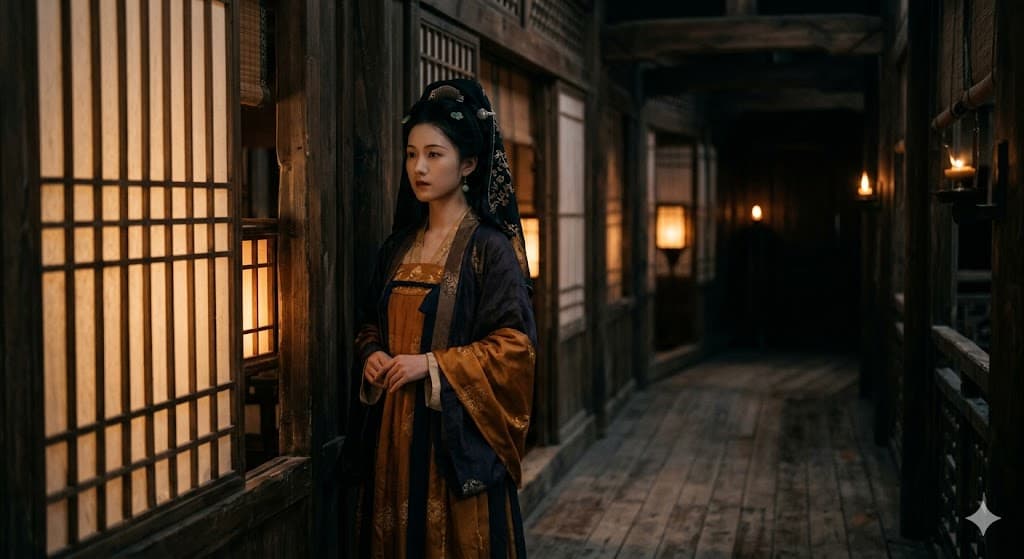
There is a moment in episode one of 薬屋のひとりごと(Kusuriya no Hitorigoto: The Apothecary Diaries) where Maomao, the apothecary girl conscripted into the rear palace, decides she should keep her literacy and her medical knowledge to herself. Her reasoning, paraphrased in my own words: it is easier to move through the world pretending you do not know things. When I heard that line, something very specific from my own childhood surfaced.
 The proverb made literal: the nail that stands taller invites the hammer.
I grew up in 下町(Shitamachi: the old working-class neighborhoods of Tokyo) as a third-generation 江戸っ子(Edokko: true Tokyoite), and one of the earliest social rules I absorbed — long before I had a name for it — was 知ったかぶりするな(shittakaburi suruna: don't act like you know). If I came home from a TV program or a library book with some new piece of trivia and announced it at the dinner table or in the schoolyard, the reaction was rarely admiration. Adults shifted in their seats. Classmates went quiet. The room cooled by a degree. Nobody said the words "the nail that sticks out gets hammered down," but the air carried the lesson clearly enough.
The strange thing is, no one was telling me my information was wrong. They were telling me, in a coded way, that knowing was fine, but announcing that you knew was the problem. By the time I was ten, I had learned to swallow half of what I was about to say.
That is the same instinct Maomao is operating on. Her line is not the wisdom of one cynical apothecary — it is a survival reflex that any Japanese viewer over a certain age recognizes from their own childhood.
Related: 進撃の巨人 (Shingeki no Kyojin) and the Walls of 村社会 (Mura Shakai): Why Japan Built Cages Long Before the Titans Came explains this in detail.
The Long Roots of Hiding Your Talons
The proverb 能ある鷹は爪を隠す(Nō Aru Taka wa Tsume o Kakusu) is the cleaner, more aesthetic version of this idea. The hawk is unambiguously capable — it is a predator — but its talons are tucked away when it is at rest. Display is reserved for the moment of strike. Anything else is wasted motion, or worse, a tell.
The Warrior's Restraint
In the long line of Japanese values that shaped this aesthetic, 武士道(Bushidō: the way of the warrior) sits near the center. The samurai ideal was not the loudest fighter on the battlefield but the one whose composure betrayed nothing. A warrior who advertised his skill was already half-defeated; the opponent could prepare. Silence and apparent ordinariness were operational advantages, not just manners. Over centuries, this logic seeped out of the warrior class and into the broader population, where it stopped being about combat and became about social life.
 A capable hawk hides its talons — display reserved for the moment of strike.
Edo Townspeople and the Aesthetic of 粋
The 江戸っ子(Edokko) culture I was raised inside has its own version of this restraint, expressed through the word 粋(Iki: Edo-period chic). To be 粋 was to know much and say little, to dress simply but cut the fabric perfectly, to crack a joke without smiling at it. The opposite — 野暮(yabo: unrefined, heavy-handed) — was someone who spelled everything out, named every reference, performed their cleverness. In old Tokyo, the person who held back was the person with depth. The one who explained themselves had nothing left in reserve.
This is why Maomao reads, to a Japanese audience, as a slightly old-fashioned heroine even though she lives in a fictionalized Chinese court. Her refusal to flaunt what she knows is not just self-protection — it carries an aesthetic charge that older Japanese viewers can place immediately.
"The Nail That Sticks Out" as Group Logic
出る杭は打たれる(Deru Kui wa Utareru) is the harder, more honest companion proverb. The hawk hides its talons by choice; the nail gets hammered whether it wants to or not. This second version captures the group-pressure side of the same coin. In a society organized around small, dense, long-lasting groups — the village, the family, the school class, the company department — visible excellence creates an immediate problem for everyone around it. If one person is clearly better, the implicit ranking shifts, and the people just below have to either rise or be diminished. The cheapest fix is to pull the standout back down to the line.
A common Japanese pattern is to choose one's school, job, or path quietly, even when the choice is unconventional. When I picked 日本体育大学(Nippon Sport Science University) for my degree, the reaction from people around me was not "good for you" but a puzzled "why there?" — partly because the school was seen as a narrow track for employment, but partly, I think, because choosing your own line at all was the deeper deviation. The hammer comes down not for being wrong but for being visibly different.
The Anime Lineage of the Hidden Hero
Maomao belongs to a long line of Japanese characters whose competence is deliberately concealed. 魔法科高校の劣等生(Mahōka Kōkō no Rettōsei: The Irregular at Magic High School) builds its entire premise on a protagonist whose official rank says one thing while his actual ability says another. Series after series — across decades — return to the figure of the unremarkable student, the failed-looking employee, the dismissed apprentice who turns out to be the most capable person in the room. The pleasure for Japanese audiences is not the reveal itself but the long stretch of restraint before it. That stretch is the part that mirrors real life.
What I Notice From the Outside
I have lived outside Japan for over a decade now, and the distance has changed how I see Maomao's strategy. From inside Japan, "playing dumb" can feel like a low-grade exhaustion — a daily small tax on saying what you actually think. From outside, it starts to look more like a precise tool that does specific work.
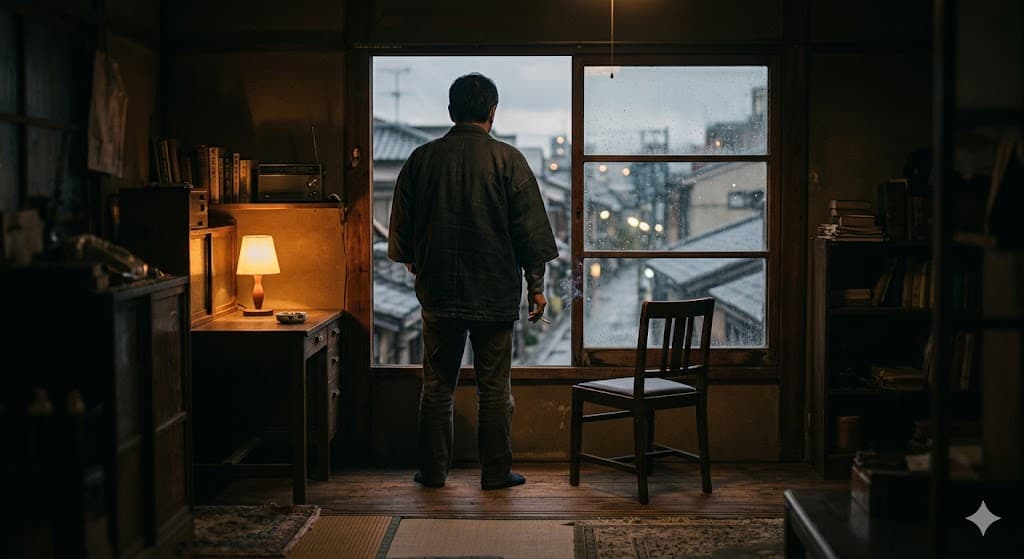
 Positioning oneself as the listener reverses the flow of information.
I work as an AIエンジニア(AI Enjinia: AI engineer) and I notice I still use Maomao's tactic constantly, just dressed in business clothes. In client meetings, even when I already know the answer, I will often ask the question as if I do not. The client explains, and in explaining tells me what they actually care about, where they are stuck, what they are afraid of. If I had walked in and demonstrated that I knew, the meeting would have been shorter and emptier. The information would not have come out.
The same thing happens with junior engineers. Asking "how would you do this?" instead of telling them the answer lets me see exactly where their thinking holds together and where it breaks. They get to be the expert for a moment, which is good for them, and I get a clearer map of what they actually understand, which is good for the work.
This is what I think Maomao's line really points at. It is not that knowledge is dangerous — it is that the flow of information reverses depending on who is positioned as the knower. The person who appears to know stops receiving. The person who appears not to know becomes the place where information collects. In a court full of factions and quiet poisons, that is not just a personality trait; it is a survival architecture.
What I notice has been quietly lost is the aesthetic side — the 粋 of it. In modern Japanese workplaces and online, the older grace of saying less has frayed. People are increasingly expected to perform their value out loud, to stack credentials in their bio, to never let a competence go unannounced. The hawk is told to display its talons or no one will know the hawk is a hawk. Something practical may be gained by this — visibility, opportunity — but something specifically Japanese is being thinned out in the trade. Watching Maomao quietly choose to be underestimated, I find I am watching a value system that the country that produced it is itself less and less sure how to keep.
FAQ
Q: Is Maomao's "play dumb" strategy a real Japanese cultural pattern, or just a quirk of the show?
A: It is a recognizable cultural pattern. The proverbs 出る杭は打たれる and 能ある鷹は爪を隠す predate the series by centuries, and the underlying social logic — that visible excellence invites pushback in dense groups — is something most Japanese people are taught informally as children. The show dramatizes it; it does not invent it.
Q: How is this different from Western humility or modesty?
A: Western modesty is often framed as a personal virtue — being humble about real achievements out of character or faith. The Japanese version is more strategic and more structural: it is about how the speaker positions themselves relative to the group, how information flows, and how visible difference is managed. You can be entirely confident inside and still actively hide it, and that is not seen as deception but as competence at social life.
Q: Does the same logic still apply in modern Japan, or is it disappearing?
A: Both. In schools, workplaces with strong vertical relationships, and small communities, the "nail that sticks out" pressure is alive and well. At the same time, social media, global business culture, and a self-promotion economy are pushing in the opposite direction, especially for younger generations. Many Japanese people now navigate both modes — quiet inside the group, more visible online — with some strain in the gap.
Key Insights to Remember
- Maomao's choice to feign ignorance is the dramatized version of a deep Japanese social grammar where information flow, group ranking, and visible difference are tightly linked. Reading her as merely shy or cynical misses the structural logic underneath. She is operating on rules her audience already knows.
- The two proverbs that sit behind this — 能ある鷹は爪を隠す and 出る杭は打たれる — are not synonyms. The first is aesthetic and chosen; the second is social and imposed. Together they describe a world where hiding ability is both a personal style and a defensive necessity, and Japanese culture has lived inside that double meaning for a very long time.
- Seen from outside Japan, the "play dumb" tactic stops looking like timidity and starts looking like a precise way of managing how information moves between people. The person positioned as not-knowing becomes the receiver; the person positioned as knowing stops receiving. That is a real tool, not just a cultural tic, and it is one of the things modern global culture is asking Japan to set down without entirely understanding what is being set down.
Sources
About the author

Spoiler-free cultural deep-dives into anime, manga & live-action Japanese drama
- ●Tokyo-born, 3rd-generation Edokko (江戸っ子)
- ●Lifelong manga reader & anime viewer since the kaiju era
- ●Writes from outside Japan — distance as a cultural lens
- ●Spoiler-free · sourced · Kanji + Romaji + English
A Tokyo-born, 3rd-generation Edokko writer who has spent years living outside Japan. I use the anime, manga, and live-action Japanese drama you already love as a doorway into the folklore, language, religion, and everyday history behind them — written so even first-time fans can follow along, with sources for every claim.
Enjoy this article?
Get the next spoiler-free cultural deep-dive straight to your inbox.
Related Articles
Frieren: Beyond Journey's End and the Weight of Time: Why the Anime Measures Life in Decades, Not Days
How Frieren: Beyond Journey's End turns the Japanese sense of 無常 (mujō, impermanence) into narrative structure — running its clock in decades so an elf's long life reveals the beauty and worth of our short human ones.
7/27/2026

Cowboy Bebop and the Jazz Kissa: How Japan Turned Listening to Music into a Ritual
How Cowboy Bebop's jazz soundtrack opens a door into the jazu kissa, Japan's silent listening cafés, where hearing a single record became a ritual.
7/13/2026

Blue Lock and the Riddle of Samurai Blue: Why Japan's Football Team Wears Blue When the Flag Is Red
How Blue Lock's blue-drenched world opens onto a real puzzle — why Japan's Samurai Blue football team wears indigo when the national flag holds no blue at all.
7/10/2026
Demon Slayer and Mono no Aware: How Tanjiro's Mother Speaks the Aesthetics of Impermanence
How Demon Slayer dramatizes mono no aware — the mother's weather metaphor in episode one and the Japanese aesthetics of impermanence woven quietly behind it.
7/9/2026
Kuroko's Basketball and the Kurogo: How a Black-Clad Stagehand Became the Phantom Sixth Man
How Kuroko's Basketball builds its phantom sixth man on kurogo, the kabuki and bunraku stagehand who stands in full view yet is treated as unseen.
6/4/2026
Dandadan and the Ghost of Ken Takakura: Why Japan Adored the Man Who Couldn't Say I Love You
How Dandadan turns a heroine's crush on Ken Takakura into a window onto bukiyō, the Showa ideal that read a man's silence as proof of sincerity.
5/30/2026