Jabami Meaning: The Snake-Eater Surname Behind Kakegurui's Yumeko
Jabami (蛇喰) is a rare real Japanese surname meaning 'snake-eater.' Kakegurui's Yumeko inherits Japan's ancient snake mythology — Benzaiten's white serpent, surname history, and the gap with Western Eden imagery.

Tokyo-born, 3rd-generation Edokko · writing on Japanese culture from outside Japan
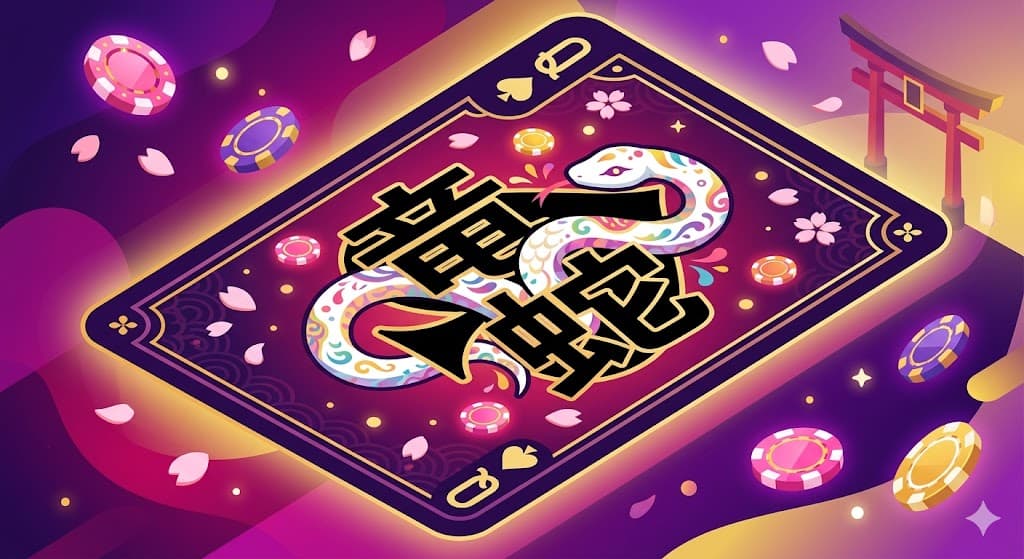
Spoiler-Free Cultural Analysis
This article explores the linguistic and folkloric background of the surname 蛇喰 (Jabami: literally "snake-eating") and the cultural weight Japanese tradition places on the snake as both sacred and ominous. No plot points, twists, or character arcs from 賭ケグルイ (Kakegurui: a Japanese gambling-themed manga and anime) are revealed beyond the protagonist's name and her arrival at the school.
Key Takeaways
- Japanese surnames are not interchangeable labels but small archives of geography, occupation, folklore, and household memory, and rare names like 蛇喰 (Jabami) almost always carry a story their bearers have been asked about their entire lives.
- The snake in Japanese culture sits in a far more ambiguous position than in the Western Garden-of-Eden tradition, functioning as a guardian deity of water, wealth, and rebirth as often as it functions as an omen of menace.
- When a Japanese work titles a character 蛇喰 (Jabami) and a rival calls her "a snake in my paradise," the line is borrowing a Western metaphor on purpose, and the friction between the two snake-traditions is part of what gives the moment its charge.
Key Terms Explained
- 名字 (Myōji) / Surname or Family Name — The Japanese family name. Most modern Japanese surnames were only formally registered after the Meiji Restoration in 1875, when commoners were legally required to adopt one.
- 稀少姓 (Kishōsei) / Rare Surname — A family name held by only a small number of households nationwide. Many derive from specific villages, geographic features, or old occupational lineages.
- 蛇 (Hebi or Ja) / Snake or Serpent — Read as hebi in everyday Japanese and as ja in compound words. The reading shift itself often signals whether the snake is being treated as creature or as symbol.
- 神使 (Shinshi) / Divine Messenger — An animal believed to serve a particular Shinto deity. The white snake is the 神使 of 弁財天 (Benzaiten: the goddess of water, music, and wealth).
- 判官贔屓 (Hōgan-biiki) / Sympathy for the Underdog — A culturally rooted Japanese tendency to favor the weaker or doomed party in a contest, originally tied to the tragic general 源義経 (Minamoto no Yoshitsune).
A Childhood Roll Call of Suzuki and Satō, and the First Name I Could Not Read
I grew up in 足立区 (Adachi-ku: a working-class ward in northeast Tokyo) in a 下町 (Shitamachi: an old downtown) neighborhood where the world was made almost entirely of common names. The kids on my block were 鈴木 (Suzuki), 佐藤 (Satō), 田中 (Tanaka), 高橋 (Takahashi). My elementary school roll call was a march through the most frequent surnames in the country, all of them readable at first glance, all of them so ordinary that the question of where a name came from never even arose.
 Morning roll call in a 1970s 足立区 elementary classroom — almost every name read out was one a child could spell on sight, and almost every name was shared by so many bearers that it asked nothing of anyone.
I did not meet a person whose name I could not immediately read until I was older and the world widened — through middle school field trips, through entering university, through working life. Only then did I start running into family names that required the other person to politely tell me, "It is read this way," before any conversation could continue. Each one of those introductions felt like a small door opening — almost always followed by a story about a village, an old occupation, a shrine, or a household legend that the bearer had grown up answering questions about.
The first time I saw the name 蛇喰 written on a page, my reaction was the same one the boys in the classroom in 賭ケグルイ have when their new transfer student introduces herself. It is a strange name. Two characters: 蛇 (snake) and 喰 (to eat, in a deliberately archaic and aggressive form). Together, literally, "snake-eater." That kind of construction does not feel chosen. It feels inherited from somewhere very old, the way certain village names still mark old battlegrounds, swamps, or shrines that have long since disappeared.
Related: My Happy Marriage and the Mukoyōshi System: When the Husband Takes the Wife's Name explains this in detail.
The Long Memory Inside a Japanese Surname
Most Japanese family names — including the ordinary ones I grew up surrounded by — are only about 150 years old as legal entities, even though the words inside them are often centuries older. Before 1875, most commoners did not officially carry a 名字 (Myōji). When the Meiji government required everyone to register one, families improvised: they took the name of their village, the river behind the house, the field they farmed, the trade their grandfather practiced, or in some cases the legend the household had quietly kept alive for generations.
 A Japanese family register page — every surname is a folded document of geography, occupation, and household legend.
This is why a Japanese surname directory reads like a folk encyclopedia. 山田 (Yamada) is "rice paddy by the mountain." 田中 (Tanaka) is "in the middle of the rice paddy." 鈴木 (Suzuki) traces back to a sacred-tree word from the 紀伊半島 (Kii Peninsula: a region in southern Wakayama and Mie prefectures with deep Shinto roots). The character 木 inside 鈴木 has nothing to do with bells; it is a phonetic borrowing that points back to ritual.
Related: Gohan Meaning: Why Dragon Ball's Saiyan Boy Is Named 'Cooked Rice' explains this in detail.
Why the Rare Names Survive
When a name is held by tens of thousands of families, no individual carrier needs to explain it. When a name is held by a few dozen households nationwide, every bearer becomes a kind of accidental historian. Whoever is named 蛇喰 has spent their life answering the question of where the name came from, and the answers usually involve one of three sources: a place name now lost, a household legend tied to a local shrine, or an occupational role connected to handling snakes — often in ritual or folk-medicinal contexts. None of these sources are flippant. None of them mean nothing.
A 稀少姓 (Kishōsei) of this construction — a kanji compound built around an animal verb — almost always points to folklore rather than geography. Compare it with surnames like 鵜飼 (Ukai: cormorant fishing) or 犬養 (Inukai: dog-keeper), where the household once held a specific role tied to that animal. By that logic, 蛇喰 most plausibly traces back to a household whose ancestors were associated, ritually or occupationally, with the serpent.
Related: My Hero Academia and the Quiet Cruelty of Japanese School Nicknames: How Deku Carries Two Insults at Once explains this in detail.
The Phonetic Weight of "Ja"
The reading 蛇 = ja, rather than the more familiar hebi, is itself part of the effect. As a child watching ゴジラ (Godzilla) and ガメラ (Gamera) and 巨人の星 (Kyojin no Hoshi: Star of the Giants), I picked up — long before I had any vocabulary for it — that certain heavy-voiced consonants at the start of a Japanese word carry weight and threat. Go, Ga, Ja. Compare 蛇 (ja) with 邪 (ja: meaning evil, wicked, malicious). They are different characters with different etymologies, but they share that low, hissing onset, and Japanese ears do not separate sound from connotation cleanly. Calling someone 蛇喰 with the ja reading rather than hebi reading is the difference between describing a snake and invoking one.
The Snake That Guards the Shrine, the Snake That Ruins the Garden
Here is where the cultural texture gets interesting, because the snake in Japanese tradition is genuinely not the snake in the Book of Genesis.
 A white snake guardian at a Benzaiten shrine — in Japanese tradition the serpent is more often a divine messenger than an intruder.
In 神道 (Shintō: the indigenous Japanese religion of kami worship), the snake is overwhelmingly a 神使 (Shinshi), a divine messenger. The white snake in particular is the messenger of 弁財天 (Benzaiten), the goddess of water, music, eloquence, and wealth. Shrines associated with her — and there are hundreds, often near ponds, rivers, or coastlines — preserve white snake imagery on votive plaques and in folk stories. To find a white snake in your storehouse was, traditionally, a sign that the household's fortunes were being protected, not that something had gone wrong.
There are also 蛇神 (Jashin: snake deities) tied to specific mountains, springs, and rice paddies. The connection to water is the deep one. A snake's body moves like flowing water; it appears and disappears the way streams do; it sheds its skin and returns. Agricultural communities that depended on irrigation read the serpent as the visible body of the water spirit, and water, in pre-modern Japan, was identical with survival.
The personal grain of this is hard to convey to readers raised on Western Christian iconography. When someone says "snake" to me as a Japanese person who grew up in 足立区, the image my mind reaches for first is not the tempter in Eden. It is the carved white snake on the side of a small shrine, the kind I used to walk past without noticing. Auspicious, watchful, faintly mysterious — but on the side of the household, not against it. The image of the snake as a guardian came to me long before I had any framework for the snake as an intruder.
Where the Western Snake Came From
The "snake in paradise" line that the student council president speaks in 賭ケグルイ is doing very deliberate cultural work. The biblical metaphor — the serpent as the breaker of an enclosed, perfect garden — is genuinely foreign to the older Japanese imagination. It enters Japan through translated Christian scripture in the 16th century, through Meiji-era Western literature, and then through 20th-century pop culture. By the time a contemporary anime invokes "a snake in my paradise," every Japanese viewer recognizes the shape of the metaphor instantly, because Japan has been bilingual in symbolism for over a century.
But the friction is still there. The school is named 百花王学園 (Hyakkaō Gakuen: literally "Hundred-Flower King Academy"), an artificial garden of privilege. The transfer student who walks into it carries a surname meaning "snake-eater." If you read that scene with only the Western frame, you get a clean Eden parable. If you read it with the Japanese frame, you also get something stranger: this snake might not be the destroyer of the garden. She might be the 神使 who has come because the garden was already corrupt and the deity has noticed.
That layered ambiguity — destroyer or messenger, ruin or revelation — is, I think, the actual reason the name 蛇喰 lands as hard as it does in the opening minutes. The work is not picking one tradition. It is letting both cohabit the same name.
Snakes Around Me Versus Snakes Inside Me
I have to be honest that I almost never saw a real snake as a child. Adachi-ku is dense, paved, and residential. The snake came to me first as a word, then as a kanji, then as a shape on a votive plaque, then as the brand name of the household 蛇口 (Jaguchi: water faucet — "snake mouth"), and finally as a creature in a textbook. Everything I associate with 蛇 was mediated through symbol before it was experienced through encounter.
I suspect this is true for most people raised in Japanese cities now. The snake we know is almost entirely a cultural construction — the one on the shrine, the one in the manga, the one in the year-of-the-snake New Year card. I was born in 1965, which makes me a 巳年 (Mi-doshi: a Snake Year in the twelve-year zodiac cycle). Once every twelve years the postal service reminds me of this, and that is roughly the depth of my conscious relationship with the animal itself.
This matters for how the name 蛇喰 reads to a domestic Japanese audience versus a foreign one. We are not reacting to the visceral image of a real snake. We are reacting to a kanji combination whose every component has been polished by centuries of folklore, religion, and language.
What Distance Has Taught Me About Names
I have lived outside Japan for many years now, and one of the small surprises of the experience is that I started paying attention to my own surname in a way I never did at home. The sound of it, the syllable count, whether English speakers can hear the long vowel correctly. In Japan, my surname was just one Japanese name among many. Outside Japan, it became — for the first time — a specific object, a string of sounds with a foreign profile.
That outsider lens is probably what has made me notice how much information a name like 蛇喰 actually carries. In daily Japanese life, a rare surname is mostly a small social hurdle: the read-aloud at the doctor's office, the awkward pause at the new workplace, the polite question from the bank teller. From a distance, the same name looks more like a folded document. Open it carefully and you find a household, a region, a folk tradition, a relationship to an animal, and an entire cosmology of what that animal meant to the people who first put the two characters together.
What modern Japan has not lost, I think, is the surname system itself — the kanji, the readings, the family lineages. They are administratively intact. What it has quietly let go of is the everyday consciousness of why a name carries what it carries. Most Japanese people I grew up with could not tell you what their own family name actually meant. The information is still there in the characters; the connection between the information and the carrier has thinned.
A work like 賭ケグルイ does something interesting with that thinning. By picking a name that almost no real family carries, and by leaning into the literal meaning of the characters, the work reactivates the older logic of Japanese naming, where a surname was a story the household stood inside. For the duration of the show, 蛇喰 is no longer just a label. It is a small folktale that walks into a classroom.
FAQ
Q: What does 蛇喰 (Jabami) mean as a Japanese surname?
A: 蛇喰 combines 蛇 (hebi / ja: snake) and 喰 (kuu / bami: an archaic and emphatic form of 'to eat'). Read together as 'Jabami,' the surname literally means 'snake-eater.' It exists in Japanese surname databases as an extremely rare family name, almost never encountered in daily life. The structure resembles an old place-name or clan name — the kind that points back to a village's relationship with a local snake, possibly a guardian, possibly a danger, possibly a totem. In Kakegurui the name is chosen for exactly that weight.
Q: Is 蛇喰 (Jabami) actually a real Japanese surname?
A: It exists in Japanese surname databases as an extremely rare family name, but it is not common in everyday life. Many viewers' first encounter with the name is through 賭ケグルイ itself, and most Japanese readers experience it the way the in-story classmates do — as striking, archaic, and slightly otherworldly.
Q: Does the name 蛇喰 mean the family literally ate snakes?
A: Almost certainly not in any direct sense. Surnames built from animal-and-verb compounds usually point to ritual, occupational, or folkloric associations rather than literal household practice. The most plausible reading is that an ancestor's role or local legend involved snakes in some way that an outside observer encoded into the family name.
Q: Why does the snake mean such different things in Japanese stories versus Western stories?
A: Japanese snake symbolism developed from agricultural Shinto traditions where the snake was a water spirit and divine messenger, particularly tied to the goddess 弁財天. Western snake symbolism developed primarily through the Genesis tradition, where the serpent is the agent of the Fall. Modern Japanese works often use both at once, which is why an anime can call its protagonist 蛇喰 (snake-eater, in the older guardian-and-messenger frame) while also having a rival call her "a snake in my paradise" (in the Edenic, intrusive-evil frame).
Key Insights to Remember
- A rare Japanese surname is not a quirk; it is a compressed history. Where a common name has been worn smooth by ten thousand bearers, a 稀少姓 (Kishōsei) like 蛇喰 still carries the original folklore in its kanji because too few hands have polished it. The strangeness modern listeners feel is the original meaning still being visible.
- The Japanese snake and the Western snake are different animals living inside the same word, and watching anime in translation flattens this difference more than viewers tend to realize. Once you know that 蛇 in Japanese tradition is as often a guardian of households and water as it is an omen of harm, scenes that read as straightforward "evil temptress" arcs in English suddenly carry a quieter second possibility: the messenger has come because the garden was already wrong.
- Names in Japan are administratively secure but emotionally thinning. The kanji are still there, the lineages still register, but the old habit of knowing what your family name actually said about your ancestors has weakened in city life. Works that take a forgotten naming logic and put it back into a character — by simply choosing a 稀少姓 with literal force — quietly do the work of reminding viewers that a Japanese surname was once meant to be read, not just pronounced.
Sources
- Japanese Surnames and Their Origins — Encyclopedia of Japan, Kodansha
- The White Snake and Benzaiten in Japanese Folk Religion — Onmark Productions A-to-Z Photo Dictionary of Japanese Buddhism
- History of the Family Name System in Japan — National Diet Library Reference
- Shinto Animal Messengers (Shinshi) — Encyclopedia of Shinto, Kokugakuin University
- Kakegurui Official Anime Page — Netflix
About the author

Spoiler-free cultural deep-dives into anime, manga & live-action Japanese drama
- ●Tokyo-born, 3rd-generation Edokko (江戸っ子)
- ●Lifelong manga reader & anime viewer since the kaiju era
- ●Writes from outside Japan — distance as a cultural lens
- ●Spoiler-free · sourced · Kanji + Romaji + English
A Tokyo-born, 3rd-generation Edokko writer who has spent years living outside Japan. I use the anime, manga, and live-action Japanese drama you already love as a doorway into the folklore, language, religion, and everyday history behind them — written so even first-time fans can follow along, with sources for every claim.
Enjoy this article?
Get the next spoiler-free cultural deep-dive straight to your inbox.
Related Articles
Chihayafuru and the World of Competitive Karuta: The Speed, Silence, and Poetry Behind Japan's Fiercest Card Game
How Chihayafuru reveals competitive karuta, where poems from the 13th-century Hyakunin Isshu meet athletic reflexes and matches turn on hundredths of a second.
7/28/2026

Chainsaw Man and Why Every Japanese Dog Is Named Pochi: The Hidden History Behind Pochita
How Chainsaw Man's Pochita carries the history of Pochi, the Meiji-era nickname that became Japan's default dog name — and what that says about loyalty.
7/11/2026

Naruto and Yakuwarigo: The Real Meaning of Dattebayo and Why Translators Invented Believe It!
How Naruto's famous verbal tic dattebayo opens the door to yakuwarigo, Japan's role language system, and why English translators had to invent Believe it!
7/4/2026

Evangelion's Angels and Japan's Decorative Christianity
How Neon Genesis Evangelion's enemies are 使徒 (apostle) in Japanese but Angel in English — and how Japan wears Christianity as aesthetic, not faith.
7/3/2026

Solo Leveling and Te-ate: Why the Japanese Word for Treatment Means Placing the Hand
How Solo Leveling's healing magic opens onto te-ate, the Japanese word for treatment whose root is the simple act of placing a hand on a wound.
6/26/2026
Detective Conan and the -kun You Didn't Expect: How Japanese Honorifics Really Work
How Detective Conan reveals that the honorific -kun is not male-only — an inspector calls teenage Ran 'Ran-kun', a hierarchy English subtitles quietly drop.
6/11/2026