Shangri-La Frontier and Ittekimasu: A Promise to Come Back
How a quiet morning farewell in Shangri-La Frontier reveals the Japanese genkan ritual, and why saying ittekimasu carries a promise to come home.

Tokyo-born, 3rd-generation Edokko · writing on Japanese culture from outside Japan
Spoiler-Free Cultural Analysis
This article explores the linguistic and cultural roots behind a single quiet domestic moment in Shangri-La Frontier's first episode. No plot spoilers — only atmosphere, daily-life detail, and the long history packed into one Japanese phrase.
Key Takeaways
- The Japanese pair 行ってきます(Ittekimasu) and 行ってらっしゃい(Itterasshai) is not "goodbye" — it is a verbal promise of return, structurally encoded in the verb itself.
- The 玄関(Genkan: traditional Japanese entryway) functions as a small ritual threshold, with the shoe-removal step and the paired greeting working together as a daily passage between inside and outside worlds.
- English subtitles routinely flatten this exchange into "see you" or "have a good day," and in doing so they remove the round-trip contract — the hidden meaning that the speaker will come back.
Key Terms Explained
- 行ってきます (Ittekimasu) / "I'm going and coming back" — A farewell phrase whose literal structure means "I will go and return," not "goodbye."
- 行ってらっしゃい (Itterasshai) / "Go and come back" — The matching reply, an honorific imperative form telling the leaving person to go and return safely.
- 玄関 (Genkan) / Japanese Entryway — The recessed entrance space inside a Japanese home where shoes are removed; functions as the boundary between outside and inside.
- 三和土 (Tataki) / Lower Entryway Floor — The lower hard-floored section of the genkan where shoes stay; the "outside" half of the threshold.
- 上がり框 (Agarikamachi) / Step-Up Edge — The wooden lip separating tataki from the raised interior floor; the literal step from outer world to home.
A Mother's Delayed Reply, and the Door That Already Closed
The moment in Shangri-La Frontier's first episode that lodged in my head had nothing to do with games. The protagonist, 楽郎 (Rakuro: a young クソゲーハンター/"bad-game hunter"), walks out the front door. A beat passes. His mother, 永華 (Eika: Rakuro's mother), busy with something in the back of the house, finally catches up to the moment and quietly says いってらっしゃい (Itterasshai: "go and come back"). He is already gone. She says it anyway.
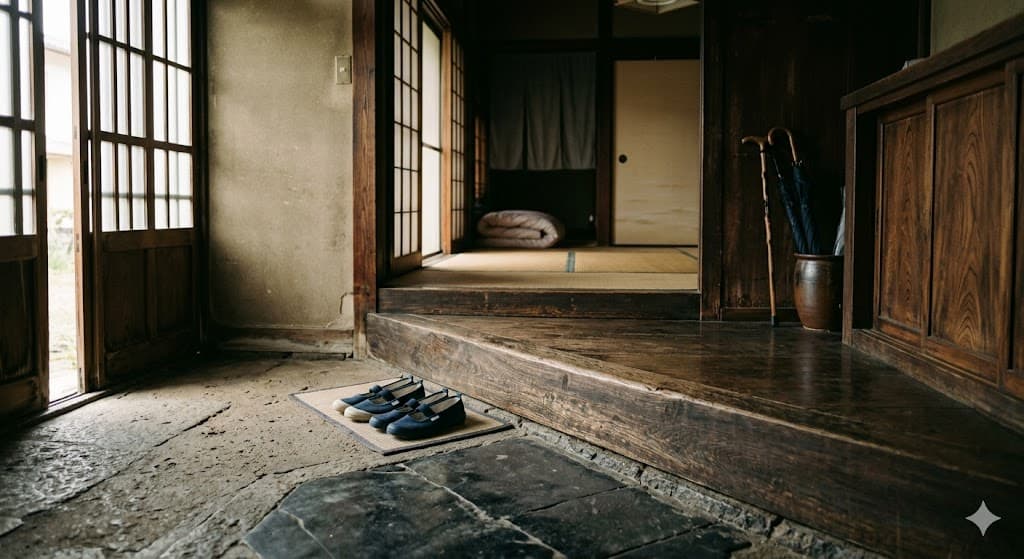
 The genkan is where the morning farewell happens — and where the body crosses from inside to outside in a single step.
It is the kind of scene most viewers will not even register. There is no music swell, no plot weight, no dramatic framing. The episode is otherwise about a young man who has just finished beating a notoriously broken video game and is on his way to school. The mother's late-arriving farewell is pure background texture.
But that small moment is doing something the English subtitles cannot quite carry. She is not saying "have a good day." She is completing a ritual — and the ritual matters even when only half of it is performed in time.
I grew up in a household where the morning farewell was not a strong habit. In our single-story house in 足立区(Adachi-ku: a working-class ward of Tokyo), some mornings my family said it, some mornings the words drifted out of a back room and met the closing door. I never thought about why we still said it at all. Watching that scene as an adult, decades after leaving Japan, I recognized something I had never had words for as a child: even in homes where the words come out late, or quietly, or to an empty hallway, the structure underneath is doing real work.
The Verb That Promises a Return
The word 行ってきます(Ittekimasu) is built from two verbs glued together: 行く(iku: to go) and 来る(kuru: to come). The literal grammar is "I go and come back." Not "I leave." Not "farewell." Not anything that resembles the English "goodbye," which is etymologically a contraction of "God be with you" — a blessing for separation.
 The verb structure 行く + 来る encodes a round trip — the leaving phrase contains its own return.
Japanese does the opposite. The leaving phrase contains its own return.
The reply, 行ってらっしゃい(Itterasshai), is the imperative honorific form built on the same skeleton: "go and come (back)." The two phrases lock together as a closed loop. One person announces the round trip; the other person ratifies it. The contract is sealed at the threshold.
This is why English subtitles struggle. "See you" is casual; it carries no weight. "Have a good day" is well-wishing but not structural. Neither one carries the embedded promise that the leaving person will return. Watch any anime episode with a school-morning scene and notice how the subtitle line collapses the meaning every single time. The original Japanese is doing two jobs at once — farewell and return-pledge — and English usually only translates the farewell half.
The Postwar Settling of the Phrase
The pair as we know it today is older in some forms and younger in others. Variants of "going and coming back" greetings appear in Edo-period domestic life, but the modern fixed pair — said reliably at the genkan, in this exact form — settled into broad household use through the 20th century, with the upheaval of the early Showa years and the postwar period reinforcing its emotional weight. One recurring popular link ties its widespread daily use to the anxieties around the 関東大震災(Kanto Daishinsai: Great Kanto Earthquake of 1923), when the simple act of leaving home suddenly carried no guarantee of return. Whether that specific causal link is fully provable or partly folk-memory, the phrase did harden into its current form during a stretch of Japanese history when "I will come back" was something families needed to say out loud.
The Genkan as a Threshold
The other half of this ritual is spatial. A traditional Japanese 玄関(Genkan) is not just a doorway — it is a small architectural transition zone. There is a 三和土(Tataki: the lower hard-floored section) where shoes belong. There is an 上がり框(Agarikamachi: the raised wooden lip) you step up onto when you enter the house proper. The two levels create a literal step, a physical altitude change between "outside person" and "inside person."
The word 玄関 itself has Buddhist origins, originally referring to the gate to deeper learning in Zen monasteries — the entrance to the mysterious. Domestic architecture borrowed it. The home's entryway became conceptually a place where one world ends and another begins.
The genkan functions as a kind of soft boundary, almost a 結界(Kekkai: a ritual barrier). You do not need to believe in spirits for this to be true in practice. The shoe-removal alone is a daily declaration: the dust of the street stops here. The genkan-line is reinforced every time someone crosses it.
The greeting pair maps exactly onto this geometry. Ittekimasu is said while still on the inside, with one foot about to cross out. Itterasshai is said by the person who is staying. The threshold is verbally marked at the moment the body crosses it. Architecture and language doing the same work in the same instant.
In our old 足立区 house, I now realize, the genkan was already lined with the everyday objects of that boundary. There was a small wooden box just outside the door where the milk delivery man left glass bottles every morning. Inside, the 三和土 held the umbrella stand, the 下駄箱(Getabako: shoe cabinet), and — pushed against the wall but very much in the inside-outside zone — my baseball glove and soccer ball. The genkan was not just the place where shoes came off. It was where the household kept all the things that belonged to neither world fully.
What the Subtitle Cannot Carry
The Shangri-La Frontier scene is interesting precisely because Eika says her line late. Rakuro is already past the door. The contract is half-broken — the leaving phrase was said, but the receiving phrase missed its window. And yet she still says it, quietly, almost to herself.
 A late itterasshai said to a closed door is not a failed ritual — it is a completed one performed at the wrong tempo.
This is the part that fascinates me about Japanese domestic ritual. The words are not really for the other person in that moment. They are for the structure. Saying itterasshai even after the door has closed is a way of completing the loop on her end, regardless of whether he heard it. The ritual gets finished because rituals are how the day stays held together.
I have lived outside Japan for many years now, in a place where the architecture is different and the language at the door is in English. There is no genkan in my apartment. The door opens directly onto a shared corridor; beyond the corridor is the elevator hall. There is no 三和土 and no 上がり框 — no built step that says "you are now leaving the home." Shoes come off, sometimes, but the architecture is not asking me to perform a transition. And the language at the door has shifted to "I'm leaving" or "see you later," which carry no return-pledge whatsoever.
The phrase ittekimasu has quietly fallen out of my daily life. Not because I made a decision, but because the stage on which it used to be performed has disappeared. The door has no threshold. The reply has no architecture to lean on. I noticed this only in retrospect — that the paired phrase had been a small ritual marking the boundary between the inside of a home and the outside world, and once the boundary itself dissolved into a corridor, the words had no place left to land.
What I notice from a long distance is that the Japanese pair was doing something English does not have a clean equivalent for. It was not just politeness. It was a daily, low-stakes performance of "I will come back to this house, and you will be here when I do." Said every morning. Said even when no one heard. Said even by a mother who only caught up to the moment after the door had closed.
That is the layer underneath Eika's late, quiet line. She is not behind on her dialogue. She is finishing a contract.
FAQ
Q: Is "ittekimasu" really untranslatable into English?
A: Not untranslatable, but routinely undertranslated. English options like "see you," "have a good day," or "I'm off" each capture a fragment, but none of them encode the verb structure 行く+来る (go + come back) that is the whole point of the Japanese phrase. The closest faithful gloss is something like "I'm going and I will come back," which is awkward as everyday speech but accurate as meaning.
Q: Do all Japanese families actually say this every morning?
A: Less universally than anime suggests. Households vary widely. Some families perform the full pair every day at the genkan; others say it inconsistently, or call it from another room, or skip it entirely on some mornings. The phrase is a strong cultural default rather than a strict daily rule, and it is fully alive even in homes where it is sometimes only half-spoken.
Q: Is it rude not to reply with "itterasshai"?
A: Not rude in a sharp sense, but noticeable. Because the pair is structurally a question-and-answer (the leaving phrase asks, the staying phrase confirms), failing to reply leaves the contract dangling. Most Japanese speakers will reply at least under their breath, even after the door has closed — exactly the situation Shangri-La Frontier shows on screen.
Key Insights to Remember
- The English subtitle is not the meaning. When subtitles render "ittekimasu / itterasshai" as "see you / have a good day," they are giving you the social register but stripping out the round-trip pledge built into the verbs. The Japanese phrase contains a return; the English replacement does not.
- The genkan is not just a doorway — it is a ritual machine. The step down to the tataki, the step up onto the agarikamachi, the shoe transition, and the spoken pair all run on the same logic: marking a clean boundary between the inside world and the outside world. Remove any one of those elements and the ritual still functions, but quieter and weaker.
- The phrase survives even in incomplete performances. The Shangri-La Frontier scene works because it shows the ritual half-broken and still doing its job. A late "itterasshai" said to a closed door is not a failed ritual; it is a completed one performed at the wrong tempo. That tells you the ritual was never really about being heard. It was about being said.
Sources & References
- Genkan — The Japanese Entryway — Tofugu
- Ittekimasu and Itterasshai: A Japanese Goodbye — Tofugu
- Japanese Greetings: A Cultural Guide — Nippon.com
- The Cultural Significance of the Genkan — Japan House London
- Shangri-La Frontier Anime Official Site — Shangri-La Frontier Production Committee
About the author

Spoiler-free cultural deep-dives into anime, manga & live-action Japanese drama
- ●Tokyo-born, 3rd-generation Edokko (江戸っ子)
- ●Lifelong manga reader & anime viewer since the kaiju era
- ●Writes from outside Japan — distance as a cultural lens
- ●Spoiler-free · sourced · Kanji + Romaji + English
A Tokyo-born, 3rd-generation Edokko writer who has spent years living outside Japan. I use the anime, manga, and live-action Japanese drama you already love as a doorway into the folklore, language, religion, and everyday history behind them — written so even first-time fans can follow along, with sources for every claim.
Enjoy this article?
Get the next spoiler-free cultural deep-dive straight to your inbox.
Related Articles
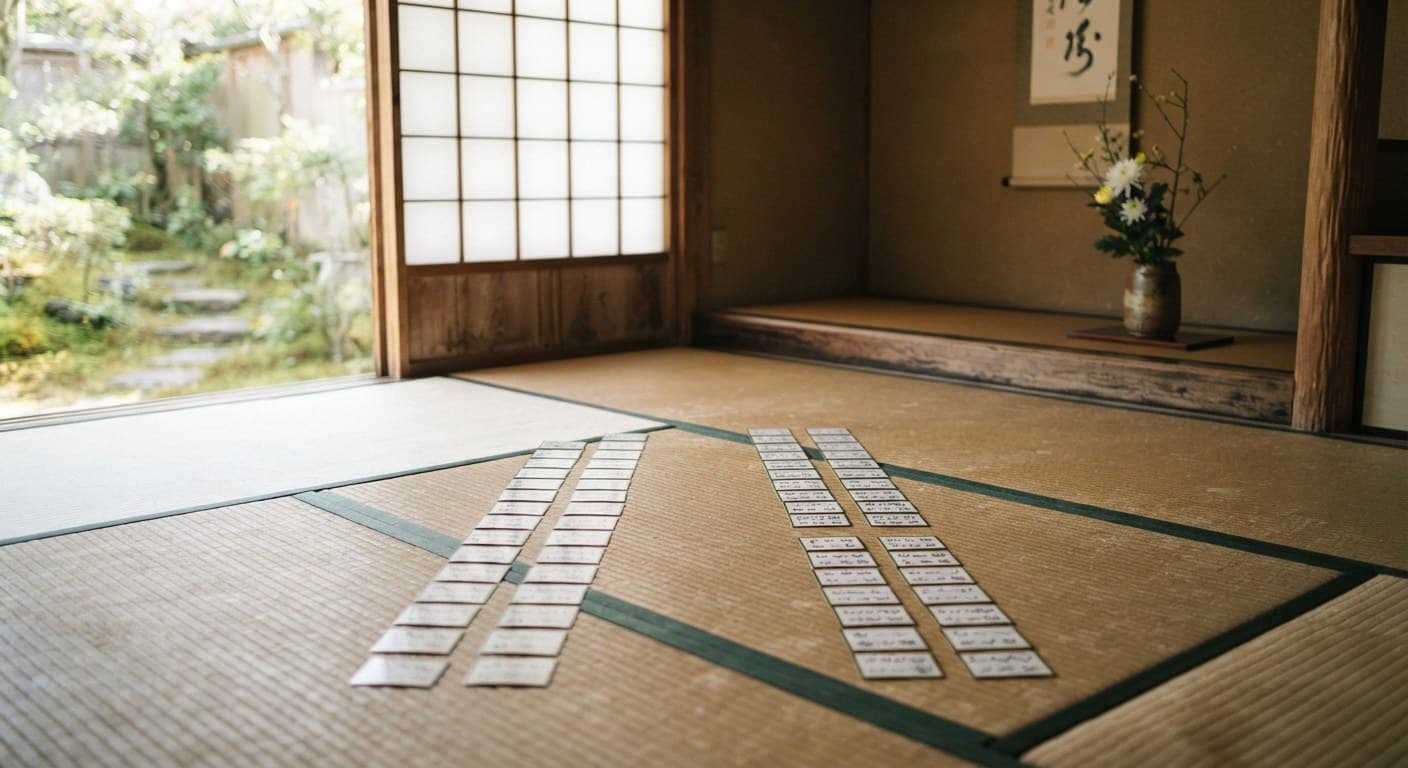
Chihayafuru and the World of Competitive Karuta: The Speed, Silence, and Poetry Behind Japan's Fiercest Card Game
How Chihayafuru reveals competitive karuta, where poems from the 13th-century Hyakunin Isshu meet athletic reflexes and matches turn on hundredths of a second.
7/28/2026
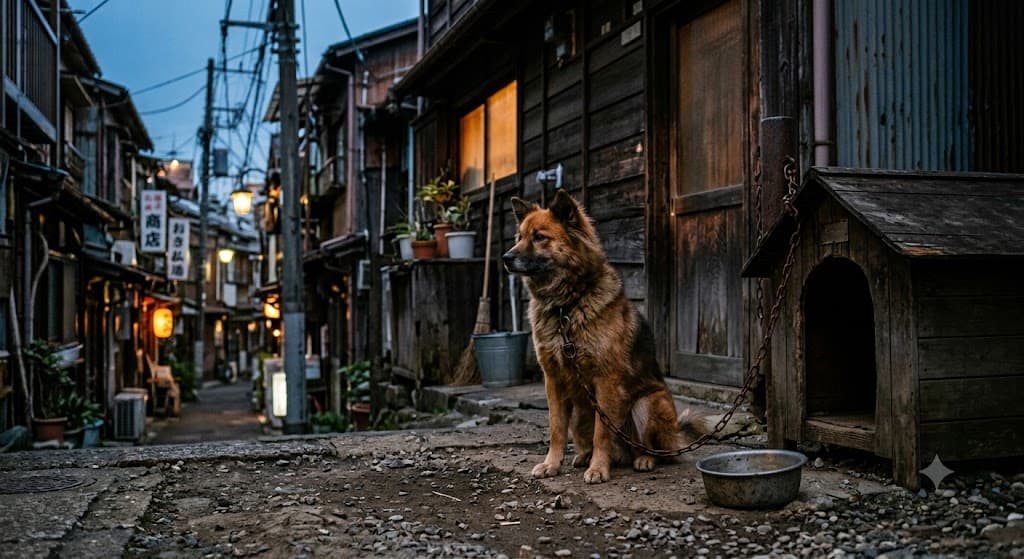
Chainsaw Man and Why Every Japanese Dog Is Named Pochi: The Hidden History Behind Pochita
How Chainsaw Man's Pochita carries the history of Pochi, the Meiji-era nickname that became Japan's default dog name — and what that says about loyalty.
7/11/2026

Naruto and Yakuwarigo: The Real Meaning of Dattebayo and Why Translators Invented Believe It!
How Naruto's famous verbal tic dattebayo opens the door to yakuwarigo, Japan's role language system, and why English translators had to invent Believe it!
7/4/2026

Evangelion's Angels and Japan's Decorative Christianity
How Neon Genesis Evangelion's enemies are 使徒 (apostle) in Japanese but Angel in English — and how Japan wears Christianity as aesthetic, not faith.
7/3/2026

Solo Leveling and Te-ate: Why the Japanese Word for Treatment Means Placing the Hand
How Solo Leveling's healing magic opens onto te-ate, the Japanese word for treatment whose root is the simple act of placing a hand on a wound.
6/26/2026
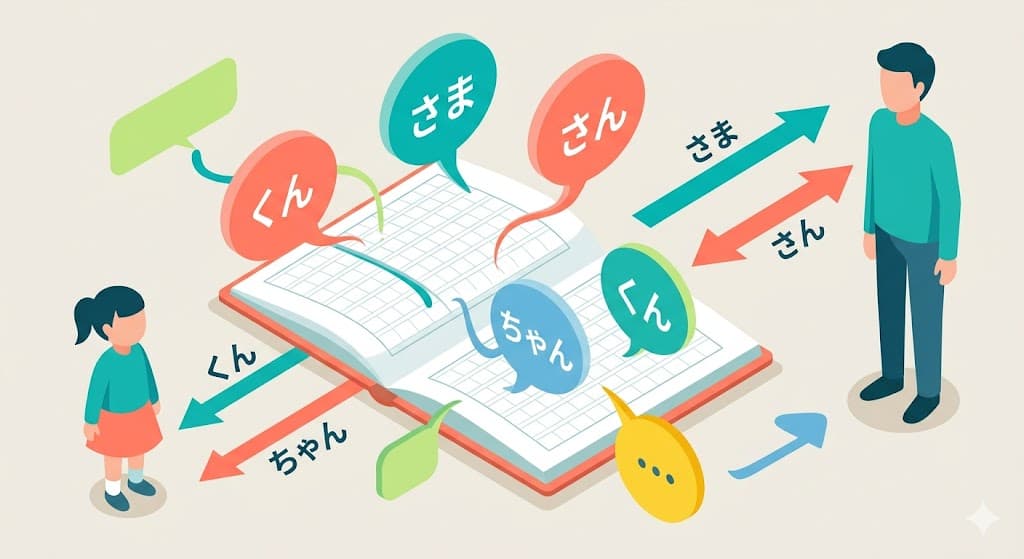
Detective Conan and the -kun You Didn't Expect: How Japanese Honorifics Really Work
How Detective Conan reveals that the honorific -kun is not male-only — an inspector calls teenage Ran 'Ran-kun', a hierarchy English subtitles quietly drop.
6/11/2026