Assassination Classroom and Haiku Kigo: Seasons in One Word
How Assassination Classroom's poetry lesson opens onto kigo, the seasonal words haiku relies on, and the saijiki that turns them into a calendar in language.

Tokyo-born, 3rd-generation Edokko · writing on Japanese culture from outside Japan

Spoiler-Free Cultural Analysis
This article explores the real linguistic and cultural rules behind the haiku and tanka lesson woven into Assassination Classroom's first episode. Only the show's poetry-class framing and its next-episode primer on Japanese verse forms are referenced — no plot spoilers, no character endings.
Key Takeaways
- 俳句(Haiku) and 短歌(Tanka) are not just two lengths of the same poem; they are two different verse forms with different histories, and length is what separates them. A 季語(Kigo: seasonal word) is what separates haiku from 川柳(Senryū: humorous 5–7–5 verse), which uses the same length without one.
- A 三日月(Mikazuki: crescent moon) looks like a shape with no season, but in the haiku tradition it already means autumn — seasonal almanacs list it as a mid-autumn word, and the plain word 月(Tsuki: moon) is an autumn word too.
- Japanese seasonal vocabulary is not a literary ornament added to nature; it is the other way around. The 季語 system is a long-accumulated calendar in language, and works like Assassination Classroom show how even a science-fiction premise can lean on that calendar to feel authentically Japanese.
Key Terms Explained
- 俳句 (Haiku) / 17-Syllable Verse — A short Japanese poem in a 5–7–5 syllable pattern, traditionally requiring a seasonal word.
- 短歌 (Tanka) / 31-Syllable Short Poem — An older Japanese form in a 5–7–5–7–7 pattern, the historical parent of haiku, with no requirement for a seasonal word.
- 季語 (Kigo) / Seasonal Word — A word or phrase formally associated with a specific season, catalogued in 歳時記(Saijiki: a seasonal almanac for poets).
- 歳時記 (Saijiki) / Seasonal Almanac — The reference book listing accepted seasonal words and example poems, organized by season.
- 三日月 (Mikazuki) / Crescent Moon — Literally "three-day moon"; a slim crescent visible a few days after the new moon, listed in haiku almanacs as a mid-autumn seasonal word, originally the thin moon of the third night of the eighth lunar month.
A Boy Who Reached Adulthood Without Looking Up
The first time anyone made me memorize a haiku, I was a kid in a Tokyo classroom reciting 古池や蛙飛びこむ水の音(Furuike ya kawazu tobikomu mizu no oto: an old pond — a frog jumps in — the sound of water) out loud with thirty other voices. The teacher cared about the rhythm. Whether we understood the season inside the poem was another matter, and at that age I did not.
 A crescent moon visible in daylight — the same striking image that opens the haiku lesson in Assassination Classroom.
That came back to me watching the opening episode of Assassination Classroom. In the middle of class, a teacher's voice continues a grammar lesson while a student's mind drifts to the moon — now permanently shaped into a crescent — visible in broad daylight outside the window. The next-episode preview then quietly delivers the textbook explanation: a haiku is 5–7–5 with seventeen syllables, a short poem is 5–7–5–7–7 with thirty-one, and the one with a seasonal word is haiku.
What struck me, watching that scene as an adult living far from Japan, was something the show does not say out loud. The students are looking at a 三日月(Mikazuki: crescent moon). Beautiful image. Visually arresting. And yet, by the rules of classical haiku, a crescent moon is not just a shape. It is already a season: the 歳時記 files it under mid-autumn.
I grew up as a 江戸っ子(Edokko: a third-generation Tokyoite) in a dense 下町(Shitamachi: working-class downtown) neighborhood where the houses pressed against each other and the sky above the alleys was a thin vertical strip. I have very few memories of looking up at the moon. When the words 三日月 came at me as a child, the first thing my mind reached for was not lunar beauty. It was 伊達政宗(Date Masamune: a famous warlord) and the crescent on his helmet. A blade shape. A samurai silhouette. Not a season at all.
That gap — between "the moon is showing" and "this is autumn" — is exactly the gap haiku exists to bridge.
Related: March Comes in Like a Lion and Tsukimi: Why Japan Watches the Moon With Rice Dumplings and Pampas Grass explains this in detail.
How a Seventeen-Syllable Form Became a Calendar
To understand how a single 三日月 can carry a whole season, you have to look at where haiku came from and what it agreed to carry.
 A 歳時記 (saijiki) page — the seasonal almanac that catalogues which words belong to which time of year.
From 短歌 to 俳諧 to 俳句
Long before haiku existed, Japan had 短歌(Tanka: 5–7–5–7–7 short poem), the dominant verse form of the imperial anthologies. A tanka is one continuous emotional arc, thirty-one syllables long. There is no requirement for a seasonal word, although seasonal imagery has been used inside tanka since the 万葉集(Man'yōshū: Japan's oldest poetry anthology, 8th century).
Out of tanka came 連歌(Renga: linked verse), a group game where poets chained 5–7–5 and 7–7 fragments together, each linking to the previous one through clever associations. In renga, a rule emerged: the opening verse, called the 発句(Hokku: opening verse), had to indicate the season. The party gathered to compose; the host's seasonal cue grounded everyone in time and place.
By the 江戸時代(Edo jidai: Edo period, 1603–1868), poets like 松尾芭蕉(Matsuo Bashō), 与謝蕪村(Yosa Buson), and 小林一茶(Kobayashi Issa) elevated that opening verse — the 発句 — into a free-standing art. By the late 19th century, 正岡子規(Masaoka Shiki) renamed the standalone form 俳句(Haiku). The 季語 requirement came along with it as part of the inheritance from renga.
I came to those names not from textbooks first but from落語(Rakugo: traditional comic storytelling) and 時代劇(Jidaigeki: period dramas) on television. As a downtown kid, Bashō and Issa felt less like literary saints and more like neighbors from the past — figures whose names floated through 江戸(Edo: old Tokyo) the same way a shopkeeper's name might float through the alleys.
Why the Season Matters: 季語 as a Compressed Calendar
The Japanese poetic tradition treats nature's calendar as a shared library. A 歳時記(Saijiki: seasonal almanac) lists hundreds of approved seasonal words, each tied to a specific time of year, with example poems showing how the word has been used.
- 桜(Sakura: cherry blossoms) — spring
- 蝉(Semi: cicadas) — summer
- 赤とんぼ(Akatonbo: red dragonflies) — autumn
- 木枯らし(Kogarashi: cold winter wind) — winter
The point is not that these words refer to the season. The point is that, inside a haiku, the word imports the season. The seventeen-syllable poem cannot afford to describe the weather, the date, the temperature, the angle of light. It points to one word, and the word brings the season with it.
This is why a poem cannot simply mention something natural and call itself a haiku. The image has to be one that the tradition has agreed will carry a season.
Why 三日月 Already Means Autumn
Now the crescent moon.
A 三日月 is a real, vivid, recognizable image, and the moon is visible all year. A crescent in April and a crescent in October are physically the same shape. So you might expect the word to carry no season at all.
The haiku tradition decided otherwise. In haiku, the plain word 月(Tsuki: moon) means the autumn moon, because autumn is when the moon has been admired most. 三日月 follows it: the 歳時記 lists it as a mid-autumn word, first meaning the thin moon on the third night of the eighth month in the old lunar calendar. 名月(Meigetsu: harvest moon) and 月見(Tsukimi: moon-viewing) are autumn words too. A moon in another season has to be named as one: 朧月(Oborozuki: hazy moon) carries spring, and 寒月(Kangetsu: winter moon) carries winter.
So a 5–7–5 about a crescent moon is, by default, an autumn poem. A poet who wants a spring crescent has to work against that default with another word.
This is the rule sitting underneath the Assassination Classroom scene. A crescent moon, made permanent and visible in broad daylight, is a striking science-fiction image. And the show is careful in its next-episode primer to say that what makes a haiku a haiku is the 季語. The shape of the moon is only an image. The almanac is what turns it into a season.
What a Tropical Climate Does to a Poet's Ear
For more than a decade now I have lived outside Japan, in a place where the year has a wet season and a dry one and not much else. There is no 桜. There is no 木枯らし. There are no 赤とんぼ. The cicadas, when they come, do not announce summer because summer never left.
 The four-season cycle that the kigo system encodes — a calendar Japanese poets inherited rather than invented.
Living that way did something I did not expect. It made me notice how dense the Japanese seasonal vocabulary actually is. In Japan, I never thought about it. The four seasons were so obvious that the words for them felt like air. Out here, with the seasonal categories collapsed into two, I started to realize that 季語 is not a quaint literary rule. It is a record of what a four-season climate gave to a language over a thousand years.
The 歳時記 is essentially a thick calendar pretending to be a dictionary. It says: in early spring, this happens; in late spring, that happens; this insect appears in this month; this wind blows in that month. A haiku poet does not invent the season. The poet pulls one word from this shared calendar and lets the seventeen syllables do the rest.
I have also come to understand why a crescent moon is so tempting to readers outside Japan, and why anime in particular reaches for it. The crescent reads cleanly across cultures: mystery, change, threat, magic. It does work in English the way a haiku 季語 does in Japanese. In Japanese, though, the crescent has made one more agreement: it carries a time of year. A reader abroad sees mystery. A reader of haiku sees mystery and mid-autumn at once.
What modern Japan is quietly losing, I think, is not haiku itself. The form is taught, recited, and even competed in. What is fading is the lived seasonal knowledge that gave the 季語 its weight. Children in air-conditioned apartments do not always know which insect belongs to which month. When that intuition thins, the seventeen syllables still scan, but the season inside the poem becomes a vocabulary item rather than a memory.
FAQ
Q: What is the actual difference between haiku and tanka?
A: Haiku is 5–7–5 (17 syllables) and traditionally requires a 季語(Kigo: seasonal word). Tanka is 5–7–5–7–7 (31 syllables) and does not require a seasonal word, though it often uses seasonal imagery. Tanka is the older, parent form; haiku grew out of the opening verse of group-composed linked poetry. The form that keeps haiku's 5–7–5 length but needs no seasonal word is 川柳(Senryū: humorous verse).
Q: Are syllables in Japanese the same as syllables in English?
A: Not exactly. Japanese counts 音(On: sound units, also called morae), where each kana character normally counts as one unit. The English word "haiku" is two syllables but three on (ha-i-ku). When teachers say "5-7-5 syllables" in English, they are using a rough equivalent.
Q: Can a modern haiku break the seasonal-word rule?
A: Yes. There is a recognized form called 無季俳句(Muki Haiku: seasonless haiku) that deliberately omits the 季語. Many modern poets, especially in the 20th and 21st centuries, write this way. But the traditional definition still treats the seasonal word as essential, and most school-textbook haiku are taught with that rule intact.
Key Insights to Remember
-
The form is not the poem. Five-seven-five syllables describe the container, not the content. The content is a season caught in a single recognized word, and the seventeen syllables exist to give that word room to land. This is why translation into English so often loses the haiku effect — the syllable count survives the trip; the seasonal almanac does not.
-
Japanese poetry treats nature as a shared library, not a private observation. A poet does not invent that cherry blossoms mean spring. A thousand years of poets have already agreed. The reader meets the poem already knowing what the word will do, and the poet's job is to place the agreed-upon word in an unexpected line. This is closer to working with a deck of cards than to expressing personal feeling.
-
Haiku is the visible tip of a much older seasonal mind. Long before haiku, tanka and renga had already trained Japanese readers to feel time through nature words. When Assassination Classroom uses a class on poetry to introduce a permanently crescent-shaped moon, it is not just being playful — it is putting a science-fictional fracture into the very calendar that haiku is built to honor. In haiku terms, a moon stuck as a crescent is a sky stuck in mid-autumn — a calendar that can no longer turn.
Sources
About the author

Spoiler-free cultural deep-dives into anime, manga & live-action Japanese drama
- ●Tokyo-born, 3rd-generation Edokko (江戸っ子)
- ●Lifelong manga reader & anime viewer since the kaiju era
- ●Writes from outside Japan — distance as a cultural lens
- ●Spoiler-free · sourced · Kanji + Romaji + English
A Tokyo-born, 3rd-generation Edokko writer who has spent years living outside Japan. I use the anime, manga, and live-action Japanese drama you already love as a doorway into the folklore, language, religion, and everyday history behind them — written so even first-time fans can follow along, with sources for every claim.
Enjoy this article?
Get the next spoiler-free cultural deep-dive straight to your inbox.
Related Articles
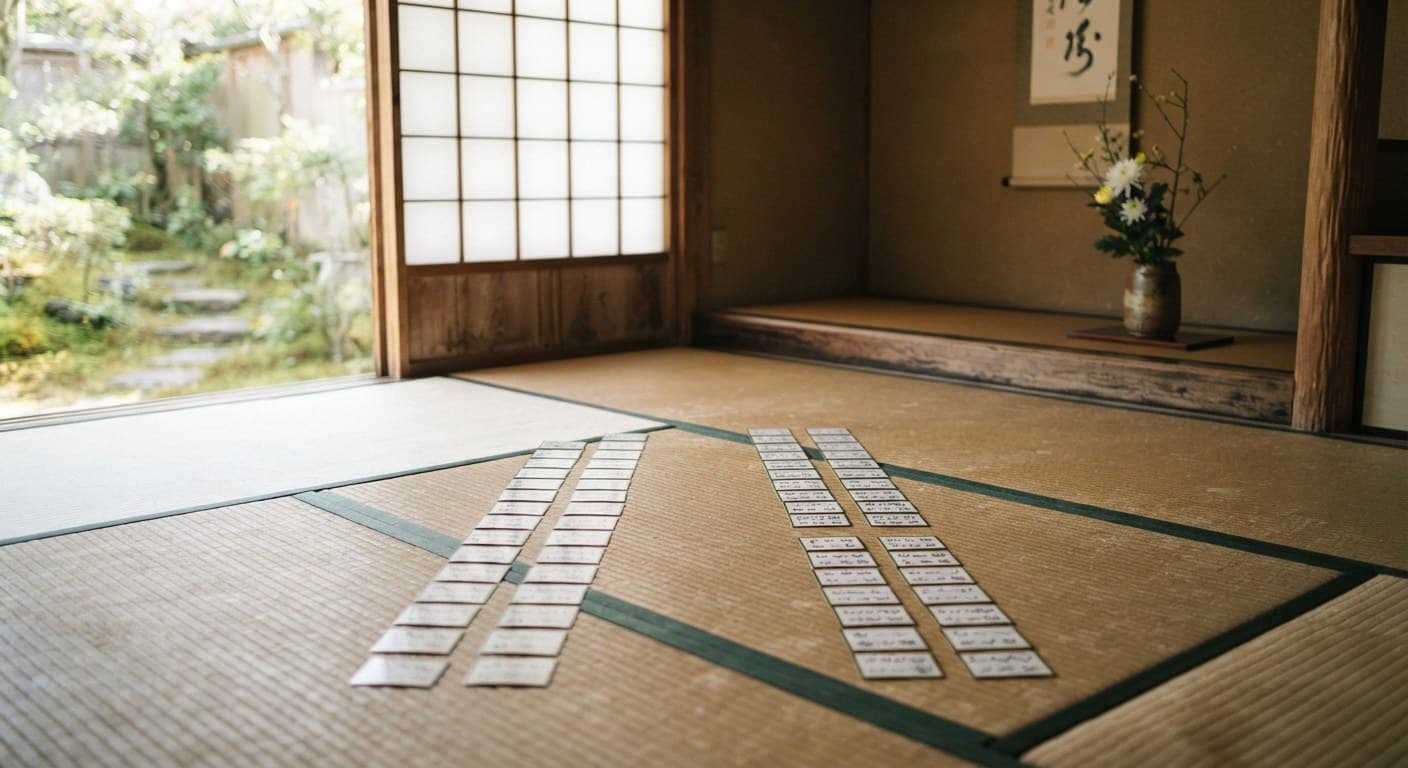
Chihayafuru and the World of Competitive Karuta: The Speed, Silence, and Poetry Behind Japan's Fiercest Card Game
How Chihayafuru reveals competitive karuta, where poems from the 13th-century Hyakunin Isshu meet athletic reflexes and matches turn on hundredths of a second.
7/28/2026
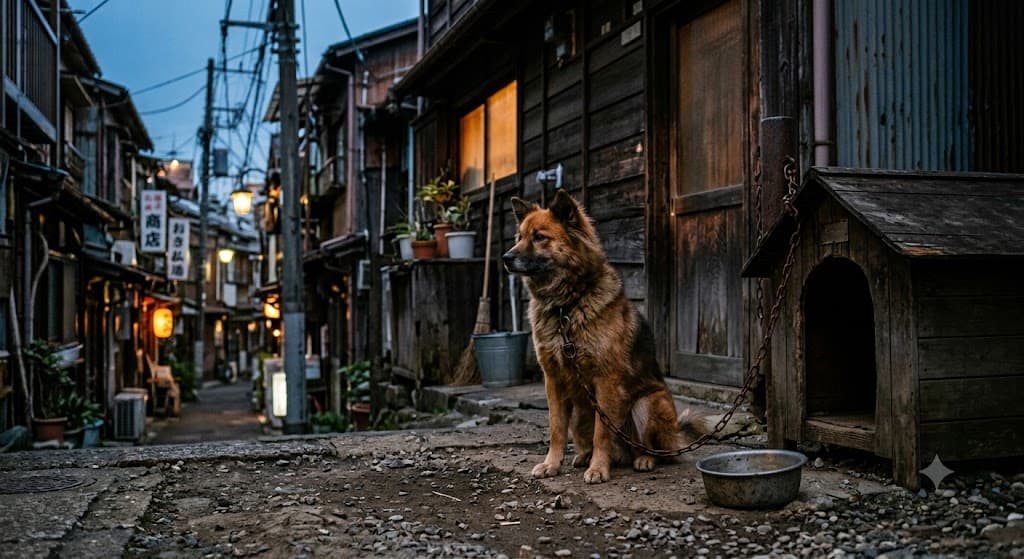
Chainsaw Man and Why Every Japanese Dog Is Named Pochi: The Hidden History Behind Pochita
How Chainsaw Man's Pochita carries the history of Pochi, the Meiji-era nickname that became Japan's default dog name — and what that says about loyalty.
7/11/2026

Naruto and Yakuwarigo: The Real Meaning of Dattebayo and Why Translators Invented Believe It!
How Naruto's famous verbal tic dattebayo opens the door to yakuwarigo, Japan's role language system, and why English translators had to invent Believe it!
7/4/2026

Evangelion's Angels and Japan's Decorative Christianity
How Neon Genesis Evangelion's enemies are 使徒 (apostle) in Japanese but Angel in English — and how Japan wears Christianity as aesthetic, not faith.
7/3/2026

Solo Leveling and Te-ate: Why the Japanese Word for Treatment Means Placing the Hand
How Solo Leveling's healing magic opens onto te-ate, the Japanese word for treatment whose root is the simple act of placing a hand on a wound.
6/26/2026

Detective Conan and the -kun You Didn't Expect: How Japanese Honorifics Really Work
How Detective Conan reveals that the honorific -kun is not male-only — an inspector calls teenage Ran 'Ran-kun', a hierarchy English subtitles quietly drop.
6/11/2026