Frieren: Beyond Journey's End and the Weight of Time: Why the Anime Measures Life in Decades, Not Days
How Frieren: Beyond Journey's End turns the Japanese sense of 無常 (mujō, impermanence) into narrative structure — running its clock in decades so an elf's long life reveals the beauty and worth of our short human ones.

Tokyo-born, 3rd-generation Edokko · writing on Japanese culture from outside Japan
Spoiler-Free Cultural Analysis
This article explores the Japanese sense of 無常 (mujō: impermanence) and the culture's long-span view of time as the cultural bedrock beneath Frieren: Beyond Journey's End. No plot spoilers beyond the official premise — only themes, atmosphere, and the ideas the work is built on.
Key Takeaways
- Frieren's strange, unhurried pacing — where a single decade can pass in a breath — is not just a storytelling quirk. It draws on a deeply Japanese way of feeling time, shaped by the aesthetic of 無常 (mujō: impermanence).
- The idea that "the mighty, too, must fall" is not a sad footnote in Japanese culture but a foundational worldview, taught to children through classics like the 平家物語 (Heike Monogatari: The Tale of the Heike).
- An elf who lives thousands of years is the perfect lens for a very old Japanese question: if everything passes, how should we treat the brief time we share with others?
Key Terms Explained
- 無常 (Mujō) / Impermanence — The Buddhist-rooted sense that all things are fleeting and constantly changing; a central thread in Japanese aesthetics.
- 諸行無常 (Shogyō Mujō) / All Things Are Impermanent — The fuller Buddhist phrase, famous as the opening line of the Tale of the Heike.
- 平家物語 (Heike Monogatari) / The Tale of the Heike — A medieval war epic about the rise and fall of a powerful clan, long recited and memorized in Japanese schools.
- 一期一会 (Ichigo Ichie) / One Time, One Meeting — The idea that each encounter is unrepeatable and should be treasured as such.
The Poem I Memorized Before I Understood It
In a Japanese language class as a schoolchild, I was made to read the opening of the 平家物語 (Heike Monogatari: The Tale of the Heike) aloud and commit it to memory. "The sound of the Gion Shōja bells echoes the impermanence of all things… the proud do not endure." We were told, briefly, what it meant: that even the mightiest will one day decline. At the time I did not grasp the depth of it. I simply liked the rhythm, and my mouth learned the cadence so well that, an adult now and far from those classrooms, the lines still come out smoothly whenever I reach for them.
Only much later did I realize what that exercise had quietly planted. Through a school assignment, I had absorbed 無常 (mujō: impermanence) — the sense that flourishing is temporary and decline is certain — before I had any philosophy to hang it on. When I first watched Frieren: Beyond Journey's End decades later, something in its slow, aching relationship with time felt immediately familiar. The anime was speaking a language my mouth had memorized as a child.
Related: Demon Slayer and Mono no Aware: How Tanjiro's Mother Speaks the Aesthetics of Impermanence explains this in detail.
A Culture That Measures in Falling, Not Rising
The Bell That Opens With an Ending
Most heroic traditions open with a rise: a birth, a call, an ascent. The defining epic of Japanese literature opens with a bell tolling for impermanence. The 平家物語 (Heike Monogatari) begins not with triumph but with the certainty of decline — the proud clan at its height already carries its fall inside it. This is not pessimism. It is a way of seeing that treats endings as part of the natural shape of things, as inevitable and even beautiful as autumn following summer.
That single framing choice tells you something profound about Japanese culture. Where other traditions might ask "how do we win and hold power forever?", this one asks "since all things pass, how do we live well inside the passing?" The concept has a name that reaches far beyond literature: 無常 (mujō), the impermanence woven through Buddhism, poetry, the tea ceremony, and the love of cherry blossoms precisely because they scatter.
Related: Frieren: Beyond Journey's End and the Quiet Tradition of the Drinking Monk: Why Heiter Is Called Corrupt Priest explains this in detail.
Time You Feel in Seasons, Not Deadlines
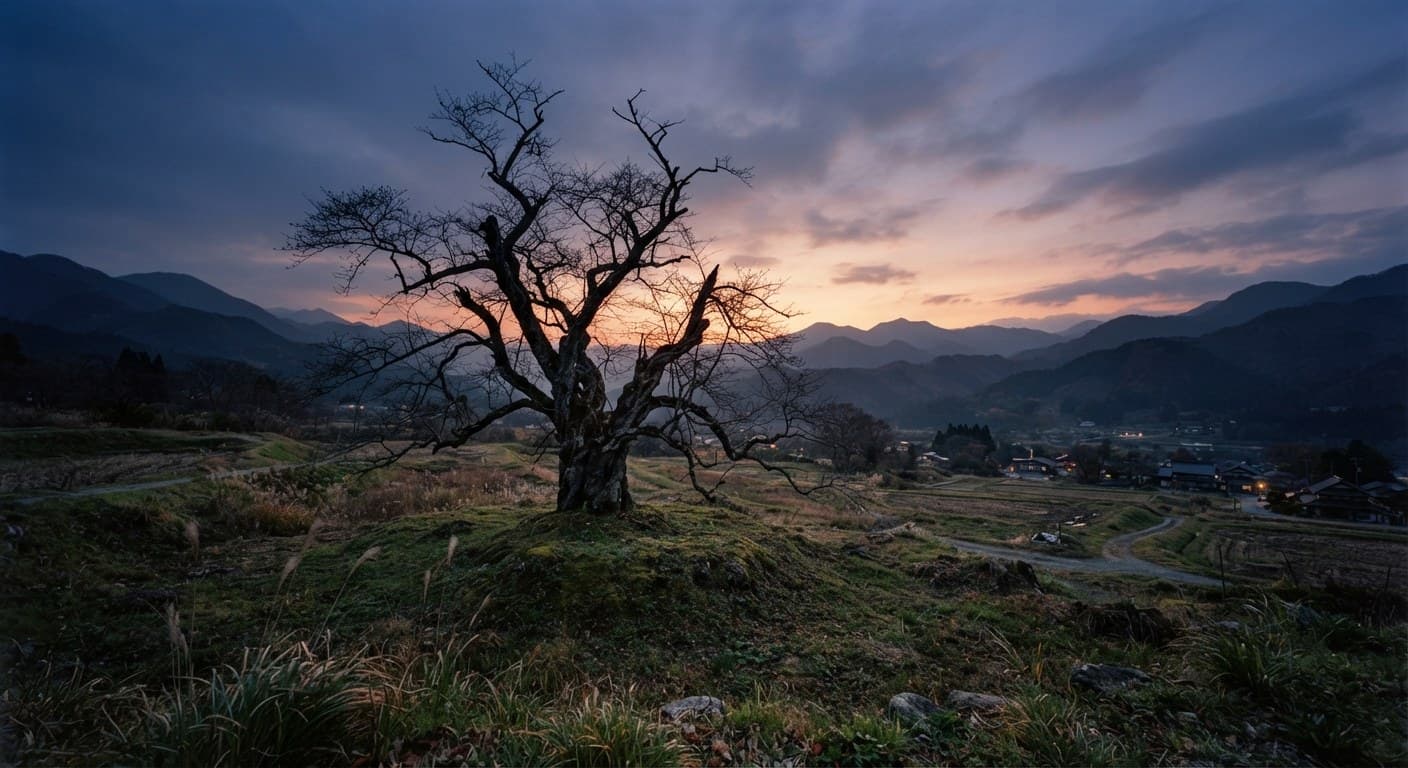
There is a second, quieter layer here: the Japanese habit of feeling time in long, natural spans. The turning of seasons, the slow weathering of wood and stone, the generations of a family — these are the units a culture shaped by 無常 tends to notice. Even having lived abroad for many years, I find this is one of the parts of me that never swapped out. My sense of seasons changing, of time as something that moves through nature rather than ticking on a clock, stayed Japanese no matter how much else I absorbed from elsewhere.
Frieren: Beyond Journey's End takes this felt sense of time and makes it the whole architecture of the story. Its clock does not run in scenes and days; it runs in decades and lifetimes.
Related: Frieren: Beyond Journey's End and Obon: Why Japan's Dead Come Home in August explains this in detail.
An Elf's Eyes and the Value of a Short Life
The official premise is deceptively simple: Frieren is an elf who lives for thousands of years, and the story follows her after the human companions of her great adventure have aged and passed on. Because she measures time on an elven scale, a human lifespan is, to her, almost a single season — bright, quick, and gone. The drama lives in the gap between her time and ours.
This is where the anime's long-span clock becomes something more than a device. By watching a near-immortal being reckon with how brief human lives are, we are handed the exact perspective that 無常 has always tried to teach: that the shortness of a thing is not a reason to value it less, but more. The Japanese love of cherry blossoms works the same way — we treasure them because they fall within a week. Frieren asks whether a human life, seen from the outside and from a great height of years, might be beautiful for precisely the same reason.
Living long outside Japan, accepted yet never quite fully an insider, I have come to feel time a little the way the story frames it — as something you watch move through people, aware you are both part of it and slightly apart from it. Frieren dramatizes that doubled feeling on an epic scale. It is not really a story about an elf's long life. It is a story about the weight and worth of our short ones, told by someone with the distance to see it whole.
FAQ
Q: Do I need to know Buddhism to understand the themes in Frieren? A: No. The sense of 無常 (mujō: impermanence) is felt more than studied by most Japanese people — absorbed through seasons, poetry, and school classics rather than doctrine. You can feel the anime's view of time without any religious background at all.
Q: Is "impermanence" a sad or a hopeful idea in Japanese culture? A: Neither, exactly — it is both at once. Impermanence means loss is certain, but it is also what makes each moment and each meeting precious. That bittersweet balance, not pure sadness, is the emotional register the culture prizes.
Q: How does this connect to the Japanese love of cherry blossoms? A: Cherry blossoms are cherished because they scatter within days, making their brief beauty more moving, not less. It is the same logic the story applies to a human lifespan seen through elven eyes — brevity as a source of value.
Key Insights to Remember
- A culture reveals its worldview in how its great stories begin. That the defining Japanese epic opens with a bell for impermanence, rather than a hero's triumph, shows a civilization at ease with endings as a natural, even beautiful, part of the shape of things.
- Frieren's unusual pacing is not slowness for its own sake; it is 無常 (mujō) rendered as narrative structure. By running its clock in decades, the anime makes the audience feel the elven perspective in their bones rather than merely understanding it as a plot fact.
- The deepest move of the story is a reversal we recognize from the cherry blossom: brevity as a reason to treasure, not to grieve. Seen from a great height of years, a short human life is not diminished by its shortness but made luminous by it.
Sources
About the author

Spoiler-free cultural deep-dives into anime, manga & live-action Japanese drama
- ●Tokyo-born, 3rd-generation Edokko (江戸っ子)
- ●Lifelong manga reader & anime viewer since the kaiju era
- ●Writes from outside Japan — distance as a cultural lens
- ●Spoiler-free · sourced · Kanji + Romaji + English
A Tokyo-born, 3rd-generation Edokko writer who has spent years living outside Japan. I use the anime, manga, and live-action Japanese drama you already love as a doorway into the folklore, language, religion, and everyday history behind them — written so even first-time fans can follow along, with sources for every claim.
Enjoy this article?
Get the next spoiler-free cultural deep-dive straight to your inbox.
Related Articles
Cowboy Bebop and the Jazz Kissa: How Japan Turned Listening to Music into a Ritual
How Cowboy Bebop's jazz soundtrack opens a door into the jazu kissa, Japan's silent listening cafés, where hearing a single record became a ritual.
7/13/2026

Blue Lock and the Riddle of Samurai Blue: Why Japan's Football Team Wears Blue When the Flag Is Red
How Blue Lock's blue-drenched world opens onto a real puzzle — why Japan's Samurai Blue football team wears indigo when the national flag holds no blue at all.
7/10/2026
Demon Slayer and Mono no Aware: How Tanjiro's Mother Speaks the Aesthetics of Impermanence
How Demon Slayer dramatizes mono no aware — the mother's weather metaphor in episode one and the Japanese aesthetics of impermanence woven quietly behind it.
7/9/2026
Kuroko's Basketball and the Kurogo: How a Black-Clad Stagehand Became the Phantom Sixth Man
How Kuroko's Basketball builds its phantom sixth man on kurogo, the kabuki and bunraku stagehand who stands in full view yet is treated as unseen.
6/4/2026
Dandadan and the Ghost of Ken Takakura: Why Japan Adored the Man Who Couldn't Say I Love You
How Dandadan turns a heroine's crush on Ken Takakura into a window onto bukiyō, the Showa ideal that read a man's silence as proof of sincerity.
5/30/2026
The Apothecary Diaries and the Art of Playing Dumb: Why Maomao Hides Her Brilliance
How The Apothecary Diaries dramatizes deru kui wa utareru, the Japanese habit of hiding talent, and why Maomao's playing dumb feels so familiar in Japan.
4/30/2026