Ghost in the Shell and the Japanese Autumn Sky: Why Akikaze Signals Change Before the Leaves Do
Why autumn wind, not falling leaves, marks the turn of the year in Japanese poetry — and how Ghost in the Shell applies that inherited convention to a question about bodies that can be replaced.

Tokyo-born, 3rd-generation Edokko · writing on Japanese culture from outside Japan

Spoiler-Free Cultural Analysis
This piece explores the real Japanese aesthetic and calendrical traditions behind the autumn imagery in 攻殻機動隊 (Kōkaku Kidōtai: Ghost in the Shell). No plot points beyond the premise are discussed — only themes, seasonal vocabulary, and the cultural grammar that makes a certain kind of wind carry meaning in Japanese.
Key Takeaways
- 秋風(akikaze: autumn wind) is a seasonal marker in Japanese poetry that arrives before any visible change in the landscape. It is heard and felt, not seen, which is precisely why it became the standard signal for a turn that has not yet become visible.
- The Japanese calendar places 立秋(risshū: the beginning of autumn) in early August, during what most of the world would call the peak of summer. Autumn in the traditional calendar is a category that opens while the heat is still at its worst.
- Ghost in the Shell uses this convention rather than inventing one. When a story wants to say that something has already changed while the surface looks unchanged, autumn wind is the established vocabulary for it.
Key Terms Explained
- 秋風 (akikaze) / Autumn wind — a 季語(kigo: seasonal word) used in poetry to mark autumn. Its literary force comes from being perceptible before foliage turns.
- 立秋 (risshū) / Beginning of autumn — one of the 二十四節気(nijūshi sekki: twenty-four solar terms), falling around 7 or 8 August. The calendrical start of autumn, not its felt arrival.
- 物の哀れ (mono no aware) / A sensitivity to transience — the aesthetic response to things precisely because they do not last. Often triggered by a signal of change rather than by change itself.
- 気配 (kehai) / A sensed presence — the awareness that something is there or is coming, before it can be confirmed. Used for both people and seasons.
The Wind I Noticed Only After Leaving
I have lived outside Japan for many years now. That distance — physical and temporal both — has become a useful lens for noticing what Japanese culture has quietly preserved and what it has just as quietly let go.
Autumn wind is one of the things I did not know I had until it was gone. In the tropics there is no equivalent. The air moves, the rain comes and goes, but nothing arrives that says the year has turned. The temperature does not step down. Nothing about the wind announces a category change.
Growing up, I never thought about this. Late August in Japan is unbearably hot, and yet somewhere in that heat the wind changes character for a few minutes in the evening. Nobody explained it to me. I simply absorbed that this shift meant something, in the way children absorb the meaning of a tone of voice before they can define it.
I am also a self-taught multi-instrumentalist — guitar, drums, piano, and alto saxophone. That background shapes how I listen to things, including anime soundtracks and the rhythmic structure of Japanese speech. Music is a layer I notice rather than a background I ignore. And autumn wind, in Japanese poetry, works the way a key change works in music. Nothing in the melody has to stop. The listener simply knows that the ground beneath it has moved.
Related: Natsume's Book of Friends and the Fūrin: The Japanese Wind Chime Was a Charm Against Spirits Before It Was the Sound of Summer explains this in detail.
Why the Calendar Puts Autumn in August
The Japanese traditional calendar divides the year into 二十四節気, twenty-four solar terms, inherited from continental East Asia and adapted locally. 立秋 — the beginning of autumn — falls in the first week of August.
To a modern reader this looks like an error. August in most of Japan is the hottest stretch of the year. Cicadas are at full volume. Nothing has cooled.
But the solar terms are astronomical, not sensory. They divide the sun's apparent path, not the felt temperature. 立秋 marks the point at which the year has structurally turned toward autumn, whatever the thermometer says.
This produces a gap that Japanese poetry has worked inside for over a thousand years. The calendar says autumn. The body says summer. The evidence that resolves the contradiction is the wind — the one thing that changes before anything visible does.
That is the mechanism behind a convention that appears throughout classical verse: the speaker notices autumn wind and understands that a turn has occurred, while the landscape still reads as summer. The wind is admissible evidence precisely because it precedes proof.
Compare this with the imagery most Western readers associate with autumn. Falling leaves, harvest, bare branches. All of these are consequences. They are autumn after it has finished arriving. 秋風 belongs to a different moment in the sequence — the moment when the change is real but not yet demonstrable.
Related: Demon Slayer and Mono no Aware: How Tanjiro's Mother Speaks the Aesthetics of Impermanence explains this in detail.
What the Series Borrows, and What It Does Not Invent
Ghost in the Shell is a work about the boundary between what a person is and what a person is made of. Bodies are replaceable. Memory is editable. The question of whether the surface still corresponds to the interior sits at the center of the premise.
Autumn wind is the pre-existing Japanese vocabulary for exactly that situation. Something has changed. The surface has not caught up. The only available evidence is a sensation that cannot be verified.
This is worth being precise about, because it is easy to over-read. The series does not invent a private symbolism here. It uses a convention that any Japanese reader of classical poetry would recognize, and applies it to a science fiction problem. The invention is in the application, not in the image.
What the work adds is the reversal. In classical verse, the wind tells the truth and the landscape lags behind it. In a world of replaceable bodies, the question becomes whether there is any wind at all — whether a self that can be edited still has an interior that could sense a change before confirming it. That is a genuinely new question, and it is asked in inherited language.
FAQ
Q: Is autumn wind actually a formal category in Japanese poetry, or a modern reading? A: It is formal. 秋風 is a 季語, a seasonal word, and seasonal words are catalogued in 歳時記(saijiki: seasonal almanacs) used by poets. Its assignment to autumn is conventional rather than personal, which is what allows a writer to use it as shorthand and be understood.
Q: Does the traditional calendar still affect daily life in Japan? A: Less than it once did, but it has not disappeared. 立秋 is why late-summer correspondence in Japan switches from 暑中見舞い(shochū mimai: midsummer greetings) to 残暑見舞い(zansho mimai: late-heat greetings). The greeting changes on a calendrical boundary even though the weather does not.
Q: Is mono no aware the same as sadness? A: No. It is closer to a heightened response to something because it will not last. The feeling can be pleasant. What makes it mono no aware is the awareness of transience folded into the perception, not the mood attached to it.
Q: Why does the wind matter more than the temperature? A: Because temperature is a measurement and wind is an experience. A thermometer can contradict you; a sensation cannot be argued with in the same way. For a poetic tradition interested in what is perceived before it is proven, the less verifiable signal is the more useful one.
Key Insights to Remember
- Autumn wind became the standard signal for change in Japanese poetry because it is perceptible before the landscape provides any evidence. The convention is about the gap between knowing and being able to show.
- The calendar and the body disagree in August by design, not by mistake. The solar terms divide the sun's path, and Japanese poetry has worked productively inside that discrepancy for centuries.
- Ghost in the Shell applies inherited seasonal vocabulary to a new problem. Recognizing the convention makes the application visible, and it is the application — not the image — that belongs to the work.
Sources
- Japan Meteorological Agency (official Japanese meteorological body; seasonal and climatological data for Japan)
- National Diet Library Digital Collections (digitized classical Japanese texts, including poetry anthologies in which seasonal words appear)
- Production I.G (the studio behind the Ghost in the Shell animated works; official production information)
About the author

Spoiler-free cultural deep-dives into anime, manga & live-action Japanese drama
- ●Tokyo-born, 3rd-generation Edokko (江戸っ子)
- ●Lifelong manga reader & anime viewer since the kaiju era
- ●Writes from outside Japan — distance as a cultural lens
- ●Spoiler-free · sourced · Kanji + Romaji + English
A Tokyo-born, 3rd-generation Edokko writer who has spent years living outside Japan. I use the anime, manga, and live-action Japanese drama you already love as a doorway into the folklore, language, religion, and everyday history behind them — written so even first-time fans can follow along, with sources for every claim.
Enjoy this article?
Get the next spoiler-free cultural deep-dive straight to your inbox.
Related Articles

Mushishi and the Japanese Ear for Insect Song: Why Autumn Arrives as a Sound
How Mushishi builds its seasons from mushi no ne, the autumn insect song Edo listeners travelled to named hills to hear, and what losing that ear means.
8/15/2026
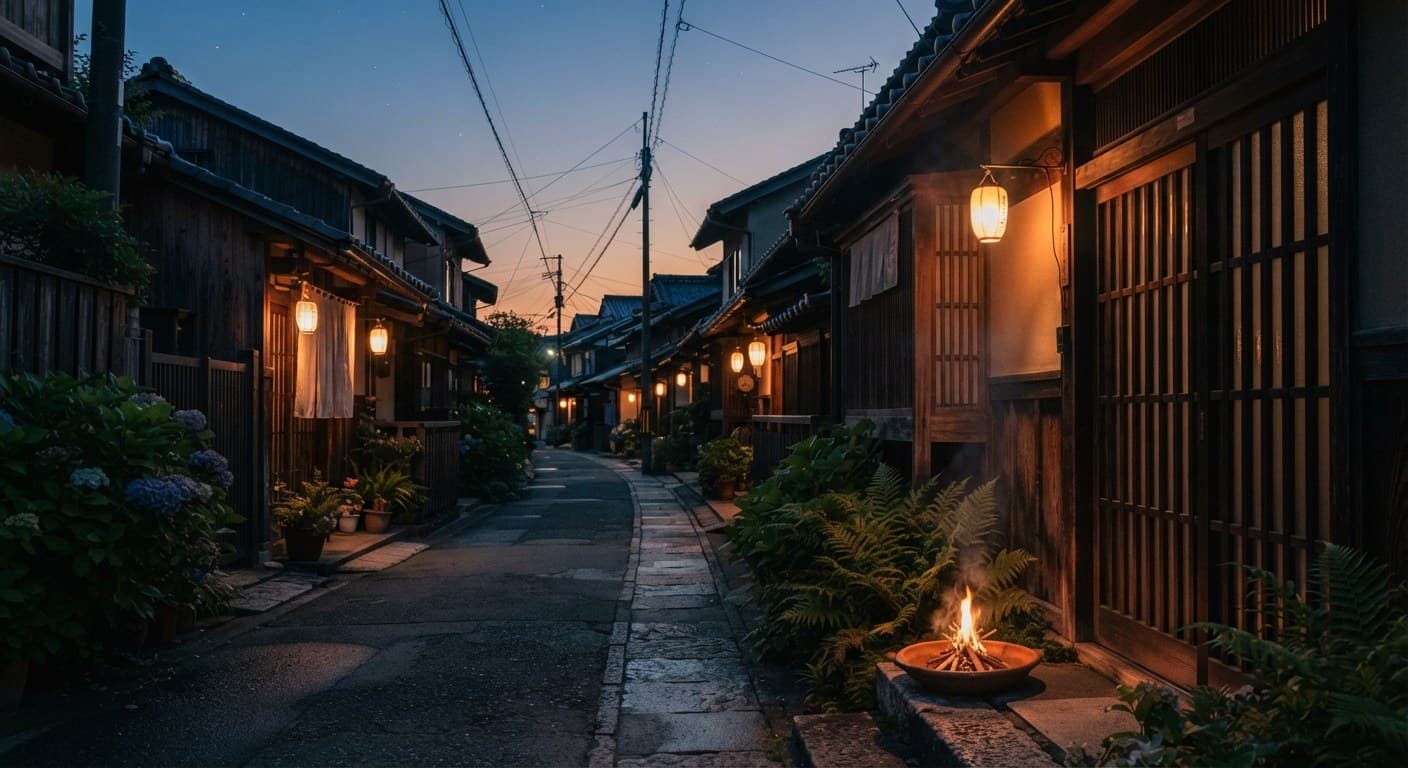
Frieren: Beyond Journey's End and Obon: Why Japan's Dead Come Home in August
How Frieren: Beyond Journey's End dramatizes the spirit of Obon — Japan's August season of welcoming ancestral spirits home with fires, lanterns, and dances — and why its view of grief as an ongoing relationship feels so deeply Japanese.
7/25/2026
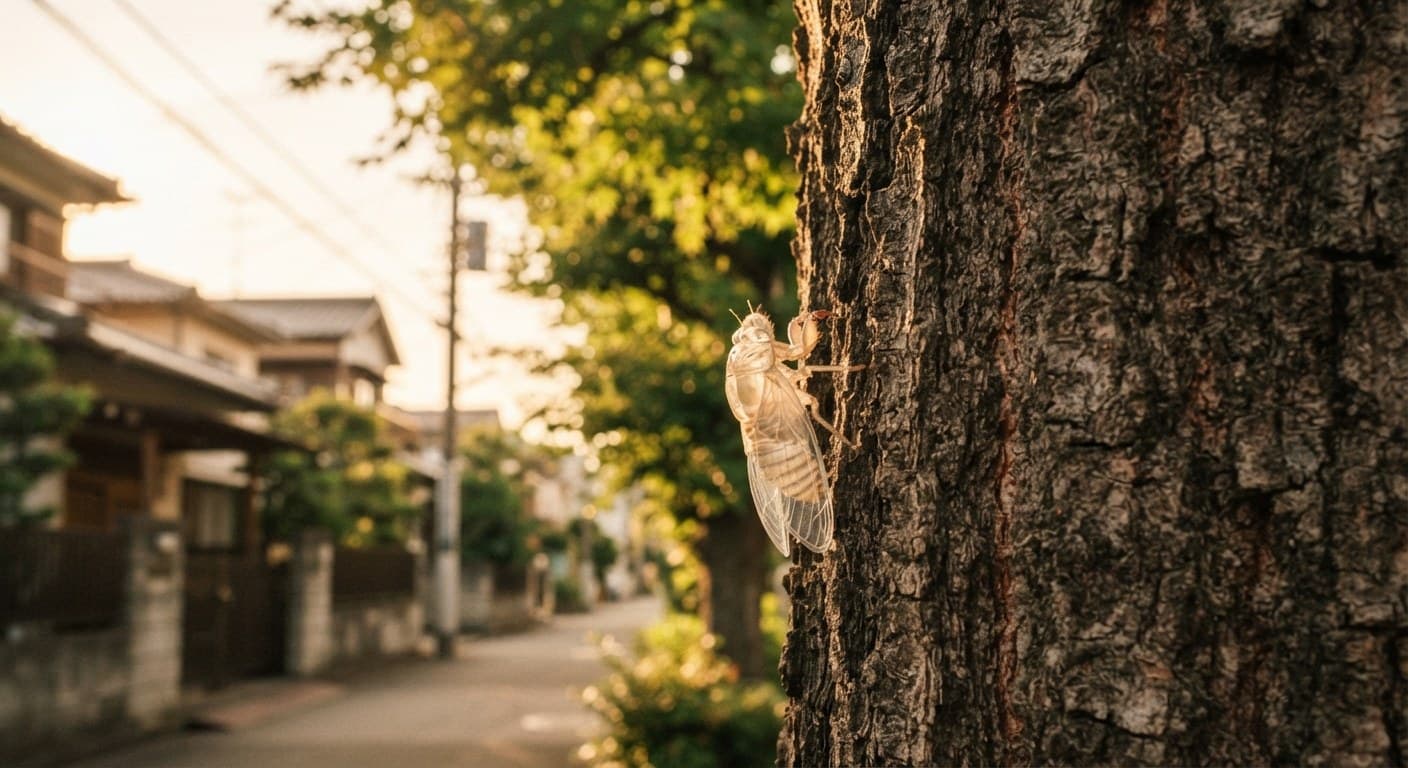
Neon Genesis Evangelion and the Cicada: Why Japan's Endless Summer Needs a Soundtrack
How Neon Genesis Evangelion turns Japan's beloved cicada chorus into a sign of a broken world — and why anime summer always sounds like semi, from semishigure to the mournful higurashi.
7/21/2026