Spirited Away and Kamikakushi: The Folklore Behind the Title
Spirited Away's Japanese title ends in kamikakushi. Learn who villages said took children away, why dusk was the dangerous hour, and how they searched for them.

Tokyo-born, 3rd-generation Edokko · writing on Japanese culture from outside Japan
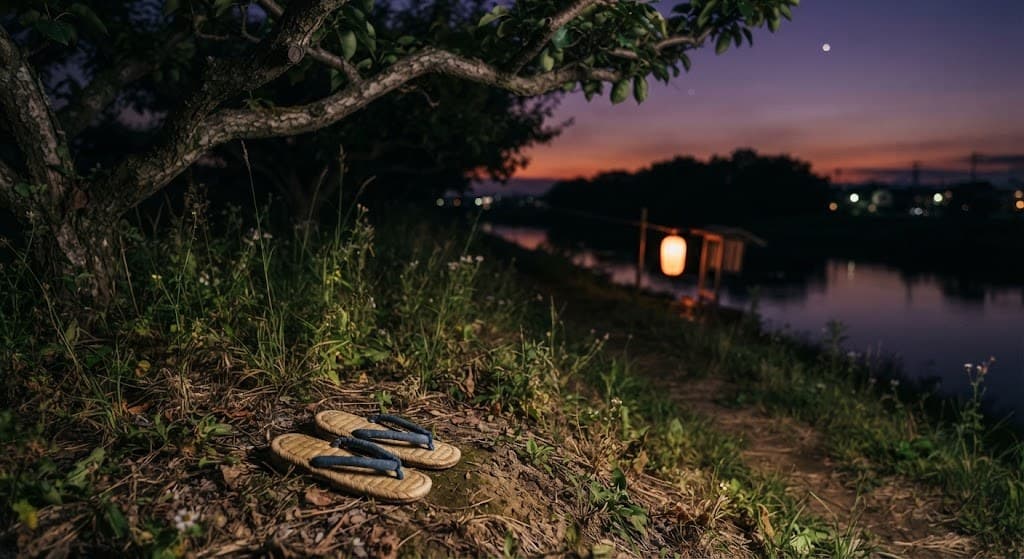
What does kamikakushi really mean? Most fans know it as the last word of the Japanese title of Spirited Away. In Japan, though, it was never just a film title. It was the name for something villages feared: a child who was outside at dusk and simply did not come home. Once you know what people said had taken those children, and how they searched for them, the film's opening reads very differently.
Spoiler-Free Cultural Analysis
This article looks at the real Japanese folk belief behind the word kamikakushi, drawing on Japanese encyclopedias and the folklore writings of 柳田国男(Yanagita Kunio: the writer who recorded Tōno Monogatari). It covers only the film's opening premise as described in the official synopses, with no later plot revelations.
Key Takeaways
- Kamikakushi means a person, most often a child, suddenly vanishing. Japanese encyclopedias say many kinds of spirits were blamed, but most places pointed to the tengu.
- Dusk was the dangerous hour. Folklore records say women and children who were outside at twilight were often taken, and even in Tokyo, parents warned children not to play hide-and-seek at night.
- Villages searched together, beating gongs and drums or carrying lanterns and calling all night. Some children came back after a few days, many never did, and communities kept the missing alive in sayings and small acts of hope.
Key Terms Explained
- 神隠し (Kamikakushi) / Spirited Away — Literally "hidden by the kami." A person, usually a child, disappearing without explanation, which people blamed on a supernatural being.
- 神 (Kami) / Deity or Spirit — The objects of worship in Shinto. The word was used not only for good beings but also for evil ones.
- 天狗 (Tengu) / Tengu — A supernatural being of Japanese folk belief, and the suspect most often named when a child disappeared.
- 黄昏 (Tasogare) / Dusk — Evening twilight, the hour when children were said to be taken most often.
- 隠世 (Kakuriyo) / The Hidden World — In Shinto, the invisible world of the gods and spirits, set against 現世(utsushiyo: the visible human world).
The Evening Chime on the Riverbank
As a third-generation 江戸っ子(Edokko: a born-and-bred Tokyoite), I spent much of my childhood on the embankment of the 荒川(Arakawa: the river near my childhood home), two or three minutes' walk from our house. When the 夕焼けチャイム(yūyake chaimu: the evening "sunset chime") rang, that was the signal to go home. My family always told me, "Come home before it gets dark." I loved trying to spot the first star of the evening from the bank.
Still, I often got so caught up playing with friends that I suddenly noticed it had grown dark around us. The riverbank I knew so well changed once the light went. It became a slightly frightening place. I still remember the sunset sky seen from the river, the embankment, and the bridges.
Home had its own quiet boundaries, too. Our house and my relatives' houses had a 神棚(kamidana: a small household Shinto shelf), お札(ofuda: paper charms from a shrine), and an old 仏壇(butsudan: a Buddhist family altar). They were treated as things you must not touch carelessly.
I have read manga and watched anime since I was a child, and these days I rewatch old and new titles on Netflix. Going back to Spirited Away with the folklore in mind, I realised that the warnings of my childhood had a much older shape.
Who Took the Children, and Why at Dusk
What the Encyclopedias Say
The 日本大百科全書(Nihon Dai Hyakka Zensho: Encyclopedia Nipponica), in an entry by 大藤時彦(Ōtō Tokihiko), defines kamikakushi as a child or someone else suddenly being nowhere to be seen. People said the child had been carried off by a tengu, and the whole village turned out to search, beating 鉦(kane: a small gong) and 太鼓(taiko: drums). The missing were hard to find, yet sometimes they turned up out of the blue two or three days later.
The 世界大百科事典(Sekai Dai Hyakka Jiten: World Encyclopedia), in an entry by 小松和彦(Komatsu Kazuhiko), says that many different spirits were believed to spirit people away, but that most places blamed the tengu. He adds a point I find important. People's picture of kamikakushi was built mainly around the stories told by those who came back.
The ブリタニカ国際大百科事典(Buritanika Kokusai Dai Hyakka Jiten: Britannica International Encyclopedia) gives one telling detail. A sign of kamikakushi was that the missing person's footwear had been left neatly side by side.
The Suspects: Tengu, Guhin, Oni, and a Hiding Granny
In 山の人生(Yama no Jinsei: Life in the Mountains), first serialised in the magazine アサヒグラフ(Asahi Gurafu: Asahi Graph) in 1925, Yanagita names the usual chief suspects as the tengu and the 狗賓(guhin: a name Yanagita sets beside the tengu). He also writes that even in a busy city like Tokyo, children did not play hide-and-seek after dark. Many parents still warned that a child who did would be taken by an 鬼(oni: a demon) or by the 隠し婆さん(kakushi-baasan: literally "the hiding granny").
The word kami itself helps here. The 國學院大學(Kokugakuin Daigaku: Kokugakuin University) glossary of Shinto terms explains kami as an honorific for spiritual beings of sacred authority. It notes that the scholar 本居宣長(Motoori Norinaga) used the word for any being with extraordinary power that inspired awe, and that it was used for evil beings as well as good ones. Shinto's kami are also so many that they are praised as 八百万の神(yao-yorozu no kami: the ever-increasing myriad deities). So "hidden by the kami" did not mean "chosen by a kindly god." The one who took the child could be awesome and dangerous at the same time. Another Shinto idea, the binding and creating power called musubi, is explained in Your Name and Kumihimo: The Real Japanese Craft Behind Mitsuha's Braided Cord.
Why Dusk Was the Dangerous Hour
The timing appears again and again. In 遠野物語(Tōno Monogatari: The Legends of Tōno), Yanagita writes in story eight that women and children who are outside at tasogare are often spirited away, just as in other provinces. The World Encyclopedia's entry on 迷子(maigo: a lost child) says the same thing in plainer terms. In the half-light of early evening, it was not unusual for a child to vanish suddenly, for no known reason.
In a 1930 essay titled かはたれ時(Kawatare-doki), Yanagita turns to the hour itself. He notes that someone, he does not know who, began calling dusk 雀色時(suzumeiro-doki: "sparrow-coloured time"), a new word he felt only Japanese people could have made. He writes that for a long time, people greeted and saw off both oni and travellers at that hour with almost the same unease. It was also, he says, the hour when children grew giddy and did not want to go home, and when many young people gazed at the sky for no particular reason.
In Yama no Jinsei, he describes walking through villages on summer evenings and often hearing women's shrill voices calling their children. It was not only because dinner was ready, he writes. Part of it was this fear.
Reading that, I heard my own family's "Come home before it gets dark." The children who did not want to go home at dusk were my friends and me on the riverbank. The chime and the warning were gentle versions of a much older worry.
How Villages Searched for the Missing
The search was a group effort. Yama no Jinsei records that in Tokyo, too, children used to go missing quite often. When one did, the neighbours gathered, each carrying a 提灯(chōchin: a paper lantern), and walked through the night calling out loudly. Yanagita says this was both a duty to one another and an established custom.
Even the words of the call differed by region. In 関東(Kantō: the eastern region around Tokyo), people usually repeated, "Maigo no maigo no Nanimatsu yai," roughly "Lost child, lost child, So-and-so-matsu!", with the child's name in place of Nanimatsu. In 上方(Kamigata: the old western heartland), people walked chanting "Kayase, modose," meaning "Give back, return," in a slower, sadder voice.
Yanagita also draws the line at which a missing child became a case of kamikakushi. It was when people had searched for two or three days and still could not find the child. In regions where wild hills and fields lay close to the villages, such cases were especially frequent, and sadly, half of those taken never came back.
What happened when the search failed is the part that stays with me. Some communities stopped searching after seven days, treating the child as someone who would not return. Others climbed to a mountain top and shouted the child's name. If something answered, they believed the child was still alive somewhere, and found a little comfort in that.
The Ones Who Came Back
Not every story ended in loss. According to Yama no Jinsei, a lucky child who returned from kamikakushi was usually dazed for a while. Most first fell into a deep sleep, then woke up and asked for food.
Yanagita also writes that in Japanese folk belief from ancient times, kamikakushi was an important means of contact with the spirit world. That idea connects to the Shinto words for the two worlds. The human world is utsushiyo, the visible world, and the world of the gods and spirits is kakuriyo, the hidden world. The 隠 in kakuriyo is the same character as the 隠 in kamikakushi. To be spirited away was to be hidden in that other world.
The Girl Who Left Her Sandals Under a Pear Tree
Tōno Monogatari was published on 14 June 1910. Yanagita explains in the preface that every story came from 佐々木鏡石(Sasaki Kyōseki), a man from 遠野(Tōno: the area the stories come from), who began visiting him at night around February of the previous year and told the tales while Yanagita wrote them down.
Story eight is one of the best-known kamikakushi tales. In a house at a place called 寒戸(Samuto) in 松崎村(Matsuzaki-mura: Matsuzaki village), a young woman took off her 草履(zōri: straw sandals), left them under a pear tree, and vanished. More than thirty years later, on a day when relatives and friends had gathered at the house, she came back, now extremely old and worn. Asked how she had returned, she said she had wanted to see everyone. Then she said she would go again, and disappeared without a trace.
That day, the wind was blowing hard. And so, Yanagita writes, the people of Tōno still say on blustery days that today feels like a day when 寒戸の婆(Samuto no Baba: the old woman of Samuto) might come back.
Two things strike me here. First, the sandals left behind under the tree echo the encyclopedia's sign of neatly placed footwear. Second, the village remembered her through the weather. Every windy day became a small act of remembering.
The Empty House in the Mountains
Story sixty-three in Tōno Monogatari describes a different kind of encounter. In Tōno, a mysterious house deep in the mountains is called マヨイガ(mayoiga: a mysterious house in the mountains). Whoever comes across one should bring something out of it, a household utensil or an animal, because the house shows itself in order to give that thing to that person. In the tale, there is nobody inside at all, yet in the back room an iron kettle is boiling on a 火鉢(hibachi: a charcoal brazier).
Yanagita's tale says nothing about films, and I am not claiming any link. Even so, I cannot read about a silent, empty place where everything is ready for guests who never appear without thinking of the abandoned village where Chihiro's family stops. Another old Japanese tale that anime has built on is explained in Fruits Basket and the Zodiac Cat: The Real Japanese Folktale of the Cat Who Missed the Banquet.
How Spirited Away Uses the Old Word
千と千尋の神隠し(Sen to Chihiro no Kamikakushi: the Japanese title of Spirited Away) opened in Japan on 20 July 2001. 宮﨑駿(Miyazaki Hayao) wrote the original story and screenplay and directed it, with 鈴木敏夫(Suzuki Toshio) as producer and music by 久石譲(Hisaishi Joe). It runs about 125 minutes and was distributed by 東宝(Tōhō: the film's distributor). At the 75th Academy Awards in 2003, it won Animated Feature Film. The Japanese title pairs two names with the word kamikakushi, and the film explains those names in its own time.
The opening premise, as the official synopsis on the GKIDS site describes it, is simple. Chihiro's family is moving to a new house. On the way, they stop to explore an abandoned village, her parents go through a mysterious transformation, and Chihiro is swept into a world of spirits ruled by the sorceress Yubaba. Put to work in a magical bathhouse for spirits and demons, she has to rely on her wits to survive, find a way to free her parents, and get back to the normal world.
Set that next to the folklore and the pattern is clear. A child crosses from the visible world into a hidden one full of beings who are not simply good or bad, much like the kami that Motoori Norinaga described. The bathhouse is full of spirits and demons together, close to the old sense of a myriad of kami. And the question the synopsis leaves open, whether she can return to the normal world, is the same question the lantern-carrying neighbours asked as they walked through the night.
Come Home Before Dark
What I remember from childhood is the evening chime and my family's warning to be back before dark. Reading Yanagita's records, I can see how much history sits behind those ordinary words.
Having lived abroad for many years, I now read the old accounts less as ghost stories and more as records of grief. A child vanished at dusk. Neighbours carried lanterns and called the child's name all night. When the search ended, some people climbed a mountain to shout one more time, and the people of Tōno spoke of a woman who might come back on a windy day. Kamikakushi gave a name to a loss that had no explanation, and it left room for the hope of return.
That is why the title of Spirited Away carries so much weight in Japanese. It does not only say that a girl went somewhere strange. It calls up dusk, a missing child, and the people waiting for her to come home.
FAQ
Q: What does kamikakushi mean in Spirited Away's Japanese title? A: Kamikakushi literally means "hidden by the kami." In Japanese folk belief, it describes a person, usually a child, suddenly vanishing without explanation, which people blamed on a supernatural being. The film's Japanese title, Sen to Chihiro no Kamikakushi, borrows this old word.
Q: Who was believed to take people away in kamikakushi? A: Japanese encyclopedias say many kinds of spirits were blamed, but most places pointed to the tengu. Yanagita Kunio also lists the guhin as a chief suspect, and notes that parents warned children they would be taken by an oni or by kakushi-baasan, "the hiding granny."
Q: Why was dusk considered the dangerous hour for kamikakushi? A: Japanese folklore records say that women and children who were outside at twilight were often spirited away, and that children often vanished in the half-light of early evening. Yanagita wrote that dusk was the hour children did not want to go home, and that mothers' shrill calls on summer evenings came partly from this fear.
Q: Did people who were spirited away ever come back? A: Sometimes. Encyclopedias say some turned up two or three days later, and Yanagita describes returning children as dazed, sleeping deeply and then asking for food. But he also writes that in some regions, half of those taken never returned.
Key Insights to Remember
- Kamikakushi was a name for an unexplained loss. When a child vanished and two or three days of searching found nothing, people said the child had been hidden by the kami, most often by a tengu.
- Dusk mattered because it was the in-between hour. Folklore records place many disappearances at twilight, when children did not want to go home, and everyday warnings like "come home before dark" carry that older fear.
- Villages answered with shared effort and long memory: gongs, drums, lanterns, regional calls, a name shouted from a mountain top, and sayings like the one about the old woman of Samuto on windy days. Spirited Away takes its title from this whole world of searching and waiting.
Next time you watch the opening of Spirited Away, think of the neighbours with their lanterns, calling a child's name through the night. The film's first minutes may feel a little different.
Sources
- Sen to Chihiro no Kamikakushi Work Page — Studio Ghibli
- Spirited Away — GKIDS
- The 75th Academy Awards (2003) — Academy of Motion Picture Arts and Sciences
- Kamikakushi (Encyclopedia Nipponica, World Encyclopedia, Britannica International Encyclopedia) — Kotobank
- Tōno Monogatari by Yanagita Kunio — Aozora Bunko
- Yama no Jinsei by Yanagita Kunio — Aozora Bunko
- Kawatare-doki by Yanagita Kunio — Aozora Bunko
- Basic Terms of Shinto: K — Kokugakuin University
About the author

Spoiler-free cultural deep-dives into anime, manga & live-action Japanese drama
- ●Tokyo-born, 3rd-generation Edokko (江戸っ子)
- ●Lifelong manga reader & anime viewer since the kaiju era
- ●Writes from outside Japan — distance as a cultural lens
- ●Spoiler-free · sourced · Kanji + Romaji + English
A Tokyo-born, 3rd-generation Edokko writer who has spent years living outside Japan. I use the anime, manga, and live-action Japanese drama you already love as a doorway into the folklore, language, religion, and everyday history behind them — written so even first-time fans can follow along, with sources for every claim.
Enjoy this article?
Get the next spoiler-free cultural deep-dive straight to your inbox.
Related Articles
Fruits Basket and the Zodiac Cat: The Real Japanese Folktale of the Cat Who Missed the Banquet
How Fruits Basket builds its outsider cat on the real Japanese folktale of the rat tricking the cat out of the zodiac, and what eto still means in Japan today.
10/20/2026

March Comes in Like a Lion and Tsukimi: Why Japan Watches the Moon With Rice Dumplings and Pampas Grass
How March Comes in Like a Lion opens onto tsukimi, Japan's moon-viewing harvest observance, and why dumplings, pampas grass and a shifting date belong to it.
8/17/2026

Summer Time Rendering and the Shoryo-uma: The Cucumber Horse That Carries the Dead Home
How Summer Time Rendering's Obon homecoming opens onto shoryo-uma, the cucumber horse for returning ancestors, and why it is only one of many regional forms.
8/16/2026

GeGeGe no Kitaro and Hyakumonogatari: Why Japan Saves Its Ghost Stories for Summer
How GeGeGe no Kitaro connects to hyakumonogatari, the hundred-candle ghost game, and the Edo custom of staging horror in summer to chill the audience.
8/11/2026

Demon Slayer Infinity Castle and the Biwa: Heike and Hōichi
How the biwa that opens Demon Slayer's Infinity Castle leads to blind Heike reciters and Hōichi, who played night after night for a court that was not there.
8/7/2026

Natsume's Book of Friends and the Fūrin: The Japanese Wind Chime Was a Charm Against Spirits Before It Was the Sound of Summer
How Natsume's Book of Friends illuminates the furin, the Japanese wind chime that hung on temple eaves as a ward against misfortune long before it meant summer.
8/1/2026