Cowboy Bebop and the Jazz Kissa: How Japan Turned Listening to Music into a Ritual
How Cowboy Bebop's jazz soundtrack opens a door into the jazu kissa, Japan's silent listening cafés, where hearing a single record became a ritual.

Tokyo-born, 3rd-generation Edokko · writing on Japanese culture from outside Japan
Spoiler-Free Cultural Analysis
This article explores the real musical and social history behind Cowboy Bebop's sound — postwar Japan's jazz cafés, their unwritten etiquette, and why the series works as a gateway to jazz for overseas fans. No plot points are revealed; only atmosphere, music, and cultural context.
Key Takeaways
- Cowboy Bebop is built on the grammar of jazz performance, not just decorated with it: episodes are called "Sessions," the first one is titled after a blues form, and the score by Yoko Kanno and her band The Seatbelts moves like a group of players trading solos rather than like background music.
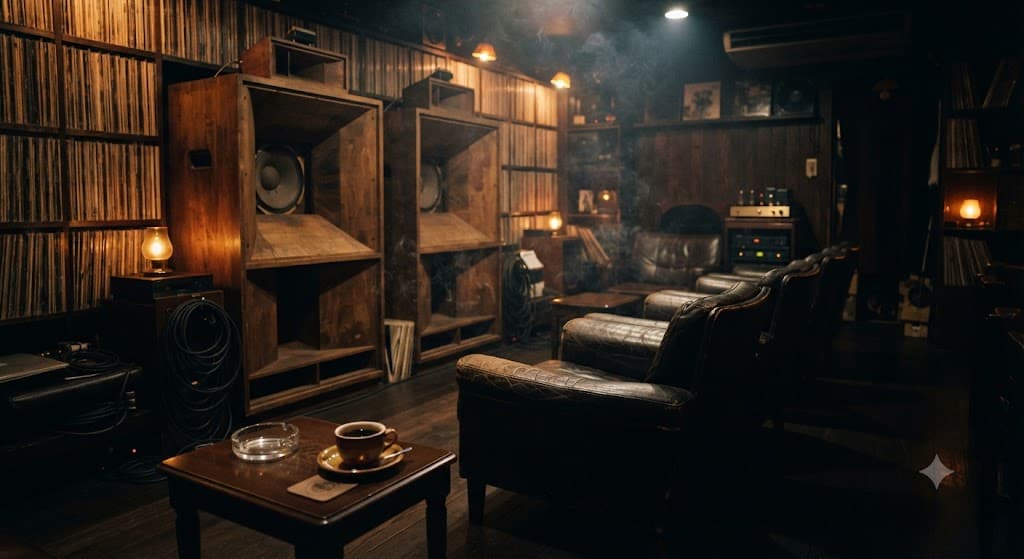
- Postwar Japan developed a cultural institution with no real equivalent abroad: the ジャズ喫茶(Jazu Kissa: jazz listening café), a small room with expensive audio equipment where customers sat in silence and did nothing but listen to records at high volume.
- The habits that made the jazz kissa possible — treating a single record as an event, giving music your undivided attention, accepting a set of unspoken rules to protect the sound — are the same habits that make Cowboy Bebop's soundtrack land the way it does.
Key Terms Explained
- 喫茶店 (Kissaten) / Coffee Shop — The traditional Japanese café, a small owner-run room where a single cup of coffee buys you the right to stay for hours.
- ジャズ喫茶 (Jazu Kissa) / Jazz Café — A kissaten dedicated to listening. High-end speakers, a large record collection, and a room arranged so every chair faces the sound rather than the other customers.
- 私語厳禁 (Shigo Genkin) / No Talking Permitted — The house rule of the classic jazz kissa. Conversation, not smoking or drinking, was the forbidden act.
- リクエスト帳 (Rikuesuto Chō) / Request Notebook — A notebook on the counter where customers wrote the record they wanted to hear, so that not even a spoken request would break the silence.
- 間 (Ma) / Charged Interval — The Japanese aesthetic of meaningful gaps: the silence between sounds is not empty, it is part of the music.
The Café I Knew the Rules Of and Never Walked Into
I knew about jazz kissa long before I ever understood what they were for. You heard about them the way you heard about certain restaurants: the volume was enormous, nobody spoke, and if you wanted to hear something you wrote it in a notebook. That was the whole description, and it was enough to keep me outside.
 Listening seriously once meant sitting down in front of the speakers for the whole side of a record.
I never went in. Not once. The threshold felt too high — the idea of walking alone into a small dark room full of regulars who had already agreed on a silence I hadn't been taught, and then sitting there being wrong about how to listen. So I stayed on the pavement side of the door, a man who knew the etiquette of a place he never entered.
What I did instead was build a smaller version at home. When I wanted to listen seriously, I put a record on the home stereo, turned it up, sat down in front of the speakers, and stayed there for the length of the side. Not music while doing something else — music as the thing being done. The little scrape before the needle settles, the gap between tracks, the moment where nothing happens: I counted all of it as part of the record. I loved jazz, though the center of gravity in my listening back then was Western rock — the Beatles, Deep Purple, the records that made the West feel less like a distant refinement and more like a window someone had thrown open. Jazz was the music I sat still for.
Years later, teaching myself alto saxophone alongside guitar, drums, and piano, I finally understood what those silent rooms were protecting. And then Cowboy Bebop opened with "Tank!" — a full big band coming in over the credits, upright bass first, horns piling on top — and I recognized the room instantly. Somebody had built a listening space and put a television show inside it.
Related: Black Butler and Japan's Butler-Café Culture: The Real-World Fantasy of the Perfect Servant explains this in detail.
The Postwar Invention of the Listening Room
Why Silence Was a Technology
 In a jazz kissa the chairs face the speakers, not each other — the room itself is arranged around the sound.
The jazz kissa exists because of scarcity. In the years after the war, imported jazz records were expensive and hard to get, and the audio equipment capable of doing them justice was far beyond an ordinary household. A student could not own Coltrane. But a student could afford one cup of coffee.
So the economics inverted. The café owner bought the records and the speakers; the customer rented access to them by the hour. What you paid for was not the coffee — the coffee was famously an afterthought — but a seat in front of a system you could never have at home.
Once you understand that, the strange rules stop being strange. 私語厳禁 was not snobbery. If the entire value of the room is the sound, then conversation is theft. You are stealing something the person two seats away paid for. The リクエスト帳 exists for the same reason: even asking for a song out loud would put a human voice on top of the record. Silence was not a mood. It was infrastructure.
The Room as an Instrument
Walk into an old jazz kissa and the geography tells you everything. The chairs face the speakers, not each other. The speakers themselves are often enormous American horn systems — the kind of cabinets built for cinemas — pushed into a room the size of a Tokyo living room, playing at a volume that would be antisocial anywhere else. The owner's record collection lines the wall like an argument being made in public.
The volume matters more than people outside Japan tend to assume. This was not ambient listening. It was loud enough that the music physically occupied you, loud enough that talking would have been difficult anyway. The room was tuned to make one thing possible and everything else impossible.
The Grammar of a Session
Cowboy Bebop imports that logic wholesale. Every episode is a Session — the word jazz musicians use for the act of playing together, unrehearsed, listening to each other and responding. The first episode is titled after a blues form, and the score by Yoko Kanno and The Seatbelts behaves like a real band rather than a synthesizer library: horns answer each other, a walking bassline sets the tempo of a scene, a solo runs long because a solo should run long.
That is why the closing theme, "The Real Folk Blues," works the way it does. It doesn't summarize the episode. It sits at the end like the last track on a record side — a piece of music you are expected to hold still for while it finishes.
There is also 間(Ma: the charged interval) at work. Bebop's scenes breathe. Characters do nothing for a beat too long, a shot holds after the action ends, and the score is often willing to be silent. In a jazz solo, the notes you don't play define the ones you do. In a jazz kissa, the silence between records is when the room resets. Watanabe's series is structured on the same principle, and I think overseas viewers feel it before they can name it.
Why It Became the World's Jazz Doorway
For an enormous number of fans outside Japan, Cowboy Bebop was the first time jazz arrived without homework attached. No canon, no reverence, no gatekeeping — just a big band playing over a spaceship. The series reproduced the jazz kissa's core function almost by accident: it gave people a room in which jazz was simply the thing happening, and let them stay. It didn't ask them to know anything first. That is a very Japanese way of handing over a foreign culture, and it is exactly how jazz entered Japan in the first place.
The Vanishing Room
Living outside Japan for many years now, the absence I notice most is not a food or a season. It is a kind of room.
 A handful of jazz kissa survive, but sitting in silence with one record is no longer an ordinary way to spend an afternoon.
Here, there is no such thing as a place you go specifically to be quiet and listen. Music is everywhere — in cafés, in bars, in shops — and it is always underneath something else: conversation, food, commerce. The idea of an establishment whose entire business model is stop talking and pay attention to this record would strike most people here as either eccentric or slightly hostile. I have never found one, and I have stopped looking.
I don't want to be sentimental about this. Streaming has given me access to more jazz in one afternoon than an entire wall of records in a listening café, and I use it constantly. But something did quietly change in the exchange. When music costs nothing and is infinitely available, the natural way to consume it is as background — a layer under work, under walking, under sleep. The jazz kissa made listening expensive in a very particular way: not in money, but in attention and constraint. You had to sit down. You had to stop talking. You had to give the record its full length. And the record, in return, gave you something you could not get any other way.
The jazz kissa hasn't disappeared — a stubborn handful survive, and a younger generation both in Japan and abroad has started opening listening bars in the same spirit. But it is no longer a normal thing to do on a weekday afternoon, and I suspect it never will be again.
Which leaves me with an odd, late realization. The door I did not walk through as a young man was not really the door of a café. It was the door of a habit — a way of treating music as an event rather than a surface. And every time Cowboy Bebop opens with those horns and asks me to sit still for twenty-four minutes, it is quietly asking me to walk through it after all.
FAQ
Q: Is a jazz kissa the same as a jazz bar or a live music venue?
A: No. A jazz bar has live musicians and conversation; a jazz kissa plays recorded music through a high-end sound system and traditionally forbids talking. The performer in a jazz kissa is the record — and the owner's stereo. Some modern "listening bars" blend the two, but the classic form is strictly about recorded sound.
Q: Do jazz kissa still exist in Japan today?
A: Yes, though far fewer than at their peak. Some long-running establishments continue to operate, mostly run by aging owners, and a newer wave of listening bars has adopted a similar spirit with a more relaxed attitude toward conversation. Finding one usually takes deliberate effort rather than a casual walk down a main street.
Q: Do I need to know jazz to appreciate Cowboy Bebop's soundtrack?
A: Not at all, and that is precisely the point. The score by Yoko Kanno and The Seatbelts was written as functional music for a story, and it introduced an entire generation of overseas viewers to big band, bebop, and blues without asking them to study anything first. Many fans discovered jazz backwards — through the anime and then into the records.
Key Insights to Remember
- The jazz kissa's famous silence rule was not an aesthetic pose but a practical solution to scarcity. When the records and the equipment belong to the room rather than to any individual, protecting the sound becomes a shared obligation, and the request notebook exists so that even the act of asking cannot damage what everyone came for.
- Cowboy Bebop borrows the structure of jazz, not merely its instruments. Calling each episode a Session, letting scenes breathe, and allowing the score to solo rather than merely underscore are all decisions that treat the audience as listeners, not just viewers. The series asks for the same posture the jazz kissa demanded.
- Abundance and attention pull against each other. The postwar Japanese listener had almost no access to jazz and gave it total concentration; the modern listener has total access and gives it partial attention. Neither situation is simply better, but noticing the trade is the first step to choosing, sometimes deliberately, to sit down in front of the speakers again.
Sources & References
- Jazz kissa — Wikipedia
- Cowboy Bebop — Wikipedia
- Yoko Kanno — Wikipedia
- The Seatbelts — Wikipedia
- Tokyo Jazz Joints — a photographic archive of Japan's jazz cafés — Tokyo Jazz Joints
About the author

Spoiler-free cultural deep-dives into anime, manga & live-action Japanese drama
- ●Tokyo-born, 3rd-generation Edokko (江戸っ子)
- ●Lifelong manga reader & anime viewer since the kaiju era
- ●Writes from outside Japan — distance as a cultural lens
- ●Spoiler-free · sourced · Kanji + Romaji + English
A Tokyo-born, 3rd-generation Edokko writer who has spent years living outside Japan. I use the anime, manga, and live-action Japanese drama you already love as a doorway into the folklore, language, religion, and everyday history behind them — written so even first-time fans can follow along, with sources for every claim.
Enjoy this article?
Get the next spoiler-free cultural deep-dive straight to your inbox.
Related Articles
Frieren: Beyond Journey's End and the Weight of Time: Why the Anime Measures Life in Decades, Not Days
How Frieren: Beyond Journey's End turns the Japanese sense of 無常 (mujō, impermanence) into narrative structure — running its clock in decades so an elf's long life reveals the beauty and worth of our short human ones.
7/27/2026

Blue Lock and the Riddle of Samurai Blue: Why Japan's Football Team Wears Blue When the Flag Is Red
How Blue Lock's blue-drenched world opens onto a real puzzle — why Japan's Samurai Blue football team wears indigo when the national flag holds no blue at all.
7/10/2026
Demon Slayer and Mono no Aware: How Tanjiro's Mother Speaks the Aesthetics of Impermanence
How Demon Slayer dramatizes mono no aware — the mother's weather metaphor in episode one and the Japanese aesthetics of impermanence woven quietly behind it.
7/9/2026
Kuroko's Basketball and the Kurogo: How a Black-Clad Stagehand Became the Phantom Sixth Man
How Kuroko's Basketball builds its phantom sixth man on kurogo, the kabuki and bunraku stagehand who stands in full view yet is treated as unseen.
6/4/2026
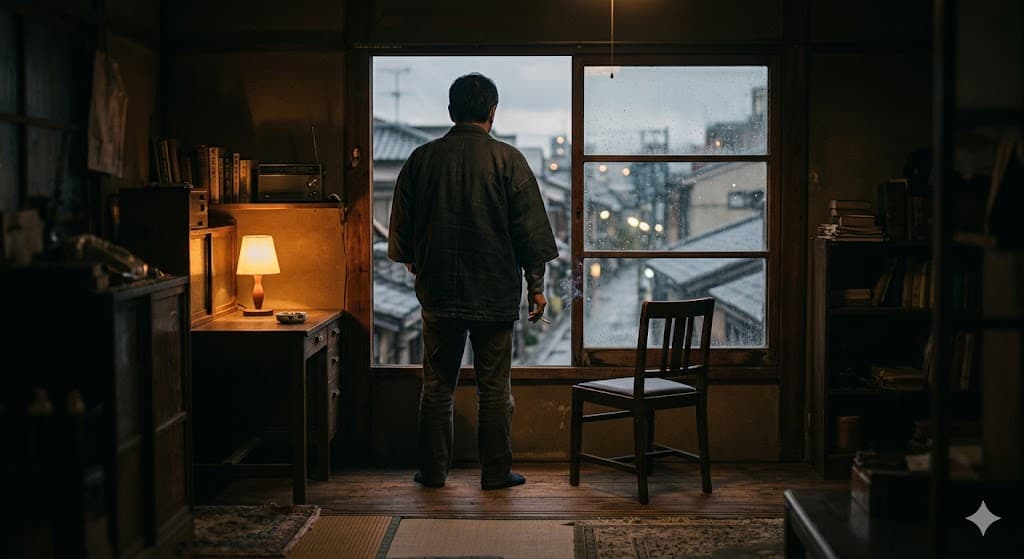
Dandadan and the Ghost of Ken Takakura: Why Japan Adored the Man Who Couldn't Say I Love You
How Dandadan turns a heroine's crush on Ken Takakura into a window onto bukiyō, the Showa ideal that read a man's silence as proof of sincerity.
5/30/2026
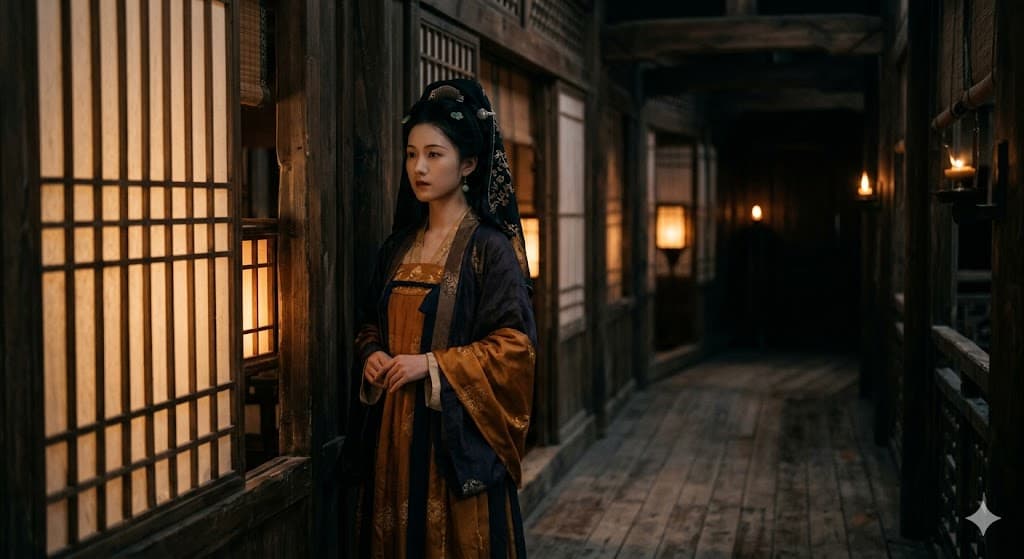
The Apothecary Diaries and the Art of Playing Dumb: Why Maomao Hides Her Brilliance
How The Apothecary Diaries dramatizes deru kui wa utareru, the Japanese habit of hiding talent, and why Maomao's playing dumb feels so familiar in Japan.
4/30/2026