Neon Genesis Evangelion Surnames and the Imperial Navy Code
How Neon Genesis Evangelion's character surnames quietly inherit the Imperial Japanese Navy ship-naming system — a hidden layer most viewers outside Japan never notice.

Tokyo-born, 3rd-generation Edokko · writing on Japanese culture from outside Japan
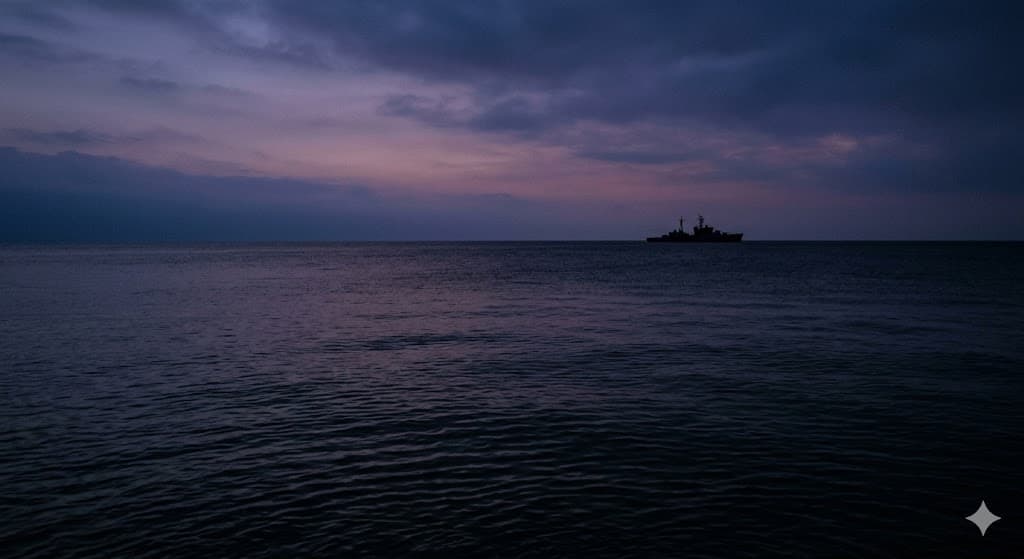
Spoiler-Free Cultural Analysis
This article examines the real historical naming conventions of the 旧大日本帝国海軍(Kyū Dai-Nippon Teikoku Kaigun: the former Imperial Japanese Navy) and how those conventions echo through the character surnames of Neon Genesis Evangelion. No plot points are revealed beyond what appears in publicly available episode synopses.
Key Takeaways
- The five main surnames introduced in Episode 1 of Neon Genesis Evangelion — Ikari, Katsuragi, Akagi, Fuyutsuki, and Ayanami — all correspond to actual warships of the Imperial Japanese Navy, drawn from a strict pre-war naming system that assigned ship types to specific categories of Japanese words.
- Imperial Japanese Navy ship names followed a rigid taxonomic code: battleships took old province names, cruisers took mountains or rivers, destroyers took weather and plants, aircraft carriers took auspicious flying creatures or storied names. The pattern was not decorative — it was a bureaucratic grammar.
- Post-war Japanese fiction has inherited this vocabulary almost as a kind of cultural muscle memory. Space Battleship Yamato, Mobile Suit Gundam, and Neon Genesis Evangelion all draw on Imperial Navy names, each work negotiating a different relationship with the memory of the war.
Key Terms Explained
- 旧国名 (Kyūkokumei) / Old Province Names — The pre-Meiji administrative provinces of Japan (Yamato, Musashi, Nagato, etc.), used as battleship names in the Imperial Navy.
- 駆逐艦 (Kuchikukan) / Destroyer — A small, fast warship class; Imperial Navy destroyers were named after weather phenomena and plants.
- 軽巡洋艦 (Keijun'yōkan) / Light Cruiser — A mid-sized cruiser class; Imperial Navy light cruisers were named after rivers.
- 空母 (Kūbo) / Aircraft Carrier — Major Imperial Navy carriers took names with auspicious or mythological resonance, often associated with flight or sacred geography.
- 庵野秀明 (Anno Hideaki: Hideaki Anno, director) — Director and writer of Neon Genesis Evangelion, known for embedding dense layers of military, religious, and literary reference into his work.
The Day a Name Stopped Being Just a Name
I first watched Neon Genesis Evangelion in the mid-1990s, when it aired in Japan and reshaped what serious anime could look like. At the time, the surnames simply registered as Anno's poetic choices — Ikari (碇), Katsuragi (葛城), Akagi (赤木), Fuyutsuki (冬月), Ayanami (綾波). They sounded weighty. They sounded right. I thought no more about them than that.
 A 1990s television broadcast — the era when Evangelion first aired in Japan and quietly buried its naval code inside character names.
It was only years later, long after I had moved away from Japan, that I learned what those names were actually doing. Every single surname introduced in the first episode of Evangelion corresponds to a warship of the 旧大日本帝国海軍(Kyū Dai-Nippon Teikoku Kaigun: the former Imperial Japanese Navy). Not loosely. Not by coincidence. By design.
What struck me was not the cleverness of the choice but the fact that I — born and raised in Tokyo, third-generation 江戸っ子(Edokko: a true Tokyoite), having watched the show in its original broadcast — had missed it for so many years. I knew the most famous names. 戦艦大和(Senkan Yamato: the battleship Yamato), 空母赤城(Kūbo Akagi: the aircraft carrier Akagi). My parents' generation lived close enough to the war that these names carried real weight. But the system behind them — the way the Navy assigned names to ship classes — I had never been taught.
That gap is, in a way, the subject of this article.
Related: Evangelion's Angels and Japan's Decorative Christianity explains this in detail.
The Imperial Japanese Navy's Naming Grammar
The Imperial Japanese Navy did not pick names at random. From the Meiji era onward, the Navy developed an internal classification system in which each ship class received names from a specific category of Japanese words. This was a quiet bureaucratic poetry, and once you see it, you cannot unsee it.
 The Imperial Japanese Navy assigned ship names by strict category — provinces, mountains, rivers, weather, plants — forming a bureaucratic poetry of the fleet.
Related: Neon Genesis Evangelion and the Danchi: The Loneliness of Japan's Concrete Utopia explains this in detail.
The Categories
戦艦(Senkan: battleships) took the names of 旧国名(Kyūkokumei: old province names from the pre-Meiji administrative map). 大和(Yamato: Province of Yamato), 武蔵(Musashi: Province of Musashi), 長門(Nagato: Province of Nagato), 陸奥(Mutsu: Province of Mutsu). These were the heaviest, most symbolically loaded ships, and they received the names of the regions that had once defined the country itself. A battleship was, in this grammar, the embodied weight of historical Japan.
重巡洋艦(Jūjun'yōkan: heavy cruisers) took the names of 山(yama: mountains). 赤城(Akagi: Mount Akagi), the famous aircraft carrier, was originally laid down as a battlecruiser and named after a mountain in 群馬県(Gunma-ken: Gunma Prefecture). When she was converted to a carrier under the Washington Naval Treaty, the mountain name stayed.
軽巡洋艦(Keijun'yōkan: light cruisers) took the names of 川(kawa: rivers). The list reads almost like a geography textbook — 利根(Tone: Tone River), 最上(Mogami: Mogami River), 球磨(Kuma: Kuma River), 長良(Nagara: Nagara River).
駆逐艦(Kuchikukan: destroyers) — the smaller, faster ships that did the bulk of the fleet's escort work — took names from two specific categories: 気象(kishō: weather and atmospheric phenomena) and 植物(shokubutsu: plants). Names like 雪風(Yukikaze: snow wind), 時雨(Shigure: autumn drizzle), 綾波(Ayanami: twill-patterned waves), 冬月(Fuyutsuki: winter moon).
空母(Kūbo: aircraft carriers) had a slightly looser convention but often took names associated with flying creatures, mythological resonance, or sacred geography — names like 飛龍(Hiryū: flying dragon), 蒼龍(Sōryū: blue-green dragon), 翔鶴(Shōkaku: soaring crane), 加賀(Kaga: old province name, inherited from her original design as a battleship).
Related: Neon Genesis Evangelion and the Walkman: Why Shinji Retreats Into His Headphones explains this in detail.
The Five Surnames Decoded
Now lay the Evangelion surnames against this grammar.
碇(Ikari) is the Japanese word for "anchor" — not a ship name per se, but the universal symbol of a ship. The commander of NERV carries the name of the thing that holds a vessel in place.
葛城(Katsuragi) was a light aircraft carrier of the 雲龍型(Un'ryū-gata: Un'ryū class), completed in late 1944. The name comes from 葛城山(Katsuragi-san: Mount Katsuragi), straddling 奈良(Nara) and 大阪(Ōsaka), a peak heavy with Shinto and mountain-ascetic associations.
赤木(Akagi) — the surname is written with slightly different kanji than the carrier 赤城, but the phonetic identity is unmistakable, and the reference is universally understood by Japanese viewers. The carrier Akagi was Admiral Nagumo's flagship at Pearl Harbor and was lost at the Battle of Midway.
冬月(Fuyutsuki) was a destroyer of the 秋月型(Akizuki-gata: Akizuki class), an anti-aircraft destroyer that survived the war and was later scrapped. "Winter moon" — a 気象(kishō: weather) name, exactly as the destroyer naming code prescribed.
綾波(Ayanami) was a destroyer of the 吹雪型(Fubuki-gata: Fubuki class), sunk during the Naval Battle of Guadalcanal in November 1942. "Twill-patterned waves" — again, weather and water. A destroyer name.
The pattern is too clean to be coincidence, and Anno has never disguised it. He chose these names because they fit a system.
Why a Director Would Reach for Warships
This is where the cultural reading gets interesting. Anno's generation grew up in a Japan still close enough to the war that warship names carried real cultural charge. 宇宙戦艦ヤマト(Uchū Senkan Yamato: Space Battleship Yamato, 1974) had already established that anime could borrow Imperial Navy vocabulary and channel it into something that was neither glorification nor straightforward apology — something more like inheritance. Mobile Suit Gundam did similar work with its ship and weapon naming. By the time Anno started building Evangelion in the early 1990s, the convention of borrowing naval names was, for Japanese science fiction, almost a genre expectation.
But Anno tightened the convention into a system. He did not just sprinkle warship references; he made every major surname in the founding cast a coherent piece of naval grammar. The viewer who knows the code reads NERV's command staff as, in effect, a fleet.
A Country That Keeps Talking to Its Ghosts
When I look at this naming system from outside Japan — and I have lived outside Japan for a long time now — what strikes me is how casually post-war Japanese fiction continues to converse with the dead of the Pacific War. Not through speeches or monuments, but through vocabulary. The name of a destroyer that went down in 1942 becomes the name of a high school girl in a 1995 anime, and the show does not announce this. It simply assumes that the cultural memory will resonate, at least for those who happen to know.
 Post-war Japanese fiction keeps the vocabulary of vanished warships alive, letting their names drift quietly into new stories.
For Japanese viewers, this resonance has been there since I was a child. As a 戦後生まれ(Sengo-umare: someone born in the post-war period), I grew up with two feelings about old warship names sitting side by side and never resolving — the heaviness of what my parents' generation remembered, and the simple, uncomplicated coolness of the names themselves. "Yamato" was a battleship that died trying to reach Okinawa in April 1945, and it was also the title of a Saturday-morning anime I watched as a child. Both were true at the same time.
What an English-speaking viewer of Evangelion generally encounters is only the second layer — the cool sound, the dramatic kanji, the sense that the names mean something without quite being able to say what. The first layer, the actual ledger of ships and where they were sunk and what was lost on board, is largely invisible. This is not a flaw of translation. It is simply what happens when a work travels.
I am not sure whether to mourn this gap or accept it. Japan itself has had an ambivalent relationship with the memory of the Imperial Navy — refusing to romanticize it in any direct way, while continuing to recycle its vocabulary in popular culture. There is something honest in that ambivalence. The names are kept alive, but kept slightly off to the side, where they can carry weight without being used to make speeches.
A work like Evangelion sits in exactly that off-to-the-side space. It uses the names. It does not explain the names. It trusts the viewer to either know or not know, and lets the meaning settle wherever it can.
FAQ
Q: Did director Hideaki Anno publicly confirm that the surnames come from Imperial Navy ships?
A: Yes. The naval origin of the surnames is well-established, and the pattern across the cast is too systematic to be coincidence.
Q: Are all the Evangelion surnames from warships, or just the main cast?
A: The pattern is most concentrated in the senior NERV staff and pilots introduced early in the series. Many of the surnames across the broader cast continue to reference Japanese warships or naval vocabulary, though the strictness of the system loosens for some minor characters.
Q: Why did the Imperial Japanese Navy have such a rigid naming system?
A: The categorical system — old provinces for battleships, mountains for heavy cruisers, rivers for light cruisers, weather and plants for destroyers — made fleet composition immediately legible to anyone who knew the code. A signal mentioning "Tone" or "Mogami" told you, without further explanation, what kind of ship you were dealing with. It was bureaucratic shorthand wearing the clothes of poetry.
Key Insights to Remember
- The Evangelion surnames are not aesthetic flourishes; they form a coherent linguistic structure borrowed wholesale from a real bureaucratic naming code. Recognizing the structure changes how the cast itself reads — they become not just individuals but, in a sense, a fleet, with the commander Ikari (anchor) symbolically holding the rest in place.
- Post-war Japanese fiction has inherited Imperial Navy vocabulary the way other cultures inherit folk songs — by recycling it, often without explanation. The continued use of warship names in Yamato, Gundam, and Evangelion is less a political statement than a form of cultural memory that has not yet decided what to do with itself, and may never need to.
- For a non-Japanese viewer, the surnames will always carry only part of their original meaning. This is not a failure of translation but a feature of how cultural works travel. What matters is being able to see the layer at all — to know that beneath the cool sound of "Ayanami" lies a destroyer sunk off Guadalcanal in 1942, and that the work is, quietly, inviting that knowledge in.
Sources & References
About the author
Spoiler-free cultural deep-dives into anime, manga & live-action Japanese drama
- ●Tokyo-born, 3rd-generation Edokko (江戸っ子)
- ●Lifelong manga reader & anime viewer since the kaiju era
- ●Writes from outside Japan — distance as a cultural lens
- ●Spoiler-free · sourced · Kanji + Romaji + English
A Tokyo-born, 3rd-generation Edokko writer who has spent years living outside Japan. I use the anime, manga, and live-action Japanese drama you already love as a doorway into the folklore, language, religion, and everyday history behind them — written so even first-time fans can follow along, with sources for every claim.
Enjoy this article?
Get the next spoiler-free cultural deep-dive straight to your inbox.
Related Articles
Your Name and Kumihimo: The Real Japanese Craft Behind Mitsuha's Braided Cord
How Your Name dramatizes kumihimo as a picture of musubi, and the real braided-cord craft behind it, from samurai armor to the modern kimono obijime.
10/12/2026

Touch and the Alps Stand of Koshien: Why Japan Unbolts Stadium Seats for a School Brass Band
How Touch's high-school baseball world leads to Koshien's Alps Stand, named by a cartoonist, and why seats are removed each August for school brass bands.
8/14/2026

Summer Wars and Hanafuda: The Flower Cards That Built Nintendo Before Video Games
How Summer Wars puts a deck designed to survive a gambling ban on the table, and why Nintendo spent its first 86 years making those flower cards by hand.
8/13/2026

In This Corner of the World and Japan's Noon Silence on August 15: The Minute a Whole Country Stops
How In This Corner of the World, set in wartime Kure, connects to Japan's mokutō, the noon silence each August 15 timed to the 1945 surrender broadcast.
8/12/2026

Sailor Moon and the Sailor Fuku: Why Japan Put a Skirt on a British Naval Uniform
How the sailor uniform behind Sailor Moon reached Japan — a British naval design adopted in 1920 so girls could do gymnastics, and the school that first paired the top with a skirt.
8/6/2026

Silver Spoon and Japan's Agricultural High Schools: The Real Nōgyō Kōkō Behind Ooezo
How Silver Spoon draws on Japan's real agricultural high schools — around 300 of them — and why their student farming clubs were deliberately modelled on an American organisation after the war.
8/5/2026