Delicious in Dungeon and Itadakimasu: The Mealtime Word That Means I Receive This Life
How Delicious in Dungeon makes Itadakimasu visible — the Buddhist and Shinto idea of receiving life behind a phrase foreign viewers mistake for let's eat.

Tokyo-born, 3rd-generation Edokko · writing on Japanese culture from outside Japan
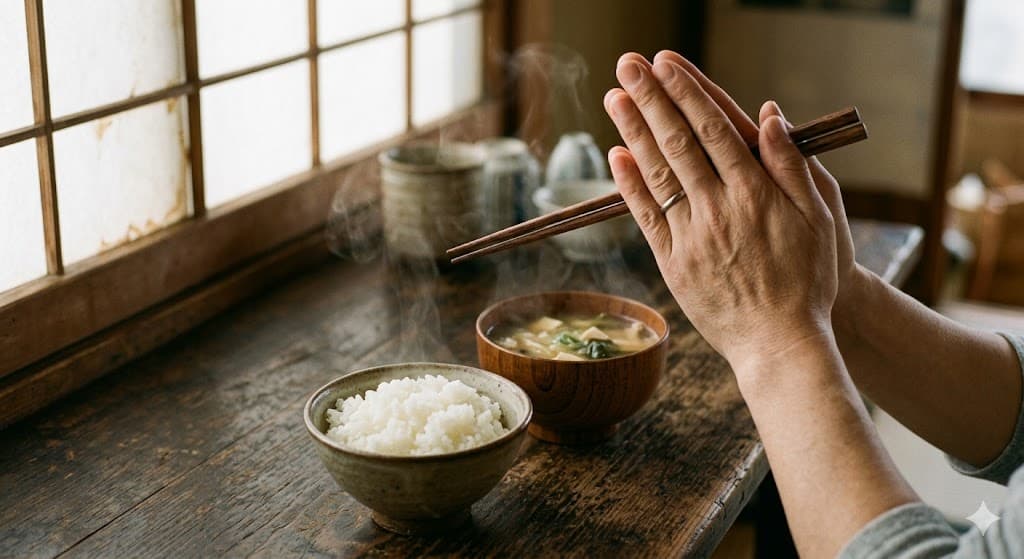
Spoiler-Free Cultural Analysis
This article explores the real religious and linguistic background behind a single Japanese mealtime word as it surfaces in Delicious in Dungeon (known in Japan as Dungeon Meshi). It stays with the premise of the first episode and the themes that frame the series — no plot revelations beyond the official setup.
Key Takeaways
- The Japanese pre-meal word いただきます (Itadakimasu: I humbly receive) is not the equivalent of "Let's eat" or "Bon appétit." It is closer to "I humbly receive this life," and the part most often dropped in translation is exactly the part that matters.
- Delicious in Dungeon takes a phrase that most Japanese people say automatically and forces it back into the light: every creature is shown being caught, cut apart, cooked, and eaten with full awareness of what it was. The show is, in a sense, an animated lesson in what いただきます originally meant.
- The idea sits on two older foundations at once — the Buddhist unease about taking life and the Shinto sense that a spirit lives in everything, including the vegetables. That double inheritance is why the word can hold both gratitude and a quiet apology.
Key Terms Explained
- いただきます (Itadakimasu) / I Humbly Receive — The phrase said before eating. It comes from a humble verb of receiving, not from any word meaning "to start" a meal.
- 命をいただく (Inochi wo Itadaku) / To Receive a Life — The unspoken phrase many feel sits in front of いただきます: an acknowledgment that something living was given up so you could eat.
- 殺生 (Sesshō) / The Taking of Life — The Buddhist concept of killing living beings, discouraged by the first precept and the root of centuries of unease about eating meat in Japan.
- 草木国土悉皆成仏 (Sōmoku Kokudo Shikkai Jōbutsu) / Even Plants and Land Attain Buddhahood — A Buddhist teaching that grass, trees, and the earth itself possess Buddha-nature, extending "life" far past animals.
- 精進料理 (Shōjin Ryōri) / Devotional Cuisine — The plant-based temple cooking developed by Buddhist monks, built around the principle of not taking life and of wasting nothing.
The Word I Said for Years Without Ever Hearing It
When I was a child, いただきます was something I chanted, not something I understood. At home it was casual — we said the word, but no one folded their hands or made a ritual of it. The version I can still hear clearly is the school lunch version: the 給食当番(Kyūshoku Tōban: the pupils on lunch duty) calling out the cue, and the whole class saying いただきます in one voice before anyone touched a tray. It lived in my body as a classroom rule more than as a family habit.
 For many Japanese, itadakimasu enters the body first as a school-lunch ritual recited in unison, long before its deeper meaning is understood.
And for the longest time, I thought I knew what it meant. To my child's mind, いただきます was a thank-you to the people who made the food — the cook at home, the farmers who grew the rice and vegetables, the fishermen who pulled in the fish. A polite nod to human effort. That was the whole of it, as far as I was concerned.
It was only as an adult that the floor dropped out from under the word. The deeper meaning — that いただきます is gratitude for the life you are about to take, the lives of the animals and plants themselves — was something I had been saying past, every single day, for years. I had been mouthing a small act of reverence without once stopping to hear it. That gap, between the phrase you recite and the meaning you finally catch up to, is exactly the gap Delicious in Dungeon decided to fill in.
The series begins simply enough. A party of adventurers loses a companion to a red dragon deep in a dungeon, and — broke, out of supplies, and out of time — they make a decision most fantasy stories would never dwell on: if the dungeon is a working ecosystem, then the dungeon can feed them. They will hunt and eat the monsters. They meet a dwarf, Senshi, who has spent years doing exactly that, and the show settles into its real subject: not the rescue, but the meals. Each creature is caught, butchered, simmered, and eaten on screen, in full. What looks at first like a comedy about eating slime is, underneath, the most patient illustration of いただきます I have ever seen.
Related: Delicious in Dungeon and the Proverb Hara ga Hettewa Ikusa wa Dekinu: Why Japan Treats Supply as Strategy explains this in detail.
From a Word on the Head to a Word for Life
The Verb That Means to Lift Something to Your Crown
 Shōjin ryōri, the devotional cooking of Buddhist monks, answers the precept against taking life by using no meat or fish and wasting nothing.
The word itself is humbler, and older, than it sounds. いただきます is the polite present of the verb 頂く(Itadaku: to receive), which is itself a humble form of もらう(Morau: to get or receive). But go back far enough — into the language of the 万葉集(Man'yōshū: Japan's oldest poetry anthology) — and 頂く meant something more physical: to place a thing on top of your head. The 頂(itadaki) is the crown of the head, and also the summit of a mountain.
That image is the whole key. To "receive" with reverence once meant to lift the offered thing up to your forehead, the highest point of the body, in a gesture of accepting something from above your own station. When you say いただきます and bow slightly over your chopsticks, you are performing a faint, worn-down version of that movement — raising the meal, symbolically, over yourself. The word does not announce that dinner is served. It lowers you beneath the food.
Many Japanese people feel an invisible phrase standing in front of it: 命を, inochi wo. Receiving a life. Said in full, いただきます edges toward something like I am taking your life into mine, and I am grateful. That is why, unlike "Bon appétit," the word is said even when you eat completely alone. There is no host to thank and no companion to address. The gratitude is aimed at the meal itself.
The Precept Against Killing, and the Problem of Having to Eat
Behind the unease sits Buddhism, which arrived in Japan around the sixth century and brought with it a sharp moral problem. The first of the Buddhist precepts is a prohibition on 殺生(Sesshō: taking the life of a sentient being). Taken strictly, this forbids not only killing an animal yourself but eating one killed by someone else, since to eat the flesh is to take part in the killing.
The trouble, of course, is that human beings cannot live without eating, and eating means something else stops living. Japanese culture never fully resolved that contradiction; instead, it learned to live inside it. Rather than pretend the tension away, people built a habit of turning toward the animals and plants that surrendered their lives and saying thank you. Itadakimasu became the bridge across a gap that doctrine could not close — a way to keep eating while still honoring the cost of it.
The monastic answer to the same problem was 精進料理(Shōjin Ryōri: devotional cuisine), the plant-based cooking refined in Zen temples from the thirteenth century onward by the monk 道元(Dōgen) and others. Its rules read almost like a manifesto: no meat or fish, nothing taken without permission, and — most strikingly — nothing wasted, down to the carrot tops and radish leaves swept into the broth. For ordinary people, an imperial decree against eating meat goes back as far as the seventh century, and a quiet discomfort around flesh-eating lingered, debated by clerics, until meat-eating became widespread again only in the Meiji era. Delicious in Dungeon runs that whole history in reverse and at speed: it refuses to look away from the killing, and then it insists on using every part — the same horror and the same thrift, compressed into a single pot.
When Even the Vegetables Have a Spirit
But Buddhism is only half the inheritance. The other half is 神道(Shintō: the indigenous way of the gods), with its animist sense that a spirit, a 神(Kami: a god or spirit), dwells in mountains, rivers, stones, trees — in everything. Under that older worldview, nature is not raw material to be managed but a living presence on roughly equal footing with you.
Buddhism met that intuition halfway with a remarkable teaching: 草木国土悉皆成仏(Sōmoku Kokudo Shikkai Jōbutsu: even grasses, trees, and the land itself attain Buddhahood). If even a blade of grass carries Buddha-nature, then the line between "a life you take" and "mere food" all but disappears. The vegetables are not innocent bystanders to the meat course. They, too, were alive.
This is the note that makes Delicious in Dungeon feel so specifically Japanese rather than merely macabre. Senshi treats a walking mushroom, a giant scorpion, and the plant pulled from the ground with the same grave attention. Nothing is beneath consideration; nothing is just an ingredient. The series quietly stages the philosophy of its own opening narration — a dream-voice describing the dungeon as a place with no hierarchy of creatures, where the act of eating is simply the privilege of whatever is still alive. Strip away the fantasy, and that is the worldview folded into a word a Japanese five-year-old recites before touching a school lunch tray.
The Phrase That Falls Silent Overseas
Living outside Japan for many years did something to the word that living inside Japan never could: it made it vanish, and only then did I notice its shape. There is no one-word English equivalent for いただきます. "Let's eat" is a starting gun. "Bon appétit" is a wish for the other person's enjoyment. Neither carries the receiving, the lowering, the apology folded into the gratitude. So in an English-speaking daily life, the moment for the word simply stopped arriving, and I let it go without deciding to. It was only once it was gone that I understood it had been a uniquely Japanese habit all along, not a universal one I happened to perform in Japanese.
 Said even when eating alone, itadakimasu directs its gratitude at the meal itself — a habit with no one-word equivalent in English.
I should be honest that the habit was never as uniform as outsiders imagine, either. My own household was not strict about clearing every grain of rice; the lectures about wasting food that some families recall were not really part of mine. The word's weight varies house to house, generation to generation. What does seem constant is that almost no one stops, mid-bite, to think about killing. The phrase has been polished so smooth by daily use that the meaning has slid out of it — which is precisely why a comedy about eating monsters can feel, oddly, like a corrective.
That is the quiet service Delicious in Dungeon performs. By dragging the act of taking life all the way into the foreground — by showing you the scorpion's pincers being trimmed and the slime being washed and dried — it hands the word back its lost weight. You cannot watch the series and still believe いただきます means "let's dig in." The show makes you hear, again, the sentence I spent my childhood reciting without listening to: something living became this, and I receive it. Sometimes it takes a fictional dungeon, or a long absence from home, to return an everyday word to its full size.
FAQ
Q: Does itadakimasu just mean "Let's eat" or "Bon appétit"?
A: No, and that is the most common misunderstanding among non-Japanese viewers. It comes from a humble verb meaning "to receive," and its felt meaning is closer to "I humbly receive this life." It is said even when eating alone, because the gratitude is directed at the food and the lives behind it, not at the people at the table.
Q: Is itadakimasu a religious phrase, and can non-Buddhists say it?
A: Its roots are religious — drawing on both Buddhist ideas about not taking life and Shinto animism — but in modern daily life most people say it without any conscious religious intent. Anyone can use it. Saying it is read as respect for the food and its origins, not as a profession of faith.
Q: Why does Delicious in Dungeon connect so strongly to this idea?
A: Because it refuses the usual shortcut of fantasy food appearing from nowhere. It shows each creature being caught, cleaned, cooked, and eaten, and it treats animals and plants with equal seriousness. That mirror — full awareness of the life being taken, plus a refusal to waste any of it — is exactly the worldview compressed into the word itadakimasu.
Key Insights to Remember
- The strangeness of Delicious in Dungeon is that it dramatizes a piece of ethics most Japanese people carry without noticing. The phrase いただきます already contains the show's premise — taking a life in order to live, and answering that act with gratitude rather than denial. The anime simply refuses to let the awareness stay buried.
- Two religious traditions are doing the work inside one small word. Buddhism supplies the discomfort about 殺生, the taking of life; Shinto animism supplies the conviction that life is everywhere, even in a plant. Held together, they explain why the same phrase can feel like thanks and like an apology in the same breath.
- A word recited a thousand times tends to go silent from the inside. Mine did, both as a child reciting it on schedule and as an adult who stopped saying it abroad and only then felt its outline. Whether it is a long absence from home or a story about cooking monsters, it sometimes takes a jolt from outside the habit to make a worn phrase audible again.
Sources & References
- The Meaning of Itadakimasu in Japanese and How to Use It — FluentU Japanese Blog
- Itadakimasu — Wikipedia
- Itadakimasu and Gochisōsamadeshita: The Mindful Moments of a Meal — Riceye
- What Does "Itadakimasu" Mean? Japanese Mealtime Culture Explained — Japanese Ordinary Life and Mind
- Itadakimasu — a Japanese Expression of Gratitude — More Than Tokyo
- Shōjin Ryōri: Food for Thought, Food for Life — Kokoro Care
- Shojin Ryori, the Food of Buddhist Monks — Japan Experience
- Partaking of Life: Buddhism, Meat-Eating, and Sacrificial Discourses of Gratitude in Contemporary Japan — Religions (MDPI)
About the author

Spoiler-free cultural deep-dives into anime, manga & live-action Japanese drama
- ●Tokyo-born, 3rd-generation Edokko (江戸っ子)
- ●Lifelong manga reader & anime viewer since the kaiju era
- ●Writes from outside Japan — distance as a cultural lens
- ●Spoiler-free · sourced · Kanji + Romaji + English
A Tokyo-born, 3rd-generation Edokko writer who has spent years living outside Japan. I use the anime, manga, and live-action Japanese drama you already love as a doorway into the folklore, language, religion, and everyday history behind them — written so even first-time fans can follow along, with sources for every claim.
Enjoy this article?
Get the next spoiler-free cultural deep-dive straight to your inbox.
Related Articles

Vinland Saga and the Paradise Beyond the Western Sea: What Vinland Shares with Japan's Tokoyo and Fudaraku Tokai
How Vinland Saga's warm land beyond the western sea echoes Japan's Tokoyo belief and the Fudaraku tokai monks who once sailed toward a paradise across the water.
7/18/2026
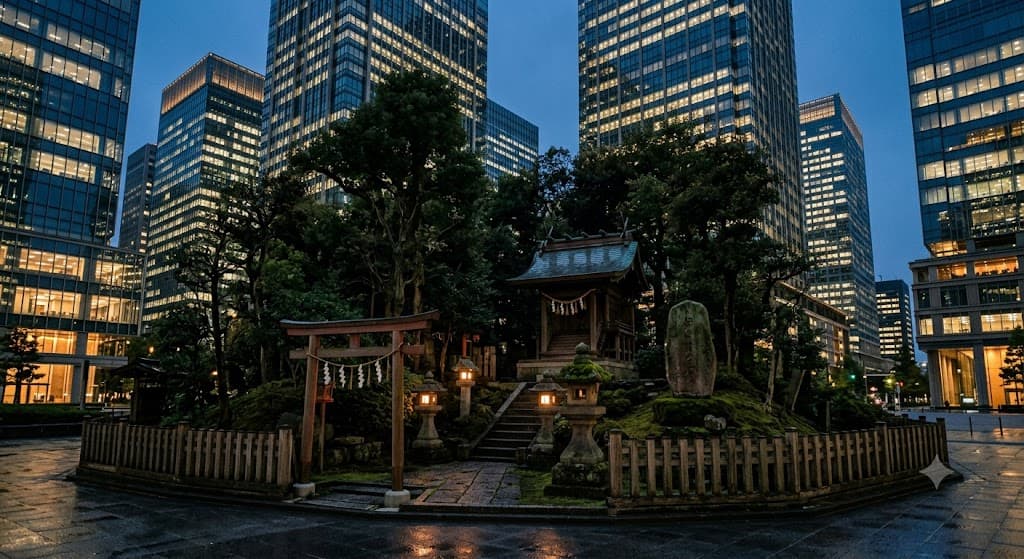
Jujutsu Kaisen and Goryō Shinkō: Why Japan Turns a Vengeful Curse Into a God
How Jujutsu Kaisen dramatizes goryō shinkō — the Japanese belief that turns a wronged spirit's resentment into a curse, then enshrines it as a worshipped god.
6/27/2026

Yu Yu Hakusho and the River Sanzu: The Ferry-Toll, the Stripping Crone, and the Three Crossings of the Dead
How Yu Yu Hakusho's ferrywoman Botan opens a door onto the River Sanzu, where six coins and a clothes-stripping crone decide how the Japanese dead cross over.
6/14/2026
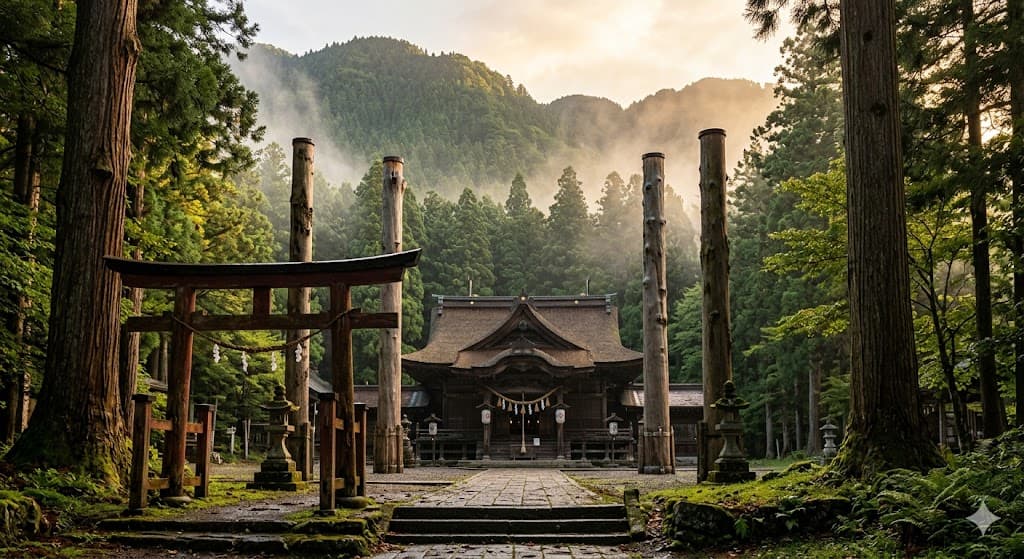
The Elusive Samurai and the Suwa Faith: The Shrine Where the Priest Was Also a Warlord
How The Elusive Samurai uses the priest Suwa Yorishige to open up the Suwa faith — the living-god high priests, the honden-less shrine, and the war god medieval samurai prayed to.
6/8/2026
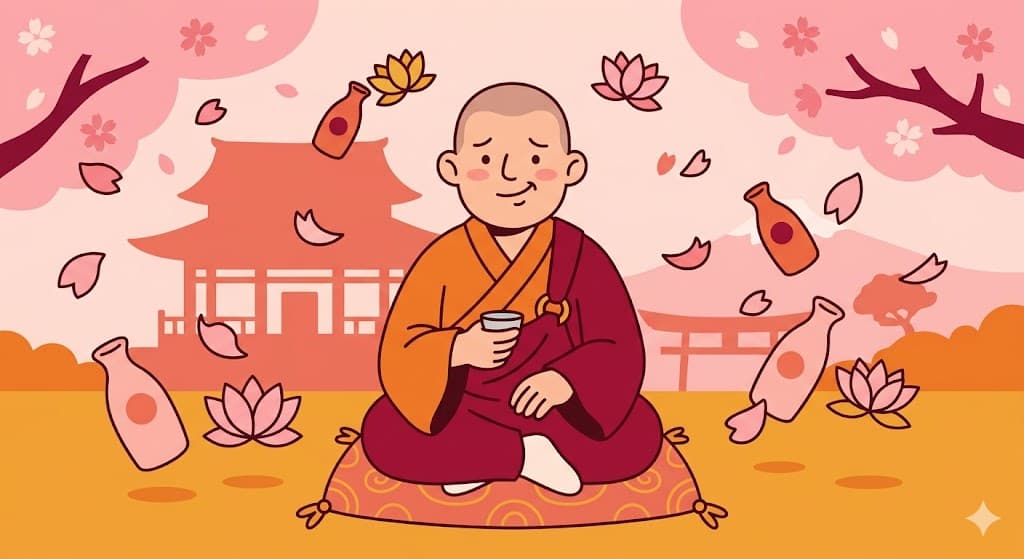
Frieren and the Drinking Monk: Heiter, the 'Corrupt Priest'
How Heiter's running Corrupt Priest joke in Frieren: Beyond Journey's End opens a door into hannyatō and Japan's long, gently bent rule against monks drinking.
5/26/2026
Kengan Ashura and the Buddhist Realm of Strife: Why a Fight Manga Wears the Name of a Warring Deity
How Kengan Ashura draws on the Buddhist concept of 修羅 (Shura) — the warring demigod, the realm of endless combat, and the everyday word for a scene of conflict.
5/15/2026