Death Note and Hissatsu Shigotonin: Japan's Shadow Justice
How Death Note channels Japan's shadow-justice tradition — the TV drama Hissatsu Shigotonin, whose hidden killers punish evil the law itself cannot touch.

Tokyo-born, 3rd-generation Edokko · writing on Japanese culture from outside Japan
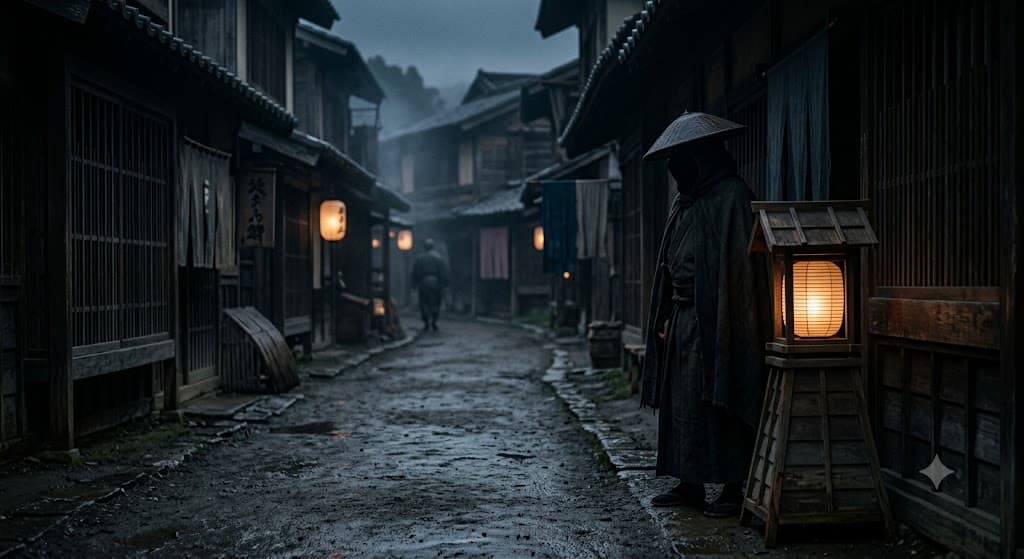
Spoiler-Free Cultural Analysis
This article stays inside the setup of Death Note's first episode — a student finds a lethal notebook and decides to purge the wicked — and uses it as a doorway into real Edo- and Shōwa-era entertainment history. There are no plot twists, no endings, and no reveals here; only themes, atmosphere, and the older Japanese tradition that shaped the story's premise.
Key Takeaways
- The central fantasy of Death Note — that a hidden figure secretly executes the evil people the courts cannot touch — is not an invention of the series but a template Japanese popular entertainment has loved for centuries.
- Long before Light Yagami, television screens were full of shadow executioners: the 必殺 (Hissatsu) shadow-trade dramas and the endlessly repeated poetic justice of 水戸黄門 (Mito Kōmon), the long-running righting-wrongs period drama.
- Understanding why so many Japanese viewers instinctively "get" a protagonist like Light means understanding a long-standing appetite for justice delivered from outside the law, and for the satisfying moment when a protected villain is suddenly stripped of that protection.
Key Terms Explained
- 勧善懲悪 (Kanzen Chōaku) / Reward Good, Punish Evil — The moral engine of most classic Japanese period drama, where the wicked are always exposed and punished before the episode ends.
- 必殺仕事人 (Hissatsu Shigotonin) / The Sure-Kill Workers — A long-running television franchise about ordinary townsfolk who moonlight as paid killers, dispatching evildoers the official law cannot reach.
- 仕置人 (Shiokinin) / The Punishers — The earlier, rawer entry in the same lineage; "shioki" was the Edo word for lawful execution, turned here toward those who "punish" from the shadows.
- 世直し (Yonaoshi) / World-Rectification — The dream of setting a corrupt world right, a recurring wish behind many of these stories.
- 裏稼業 (Uragyō) / The Shadow Trade — The "back-facing profession" a character secretly practices while wearing an ordinary "front" face to society.
The Shadow Executioners of the Family Living Room
Long before I ever heard the name Light Yagami, I grew up on stories about people who took on the jobs the visible law could not do. As a child I was drawn to dramas about 必殺仕事人(Hissatsu Shigotonin: the sure-kill workers) and 仕置人(Shiokinin: the punishers) — figures from a hidden trade who quietly finished off the villains that officials and the wealthy were powerful enough to escape. An official or a merchant who ought to have been beyond punishment would be dealt with, in secret, for money, and the unspoken grief of the people they had wronged would finally be settled somewhere outside the courtroom. Even as a child, that shape of story pulled at me hard: the evil that cannot be brought into the open, judged in secret by someone in the dark.
 Weeknight period dramas were a fixed family ritual in the 茶の間 (chanoma), the living room where poetic justice arrived on schedule.
These period dramas were the kind of thing my family watched together, in the 茶の間(chanoma: the family living room), as a fixed weekly ritual on a set day and time. Every episode ran almost identically, and I knew from the start that the wrongdoer would be brought down by the end — yet that predictability was exactly why it felt safe to watch. Because the shape of the plot was settled, everyone could relax into it, and the tidy comfort of justice always arriving on schedule is something I still remember, together with the whole atmosphere of that room.
So when I finally sat with Death Note's opening — a young man deciding that a rotten world needs someone to erase its criminals — the premise did not feel foreign at all. It felt like a modern, anime-shaped descendant of the very stories I had grown up watching.
Related: Death Note and the Japanese Shinigami: Why Ryuk Is Not the Grim Reaper explains this in detail.
From Edo Vengeance to the Sure-Kill Trade
The idea that runs underneath Death Note — that the law is too corrupt or too weak to punish real evil, so judgment must come from somewhere else — is one Japanese mass entertainment has been refining for a very long time.
 The shadow-trade executioner: an ordinary townsperson by day who settles the grudges the official law can never reach.
The Sure-Kill Series and the Birth of the Shadow Executioner
In the early 1970s a run of television period dramas began that would become one of the most beloved cycles in Japanese TV history. The lineage started with a story about killers-for-hire, and its second entry — broadcast in 1973 — established the template that everything after would follow: a group of outwardly ordinary townspeople who, behind their everyday "front" jobs, take money to settle the unavenged grudges of the powerless. The word 仕置(shioki: punishment, in Edo usage the term for a lawful execution) is deliberately turned inside out here. These are executioners, but ones who operate through the gaps in the law, sentencing the evil that the official system lets slip through.
What makes this lineage so striking is its moral honesty about its own darkness. Unlike the usual 勧善懲悪(Kanzen Chōaku: reward good, punish evil) hero, the protagonists here are not straightforward do-gooders. They are anti-heroes who take payment precisely so that they never get to call themselves "allies of justice," who target only the evildoers the courts genuinely cannot reach, and who investigate carefully so as not to kill the wrong person. Their guiding principle is to settle grudges that can never otherwise be settled — and never to kill for reasons that serve no one. It is a genre built on the uncomfortable knowledge that killing is wrong, dressed up with just enough ethical scaffolding to let the audience cheer.
Line that description up against the setup of Death Note, and the family resemblance is unmistakable. Light adopts a secret identity, キラ(Kira: the vigilante name the public gives him), keeps his ordinary "front" life as a model student, and appoints himself the one who purges the wicked from a world he has decided is beyond saving by normal means. The tools are different — a supernatural notebook instead of a hidden blade — but the job description is centuries old.
水戸黄門 and the Machinery of Poetic Justice
If the sure-kill dramas are the dark cousin, the bright, wholesome cousin is 水戸黄門(Mito Kōmon: the long-running series about the retired lord Tokugawa Mitsukuni wandering the country righting wrongs). Here the fantasy is gentler but the underlying wish is the same. A high-ranking figure disguises himself as a harmless old commoner, travels the land, and exposes corrupt officials and greedy merchants who have been abusing people under the protection of their status.
 The inrō reveal in 水戸黄門 (Mito Kōmon) — the ritual moment when a protected villain is stripped of protection and made to bow.
The famous climax — the retainer holding up the 印籠(inrō: a small lacquered case bearing the Tokugawa crest) so the villains suddenly recognize who they are dealing with and drop to the ground — is a piece of pure ritual theater, and it hides a very old piece of wish-fulfillment. In real history, the lord it is based on never actually wandered the provinces at all. Later generations of ordinary people simply invented the legend, projecting onto him the dream of a powerful protector who comes down to the side of the common folk and sets a crooked world right. That is 世直し(Yonaoshi: world-rectification) in its purest, most comforting form.
The Reversal of Status as Catharsis
What I felt watching these stories as a child was not really about the finishing blow or the catchphrase. The moment that gave me the biggest jolt of satisfaction was always the reversal of status — when a villain who had been strutting around, sure of his own power, learns in a single instant who he is truly facing, and the whole balance flips. Someone he had looked down on as beneath notice turns out to stand far above him; a wrongdoer who thought his rank and wealth made him untouchable is rendered powerless in a heartbeat before a higher justice, and made to bow. In a world where status decided everything, watching that very power invert and turn back on the villain was the sharpest pleasure of all.
Death Note plays on the same nerve. The fantasy at its core is that the people who feel safe — the ones the system protects, the ones the news reports on and then forgets — are suddenly not safe at all, because a hidden judge has quietly decided their fate. The anonymity is new; the emotional payoff is exactly the one I grew up craving in the 茶の間.
What Travels, and What Gets Left Behind
Having lived outside Japan for many years, one thing that stands out to me is how strong this 勧善懲悪 pattern still is — the pattern where every episode cleanly divides good from evil, and the side of justice always wins, and evil is punished before the credits roll. In stories from elsewhere, the line between right and wrong is often left blurred to the very end, or the whole thing closes on a deliberately unsettled, unsatisfying note. By comparison, Japanese audiences seem to want, quite strongly, that final beat where evil is decisively brought down and everything is neatly closed off. There is a certain decisiveness in refusing to leave good and evil ambiguous, and I think it still runs deep in Japanese entertainment.
This is exactly why Death Note is such an interesting descendant of the tradition rather than a simple copy of it. It inherits the shadow-executioner premise wholesale — but then it starts pulling at the thread the older dramas kept carefully knotted. The sure-kill workers always killed for money so they could never mistake themselves for gods; Light does the opposite, and reaches straight for the word "god." A protagonist raised inside the poetic-justice tradition, who nonetheless drags its comforting certainties out into the open and asks whether anonymous, self-appointed judgment is really justice at all, could only feel this pointed to an audience for whom the old pattern is second nature. You have to have loved the template for a long time to feel the discomfort of watching it questioned.
FAQ
Q: Is Death Note based on a real Japanese legend or historical event?
A: No. Death Note is an original manga and anime, not an adaptation of a folk tale. What it draws on is not a specific legend but a durable storytelling pattern — the shadow-justice tradition of period dramas like the 必殺 (Hissatsu) series and 水戸黄門 (Mito Kōmon), in which hidden figures punish the evil the law cannot reach.
Q: What does "shadow justice" actually mean in this context?
A: It refers to judgment delivered from outside the official legal system — by a disguised lord, a paid killer from the "shadow trade," or, in Death Note's case, an anonymous student with a supernatural notebook. The recurring appeal is that corrupt or protected wrongdoers, safe from the courts, are finally held to account by someone operating in the dark.
Q: Why do Japanese audiences seem to sympathize with a character like Light so easily?
A: A large part of it is cultural familiarity. Generations grew up watching stories where villains protected by rank or wealth are secretly brought down and order is restored. That long appetite for poetic justice against the untouchable primes viewers to instinctively understand — even while being unsettled by — a protagonist who appoints himself that hidden judge.
Key Insights to Remember
- Death Note's premise is best read not as a shocking novelty but as the newest link in a very old chain. The wish to see the evil that outranks the law struck down from the shadows has animated Japanese entertainment from Edo-period tales through the 1970s sure-kill dramas to the present, and Light Yagami stands squarely inside that lineage.
- The genius of the older shadow-executioner dramas was their built-in restraint: they let audiences enjoy the killing of villains while quietly insisting that the killers were not saints. Death Note takes that same machinery and removes the safety catch, which is precisely what turns a comforting tradition into an uncomfortable question.
- The pleasure of the status reversal — the protected villain suddenly stripped of protection — is the emotional core that connects a lacquered crest held aloft in a period drama to an anonymous notebook. Recognizing that shared nerve is the clearest way to explain, to a viewer outside Japan, why this kind of protagonist resonates the way he does.
Sources
- 必殺シリーズ (Hissatsu Series) — Wikipedia
- 必殺仕置人 (Hissatsu Shiokinin) — Wikipedia
- 水戸黄門 (Mito Kōmon) — Wikipedia
- Light Yagami — Wikipedia
- Death Note: The moral dilemma of justice — Hypercritic
About the author

Spoiler-free cultural deep-dives into anime, manga & live-action Japanese drama
- ●Tokyo-born, 3rd-generation Edokko (江戸っ子)
- ●Lifelong manga reader & anime viewer since the kaiju era
- ●Writes from outside Japan — distance as a cultural lens
- ●Spoiler-free · sourced · Kanji + Romaji + English
A Tokyo-born, 3rd-generation Edokko writer who has spent years living outside Japan. I use the anime, manga, and live-action Japanese drama you already love as a doorway into the folklore, language, religion, and everyday history behind them — written so even first-time fans can follow along, with sources for every claim.
Enjoy this article?
Get the next spoiler-free cultural deep-dive straight to your inbox.
Related Articles

Crayon Shin-chan and Nagashi Somen: Why Japan Sends Its Summer Noodles Down a Bamboo Flume
How a Crayon Shin-chan episode turns nagashi somen into salaryman theatre — and the real 1955 origin of Japan's flowing noodles, from Takachiho Gorge to Kagoshima's rotating rival.
8/9/2026

Naruto and the Naruto Strait Whirlpools: The Real Uzushio Behind the Uzumaki Name
How the anime Naruto links to the real Uzushio whirlpools of Tokushima's Naruto Strait — a tidal wonder you can visit, and the spiral motif behind it.
7/17/2026
SPY x FAMILY and O-juken: The Real Exams Behind Eden Academy
How SPY x FAMILY dramatizes O-juken, Japan's high-stakes early-childhood entrance exams, and the parent-child interview that judges the whole family.
7/8/2026

Attack on Titan and On-Gaeshi: Why Hannes's Debt to the Jaeger Family Is More Than a Favor
How Attack on Titan dramatizes on-gaeshi — the lifelong Japanese debt of gratitude behind Hannes's vow, and why the English word favor can't carry its weight.
7/6/2026

Kaiju No. 8 and the Ritual of All Night Nippon: The Late-Night Radio Culture Behind Hoshi Night Nippon
How Kaiju No. 8's Hoshi Night Nippon bit recreates Japan's late-night radio ritual, from radio names to the postcard-artisan culture of listener submissions.
6/28/2026
One Piece and the Art of Nanori & Mie: Why the Hero Names the Move Before He Throws the Punch
How One Piece's named attacks carry the samurai nanori battle-cry and the kabuki mie pose — the old grammar of declaring yourself before you strike.
6/23/2026