One Piece and the Art of Nanori & Mie: Why the Hero Names the Move Before He Throws the Punch
How One Piece's named attacks carry the samurai nanori battle-cry and the kabuki mie pose — the old grammar of declaring yourself before you strike.

Tokyo-born, 3rd-generation Edokko · writing on Japanese culture from outside Japan
Spoiler-Free Cultural Analysis
This article explores the real performance traditions behind a famous storytelling habit — the way a fighter announces an attack and freezes in a pose before it lands. It deals only with theme, atmosphere, and history; there are no plot revelations beyond what an episode summary would already tell you.
Key Takeaways
- The convention of shouting a move's name before the blow connects is not empty spectacle — it descends from the samurai 名乗り (Nanori), the loud battlefield self-introduction a warrior gave before single combat.
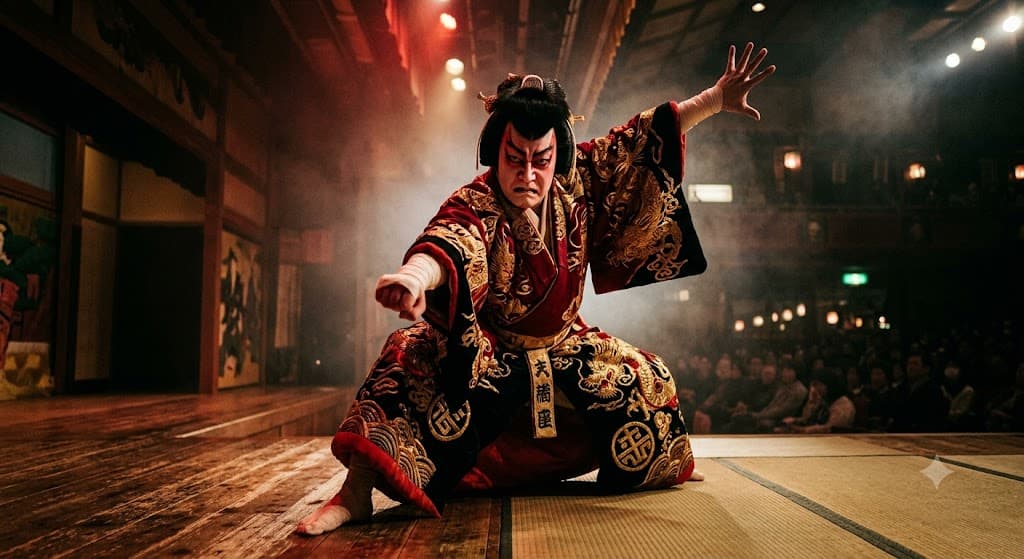
- The dramatic freeze that so often accompanies a finishing move traces back to the kabuki 見得 (Mie), where an actor halts mid-action and locks into a pose so the audience can absorb a peak of feeling.
- The held beat of stillness before the strike — the 間 (Ma) — is itself the point; both the old stage and modern battle storytelling treat that pause, not the impact, as the place where tension actually lives.
Key Terms Explained
- 名乗り (Nanori) / Battlefield Self-Announcement — A warrior's loud declaration of his name, house, and lineage before fighting, both a claim of honor and a challenge.
- 見得 (Mie) / The Frozen Pose — A kabuki actor's deliberate stop-and-glare at a dramatic climax, the body locked into a single charged shape.
- 見得を切る (Mie wo Kiru) / To Strike a Mie — The act of holding that pose so the moment can be seen and savored, often punctuated by wooden clappers.
- 間 (Ma) / The Charged Pause — The loaded interval of stillness that an actor or character lets hang before action resumes.
- 決めゼリフ (Kimezerifu) / The Signature Line — A fixed catchphrase delivered at a decisive moment, the verbal twin of the visual pose.
Rolled-Up Newspaper Swords and the Pose Before the Strike
The first time I really understood "stop, declare yourself, then fight," I was a child in front of a television, not in a theater. The samurai dramas I grew up on — 時代劇 (Jidaigeki: Japanese period drama) staples that ran every week — were built around a held moment of theater right before the violence. In one long-running series an old traveling lord would raise a small crested seal case, the 印籠 (Inro: a lacquered seal case used here as a badge of authority), and the whole scene would freeze around it. In another, a sword-carrying shogun in disguise would face down the villains and pronounce a single word, 成敗 (Seibai: to bring to justice), before any blade moved. Even the wandering gamblers had their version — the rolling, formal self-introduction of 仁義を切る (Jingi wo Kiru: a drifter's ritual statement of who he is and where he hails from), a mouthful of stylized speech delivered before anyone reached for a weapon.
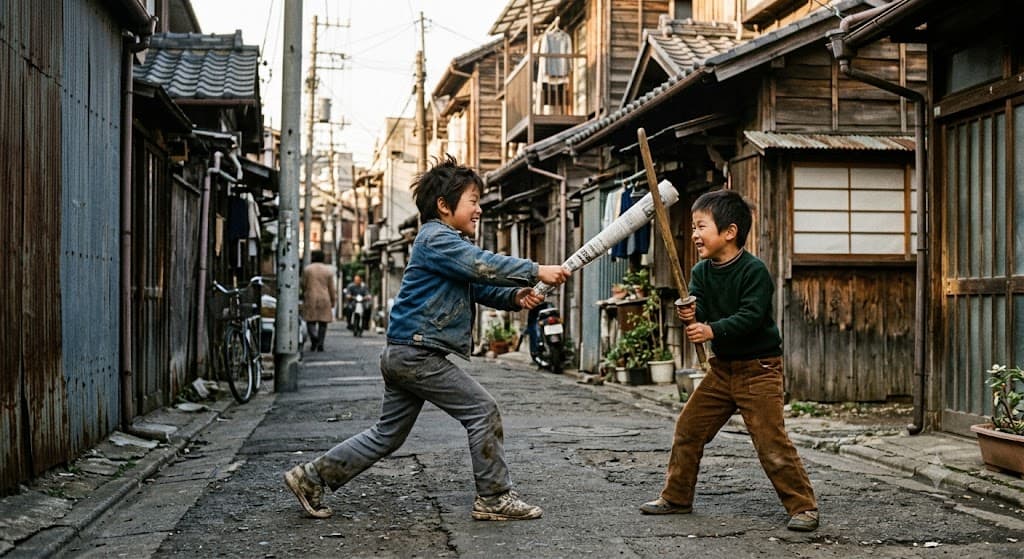 Long before kabuki, the declare-then-strike rhythm was learned in childhood chanbara play.
What struck me as a kid was the rhythm of it: the action stopped, someone said who they were or what was about to happen, and only then did the fight begin. I absorbed this not as a piece of classical knowledge but through my body, out on the streets of the Adachi-ku downtown where I grew up. We played チャンバラ (Chanbara: children's sword-fight play), using a stick or a tightly rolled newspaper as a blade, and the natural flow of the game was to name yourself, call out a pose or a move, and then swing. Nobody taught us to do that. We were copying what we saw on screen, and the screen was copying something far older.
So when I finally sat down to watch the opening of One Piece with adult eyes, the first episode's most iconic gesture felt instantly familiar. The rubber-bodied boy plants himself, declares his impossible ambition out loud to anyone who will listen, and later, mid-brawl, names his attacks — the Gum-Gum techniques — an instant before they connect. To a foreign viewer this can read as a quirky anime tic. To me it read as the same beat I had been imitating with a newspaper sword decades earlier: declare, then strike.
From Battlefield Cry to Stage Freeze: The Roots of the Pose
Two separate traditions feed into that single beat, and it helps to take them one at a time.
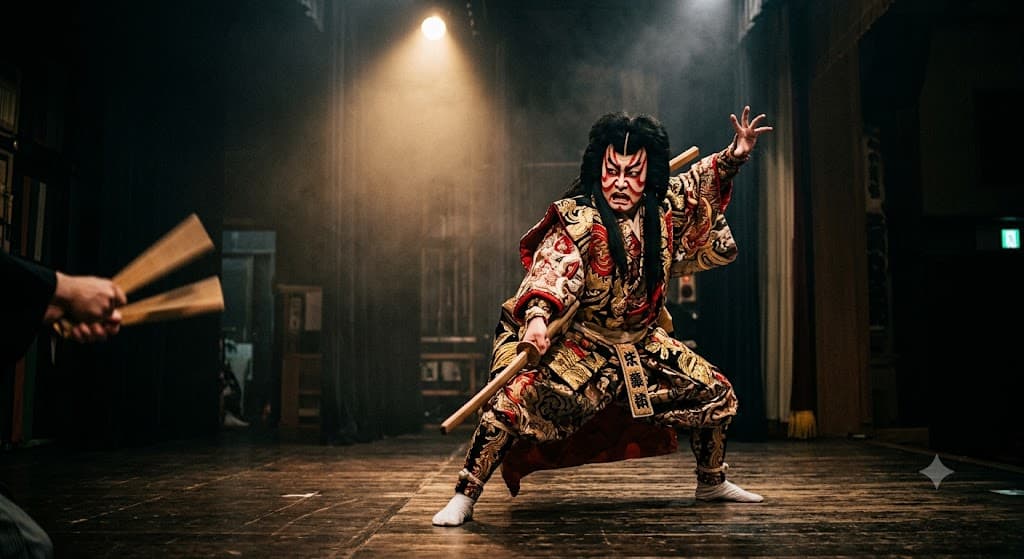 The mie freezes a flow of motion into one charged shape for the audience to absorb.
Nanori: the warrior who shouted his own name
Before mass infantry tactics, Japanese warfare leaned heavily on single combat between mounted warriors, and that combat opened with words. A samurai would ride forward and perform 名乗り (Nanori) — proclaiming his name, his ancestry, the deeds of his house, sometimes in a set, almost liturgical phrasing. The old war chronicles of the Genpei conflict are full of these scenes, where a warrior calls out his pedigree so that a worthy opponent will answer and an unworthy one will know to stay back.
The logic behind it was practical as much as proud. In a culture where reputation was capital, you needed a witness to know whom you had defeated, and you wanted to fall, if you fell, to someone of standing. To announce yourself was to set the terms of the encounter: I am somebody, this is whom you face, and what happens next will be remembered under these names. The shout was not a delay before the real event. It was part of the event.
Mie: the actor who stopped time
The second root grows from the stage. In 歌舞伎 (Kabuki: traditional Japanese theater), at the emotional peak of a scene, an actor does something counterintuitive — he stops. He freezes his whole body into a single sculpted shape, often crossing his eyes into a fierce glare, and holds it. This is the 見得 (Mie), and the act of holding it is 見得を切る (Mie wo Kiru). Wooden clappers beat out a sharp rhythm as the pose locks in, and admirers in the audience call out the actor's house name to honor the moment.
The mie is a way of taking a continuous flow of motion and pinning it, like pressing a single frame out of a reel and letting everyone stare at it. It says: this instant matters more than the ones around it; look at it before we move on. The power of the pose comes entirely from the stillness — the body strains, the music stops, and the silence does the work.
Where the two streams meet
Put the warrior's spoken self-announcement together with the actor's frozen pose, and you have the exact grammar of the modern fight scene. The hero stops. He says something — his name, his resolve, the name of the technique. He holds a shape for a beat. Then the blow lands. The verbal half is the descendant of 名乗り; the visual freeze is the descendant of 見得. Battle manga and anime did not invent this rhythm. They inherited it, kept the load-bearing parts, and dressed it in new costumes.
The connective tissue between all of it is the 間 (Ma) — the charged pause. A warrior's nanori, a kabuki actor's frozen glare, and a comic panel that holds on a hero mid-declaration are all doing the same thing with time: refusing to rush to the impact, because the anticipation is where the audience's heart is. When a character in a battle series shouts a move name and the art lingers for a single dramatic panel, that lingering is pure ma. It is the oldest trick on this list, and still the most effective.
The Held Beat That Traveled the World
I should be honest about my own distance from one half of this story. I am a third-generation 江戸っ子 (Edokko: a true-born Tokyoite), and people sometimes assume that means a lifelong intimacy with kabuki. The truth is more ordinary. I knew the great theater names and the famous house cries the way most people in my old neighborhood did — from television broadcasts, from the openings of comic storytelling routines, from period dramas — but I rarely sat in the actual theater. The living tradition reached me secondhand, already filtered through screens. That is, I suspect, how most contemporary Japanese receive it too. The forms survive less because we attend the old stage and more because the stage's instincts were absorbed into the popular culture we do consume.
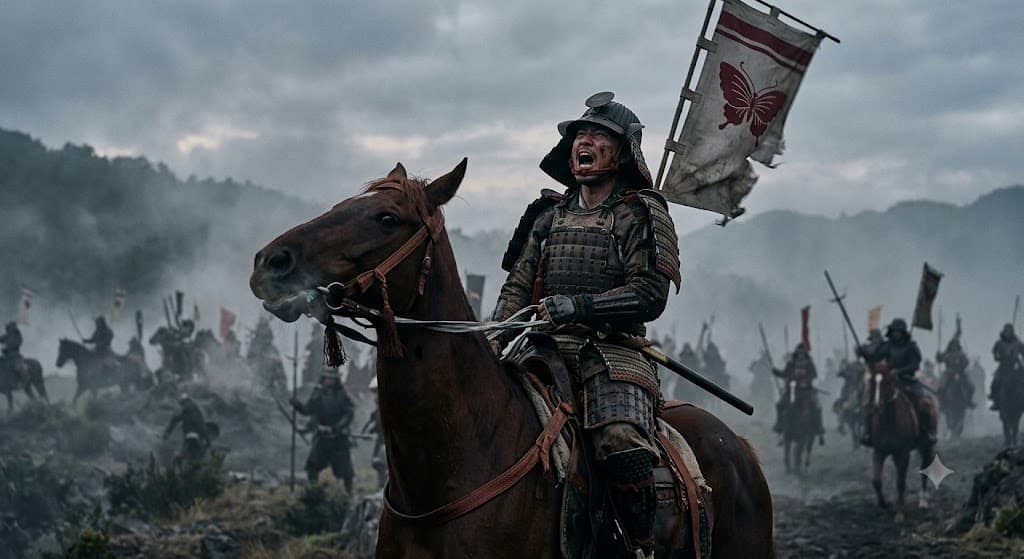 The samurai nanori turned a battlefield self-introduction into part of the fight itself.
That is the quieter point worth sitting with. For a long time I enjoyed the pause-and-pose of a battle scene as pure style — the satisfying way a fight refuses to start until someone has struck an attitude — without ever putting into words that I was watching the direct heir of the samurai's battle-cry and the actor's frozen glare. Living outside Japan for many years sharpened that recognition. From a distance you start to notice which of your reflexes are universal and which are local. The convention of naming the move before throwing the punch is local in origin but has become strangely global: fans far from Japan now imitate the technique-shout, the dramatic freeze, the held beat, often with no idea that the gesture passed through a Genpei battlefield and an Edo-period stage on its way to them.
What has been kept, then, is the instinct itself — the sense that a decisive action deserves a frame of stillness and a spoken claim before it happens. What has quietly been let go, for many of us, is the memory of where that instinct came from. The pose outlived its own history. There is something fitting about that, and something a little melancholy: a culture can preserve a gesture perfectly while forgetting the battlefield and the theater that gave it meaning.
FAQ
Q: Is shouting a move's name in anime really connected to old samurai culture?
A: The lineage is one of resemblance and inheritance rather than a single documented rulebook. Samurai genuinely performed 名乗り (Nanori), announcing name and lineage before combat, and kabuki actors genuinely freeze into the 見得 (Mie) at dramatic peaks. The modern fight beat — declare, pose, then strike — recombines those two older habits, which is why it feels so deeply "right" to Japanese audiences.
Q: What exactly is a mie, and why do actors cross their eyes?
A: A 見得 (Mie) is a held, sculptural pose struck at an emotional climax in kabuki. The actor stops all motion and often crosses the eyes into an intense stare to concentrate the moment's force. The crossed-eye glare reads as a surge of power or resolve being frozen in place so the audience can take it in.
Q: Does this convention exist outside of One Piece?
A: Yes — the declare-and-pose rhythm runs through a great deal of Japanese action storytelling across decades. One Piece is simply a clear, well-known example because its hero announces both his ambition and his named techniques out loud. The same underlying grammar of 名乗り and 見得 shows up far more widely.
Key Insights to Remember
- The "delay" before a fight in Japanese storytelling is not a flaw in the pacing but the heart of the form. From the warrior's 名乗り to the actor's 見得 to the hero's named attack, the tradition consistently treats the pause and the spoken claim as more important than the impact itself.
- A gesture can survive long after its origins are forgotten. Most modern viewers — including Japanese ones who grew up on screens rather than in theaters — feel the rightness of the pose-before-the-strike without consciously knowing it descends from the battlefield and the kabuki stage.
- Watching from outside Japan reveals how local this instinct really is. The technique-shout now travels worldwide as a beloved anime trope, but underneath it carries a very specific cultural logic about honor, witness, and the charged stillness of 間 (Ma) — the idea that a worthy action deserves to be named and seen before it is done.
Sources
- Kabuki — Encyclopaedia Britannica
- Mie — Kabuki21
- The Tale of the Heike — Encyclopaedia Britannica
- Jidaigeki — Encyclopaedia Britannica
About the author

Spoiler-free cultural deep-dives into anime, manga & live-action Japanese drama
- ●Tokyo-born, 3rd-generation Edokko (江戸っ子)
- ●Lifelong manga reader & anime viewer since the kaiju era
- ●Writes from outside Japan — distance as a cultural lens
- ●Spoiler-free · sourced · Kanji + Romaji + English
A Tokyo-born, 3rd-generation Edokko writer who has spent years living outside Japan. I use the anime, manga, and live-action Japanese drama you already love as a doorway into the folklore, language, religion, and everyday history behind them — written so even first-time fans can follow along, with sources for every claim.
Enjoy this article?
Get the next spoiler-free cultural deep-dive straight to your inbox.
Related Articles

Crayon Shin-chan and Nagashi Somen: Why Japan Sends Its Summer Noodles Down a Bamboo Flume
How a Crayon Shin-chan episode turns nagashi somen into salaryman theatre — and the real 1955 origin of Japan's flowing noodles, from Takachiho Gorge to Kagoshima's rotating rival.
8/9/2026
Naruto and the Naruto Strait Whirlpools: The Real Uzushio Behind the Uzumaki Name
How the anime Naruto links to the real Uzushio whirlpools of Tokushima's Naruto Strait — a tidal wonder you can visit, and the spiral motif behind it.
7/17/2026
SPY x FAMILY and O-juken: The Real Exams Behind Eden Academy
How SPY x FAMILY dramatizes O-juken, Japan's high-stakes early-childhood entrance exams, and the parent-child interview that judges the whole family.
7/8/2026

Attack on Titan and On-Gaeshi: Why Hannes's Debt to the Jaeger Family Is More Than a Favor
How Attack on Titan dramatizes on-gaeshi — the lifelong Japanese debt of gratitude behind Hannes's vow, and why the English word favor can't carry its weight.
7/6/2026
Death Note and Hissatsu Shigotonin: Japan's Shadow Justice
How Death Note channels Japan's shadow-justice tradition — the TV drama Hissatsu Shigotonin, whose hidden killers punish evil the law itself cannot touch.
7/1/2026

Kaiju No. 8 and the Ritual of All Night Nippon: The Late-Night Radio Culture Behind Hoshi Night Nippon
How Kaiju No. 8's Hoshi Night Nippon bit recreates Japan's late-night radio ritual, from radio names to the postcard-artisan culture of listener submissions.
6/28/2026