Crayon Shin-chan and Nagashi Somen: Why Japan Sends Its Summer Noodles Down a Bamboo Flume
How a Crayon Shin-chan episode turns nagashi somen into salaryman theatre — and the real 1955 origin of Japan's flowing noodles, from Takachiho Gorge to Kagoshima's rotating rival.

Tokyo-born, 3rd-generation Edokko · writing on Japanese culture from outside Japan

Spoiler-Free Cultural Analysis
This article explores the real history behind 流しそうめん (Nagashi Sōmen: flowing noodles) — the summer custom that a memorable Crayon Shin-chan episode turned into salaryman theatre. No plot spoilers here; only the culture, the history, and the strange engineering of Japan's most playful meal.
Key Takeaways
- Nagashi somen — catching thin wheat noodles with chopsticks as they ride cold water down a bamboo flume — is not an ancient tradition. It was first commercialized in 1955 by a single restaurant beside Takachiho Gorge in Kyushu.
- Kagoshima developed a rival format: the rotating tabletop version invented in the 1960s, where the noodles circle instead of flowing past. Locals there insist on a different name, そうめん流し (sōmen-nagashi), and the distinction is defended with real feeling.
- The noodles themselves carry a much older story: sōmen has been tied to the July 7 Tanabata festival since the Heian court, and Japan's dried-noodle association formalized July 7 as "Sōmen Day" in 1982.
Key Terms Explained
- 流しそうめん (Nagashi Sōmen) / Flowing Noodles — sōmen sent down a split-bamboo flume with cold water, caught mid-flow with chopsticks and dipped in sauce.
- そうめん (Sōmen) / Thin Wheat Noodles — noodles less than 1.3 mm thick, eaten chilled in summer; a staple of Japanese hot-season tables.
- 竹樋 (Takedoi) / Bamboo Flume — the halved-bamboo channel that carries water and noodles; the defining stage prop of the custom.
- そうめん流し (Sōmen-nagashi) / Rotating Noodle Table — the Kagoshima format in which water circulates in a round tabletop tank; the word order is reversed on purpose.
- 七夕 (Tanabata) / The Star Festival — the July 7 festival on which sōmen has been eaten since the Heian period.
The Summer Meal I Never Actually Had
Here is an honest confession to start with: I grew up in Tokyo, in a small single-story house in Adachi ward, and not once in my childhood did anyone in my neighborhood rig up a bamboo flume in the yard. Sōmen certainly appeared in summer — it is the meal Japan reaches for when the heat makes everything else feel like work — but it arrived the ordinary way, in a bowl, eaten quietly under an electric fan.
I have written before about how overseas introductions to Japan tend to flatten the country into a single household: everyone shares food with neighbors, everyone grows morning glories, everyone does nagashi somen in August. The truth is that nagashi somen was, for most of us, a special event — something done at a mountain restaurant on a family trip, at a school festival, or at one enthusiastic relative's house. That is precisely why a Crayon Shin-chan episode about it works so well. When Hiroshi Nohara, the show's everyman father, is invited to his boss's home for nagashi somen — the episode 「流しサラリーマンそうめんだゾ」 (Nagashi Salaryman Sōmen da zo: "It's Flowing Salaryman Somen"), aired May 30, 2020 on TV Asahi — the flume is not everyday furniture. It is an occasion, with social stakes. Hiroshi treats the noodles sliding past as chances a working man must seize before they are gone, and the joke lands because every Japanese viewer understands both halves: the absurd solemnity, and the real truth that nagashi somen is a game you can lose.
A Tradition Invented in 1955, Beside a Waterfall
The newspapermen of Takachiho Gorge
If you assume a custom this picturesque must be centuries old, the actual origin is refreshingly concrete. In 1955, at Takachiho in Miyazaki prefecture — a gorge already famous in Japanese mythology — newspaper reporters covering the area would boil sōmen outdoors and cool it in the gorge's spring water. The founder of a local restaurant, 千穂の家 (Chiho no Ie: "House of Chiho"), read about this improvised meal, experimented, and turned it into a format customers could enjoy: cold spring water running down bamboo, noodles released upstream, chopsticks waiting downstream. His shop still operates beside the gorge and still calls itself the originator — 元祖 (ganso: the original) — of nagashi somen.
So the "tradition" is younger than television in Japan. What Chiho no Ie actually invented was not a dish but a delivery mechanism — and, more importantly, a piece of theatre. The water is the air-conditioning, the bamboo is the stage, and the diner is a participant instead of a customer.
Kagoshima's rotating rebellion
Seven years later, in 1962, the town of Kaimon in Kagoshima prefecture — now part of Ibusuki city — opened a noodle attraction of its own at 唐船峡 (Tōsenkyō), a spot blessed with abundant cold spring water. In 1967, a local official named Hironori Inoue devised something new: a round tabletop tank in which the water, and the noodles, rotate past each diner. The design was patented in 1970, and the municipal restaurant built around it serves noodles year-round to this day.
Crucially, Kagoshima does not call this nagashi somen. It is そうめん流し (sōmen-nagashi) — the same two words in reverse order — and the locals mean something by the reversal. Nothing flows away downhill; the noodles circle back, democratically, so the person seated last gets the same chance as the person seated first. Anyone who has stood at the bottom end of a bamboo flume, watching well-fed relatives upstream intercept everything, will recognize this as a genuine engineering solution to a genuine injustice.
The older river underneath: sōmen and Tanabata
The noodles themselves are far older than either restaurant. Sōmen has been associated with 七夕 (Tanabata), the July 7 star festival, since the Heian period, when eating it on that day was said to make wishes come true; one strand of the lore holds that the custom began as a way to appease a spirit believed to cause summer fevers. The connection is institutional now: in 1982, Japan's national federation of dried-noodle makers designated July 7 as Sōmen Day. Nagashi somen, then, is a modern stage built over a very old floor — a 1950s invention riding on a thousand years of "eat thin white noodles when the heat comes."
What the Bamboo Flume Says About Japanese Summer
Living outside Japan for many years has changed how I see this custom. Where I have lived, summer is not a season you mark; it is simply the weather. Japan does the opposite: it curates summer into a sequence of set pieces — fireworks, wind chimes, morning exercise in the park, and noodles in a bamboo flume — each one deliberately temporary. The distance has become a useful lens: I notice now that what Japan preserves is rarely the object itself, but the occasion around it.
Nagashi somen is the clearest example I know. Nutritionally, it is identical to a bowl of sōmen served at the table. Every added element — the water, the bamboo, the queue of cousins with chopsticks — exists to convert eating into an event that cannot be paused or repeated. The noodles come once. You catch them or you watch them go. Hiroshi's salaryman speech in the Shin-chan episode is a parody, but like most good parodies it is aimed at something real: the custom genuinely is a small rehearsal of alertness, timing, and knowing your place in the line.
I will also admit what the years abroad have taught me about my own core. However much I have absorbed from the culture around me, the root — the part that cares about seasons having proper furniture, about summer being announced rather than merely endured — has stayed stubbornly Japanese. I have never once missed nagashi somen as a meal. I miss it as a calendar.
FAQ
Q: Is nagashi somen an ancient Japanese tradition? A: No — the format was first commercialized in 1955 by the restaurant Chiho no Ie at Takachiho Gorge in Miyazaki prefecture, inspired by newspaper reporters cooling boiled noodles in the gorge's spring water. The noodles themselves, however, carry associations with the Tanabata festival that go back to the Heian court.
Q: What is the difference between nagashi somen and sōmen-nagashi? A: Nagashi somen sends noodles down a sloped bamboo flume, so they flow past you once. Sōmen-nagashi is the Kagoshima format, launched at Tōsenkyō in 1962, in which water circulates in a round tabletop tank and the noodles rotate past every diner. Kagoshima locals use the reversed word order deliberately and consider their version the fairer machine.
Q: Do Japanese families do nagashi somen at home? A: Less often than anime might suggest. For most households it is an occasional event — a mountain restaurant on a trip, a school or neighborhood gathering — rather than a routine meal. Compact electric machines that rotate water in a tabletop tank have made the home version easier, but everyday summer sōmen is still mostly eaten the quiet way, chilled in a bowl.
Key Insights to Remember
- Japan is unusually good at inventing traditions and then wholeheartedly believing in them. Nagashi somen is younger than many people's grandparents, yet it feels timeless — because it was built on a genuinely old foundation, the thousand-year link between sōmen and the summer calendar.
- The regional split between Miyazaki's flume and Kagoshima's rotating table is a reminder that Japanese food culture is argued about in fine grain. Even the word order — nagashi somen versus sōmen-nagashi — encodes a real difference in philosophy: spectacle and chance on one side, fairness and circulation on the other.
- The deepest function of nagashi somen is not culinary but temporal: it makes a meal unrepeatable, and therefore memorable. Crayon Shin-chan's salaryman parody works because the custom really is a tiny game about seizing what flows past — which may be the most Japanese metaphor for summer there is.
Sources
About the author

Spoiler-free cultural deep-dives into anime, manga & live-action Japanese drama
- ●Tokyo-born, 3rd-generation Edokko (江戸っ子)
- ●Lifelong manga reader & anime viewer since the kaiju era
- ●Writes from outside Japan — distance as a cultural lens
- ●Spoiler-free · sourced · Kanji + Romaji + English
A Tokyo-born, 3rd-generation Edokko writer who has spent years living outside Japan. I use the anime, manga, and live-action Japanese drama you already love as a doorway into the folklore, language, religion, and everyday history behind them — written so even first-time fans can follow along, with sources for every claim.
Enjoy this article?
Get the next spoiler-free cultural deep-dive straight to your inbox.
Related Articles
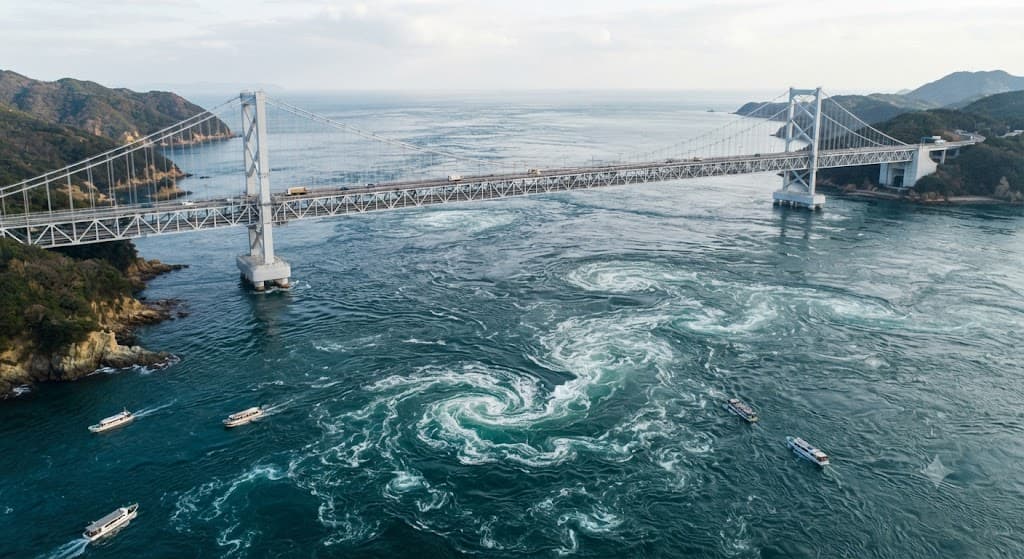
Naruto and the Naruto Strait Whirlpools: The Real Uzushio Behind the Uzumaki Name
How the anime Naruto links to the real Uzushio whirlpools of Tokushima's Naruto Strait — a tidal wonder you can visit, and the spiral motif behind it.
7/17/2026
SPY x FAMILY and O-juken: The Real Exams Behind Eden Academy
How SPY x FAMILY dramatizes O-juken, Japan's high-stakes early-childhood entrance exams, and the parent-child interview that judges the whole family.
7/8/2026

Attack on Titan and On-Gaeshi: Why Hannes's Debt to the Jaeger Family Is More Than a Favor
How Attack on Titan dramatizes on-gaeshi — the lifelong Japanese debt of gratitude behind Hannes's vow, and why the English word favor can't carry its weight.
7/6/2026
Death Note and Hissatsu Shigotonin: Japan's Shadow Justice
How Death Note channels Japan's shadow-justice tradition — the TV drama Hissatsu Shigotonin, whose hidden killers punish evil the law itself cannot touch.
7/1/2026

Kaiju No. 8 and the Ritual of All Night Nippon: The Late-Night Radio Culture Behind Hoshi Night Nippon
How Kaiju No. 8's Hoshi Night Nippon bit recreates Japan's late-night radio ritual, from radio names to the postcard-artisan culture of listener submissions.
6/28/2026
One Piece and the Art of Nanori & Mie: Why the Hero Names the Move Before He Throws the Punch
How One Piece's named attacks carry the samurai nanori battle-cry and the kabuki mie pose — the old grammar of declaring yourself before you strike.
6/23/2026