Detective Conan and the -kun You Didn't Expect: How Japanese Honorifics Really Work
How Detective Conan reveals that the honorific -kun is not male-only — an inspector calls teenage Ran 'Ran-kun', a hierarchy English subtitles quietly drop.

Tokyo-born, 3rd-generation Edokko · writing on Japanese culture from outside Japan
Spoiler-Free Cultural Analysis
This article looks at the real linguistic logic behind Japanese honorifics — how 君(Kun: a Japanese honorific suffix) actually works — using the way characters address one another in the first episode of Detective Conan. It discusses forms of address, social hierarchy, and the texture of spoken Japanese, with no plot revelations beyond who calls whom what.
Key Takeaways
- The suffix 君(Kun) is not reserved for boys. A person of higher standing can use it for a junior of any gender, which is why an adult inspector can address a teenage girl as "Ran-kun" without it being strange.
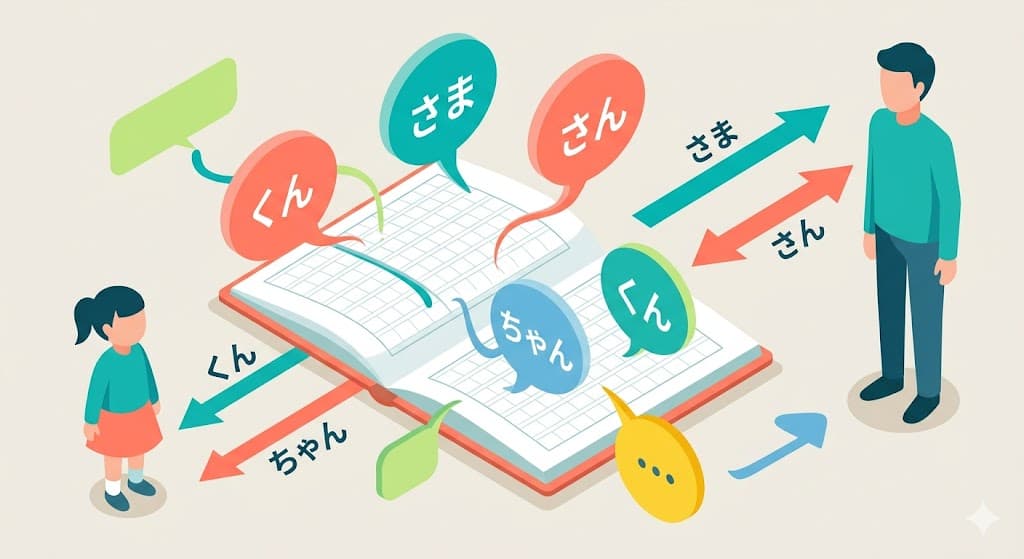
- Japanese honorifics form a ladder of distance and rank — ちゃん(Chan: an affectionate suffix), 君(Kun), さん(San: a neutral polite suffix), 様(Sama: an honored suffix) — and the same word can signal warmth among friends or formal authority in an official room, depending entirely on who is speaking to whom.
- English subtitles flatten almost all of this. The choice between "-kun," "-chan," and dropping the suffix entirely carries information about closeness and status that simply has no single-word equivalent in English.
Key Terms Explained
- 君 (Kun) / Junior-Address Suffix — A suffix a senior can attach to a junior's name regardless of gender, and also a familiar form used among (often male) peers. Its meaning shifts with the speaker's position.
- ちゃん (Chan) / Affectionate Suffix — A warm, softening suffix used for small children, close friends, and pets. It signals endearment and would sound condescending if aimed upward at a superior.
- さん (San) / Neutral Polite Suffix — The everyday, gender-neutral "Mr./Ms." of Japanese. Safe in almost any situation and the default in polite distance.
- 様 (Sama) / Honored Suffix — A markedly elevated form used for customers, deities, and formal correspondence. It places the other person clearly above the speaker.
- 敬称 (Keishō) / Term of Address — The general category of honorific titles and suffixes attached to names to mark respect, distance, and relationship.
A Female Lawmaker Called "-kun" on the Evening News
When parliamentary broadcasts came on the television at home, I remember being quietly puzzled by something. The chair of the session would call on members one after another, and not only the men — women lawmakers, too, were addressed as "○○君". I had grown up assuming 君(Kun) was a word for boys, the suffix you stuck on a male classmate's name, so I could not work out why a grown woman in the National Diet was being called the same thing.
 In the National Diet, the chair addresses members as "-kun" regardless of gender — a formal usage far from the schoolyard suffix.
It was only later that I understood that this was a different "kun" altogether. It was not the friendly, schoolyard "kun" that passes between buddies. It was a formal usage in which the person presiding addresses those of lower standing in that setting, with no regard to gender at all. The same two sounds carried two almost unrelated jobs: one for the warmth of the playground, one for the procedure of a public chamber.
That childhood confusion is exactly the trap waiting for anyone who meets Detective Conan in English and assumes "-kun" means "boy." Watch the opening episode closely and the honorifics tell their own quiet story. The grade-school children are "Ayumi-chan" and "Genta-kun." The high-school detective is "Kudo-kun." And Inspector Megure — a seasoned police officer, an adult, a clear senior in every social sense — addresses the teenage Ran as "Ran-kun." She is unmistakably a girl. The suffix is unmistakably "-kun." Both are correct, and the reason they sit together comfortably is the whole point.
The Two Lives of a Single Suffix
The "-kun" Among Friends, and the "-kun" From Above
 The same scene can hold "Ayumi-chan," "Genta-kun," and "Ran-kun" at once — the suffix tracks the relationship, not the gender.
The friendly "kun" and the official "kun" look identical on paper but behave like different words. Among peers, "kun" tends to attach to boys and reads as casual and familiar. But the older, more structural use is the one driving Inspector Megure's speech: a senior addressing a junior. In offices, an older manager of senior rank may call younger employees "-kun" whether they are men or women; teachers have historically used it for students of either sex. The suffix marks the relationship — who is above, who is below — far more than it marks the body of the person being named.
That is why a police inspector calling a high-schooler "Ran-kun" needs no special explanation for a Japanese viewer. He is the adult and the authority; she is the younger civilian. The "-kun" is simply the shape that gap takes in sound.
The Ladder of Distance: Chan, Kun, San, Sama
These suffixes are not interchangeable politeness-stickers. They form a graded ladder. ちゃん(Chan: an affectionate suffix) sits at the warm, soft end, used for little children and close friends, and would sound belittling if pointed at someone senior. 君(Kun) carries that mix of familiarity and downward direction. さん(San: the neutral polite suffix) is the broad, gender-neutral middle ground — the suffix you reach for when in doubt. 様(Sama: an honored suffix) lifts the other person well above you, reserved for customers, the divine, and formal letters.
Crucially, the closer two people actually become, the fewer suffixes they use. Thinking back on my own school years, the friends I was genuinely close to were rarely "○○くん" to me at all; we used first names or nicknames, and the bare name — no suffix — was a sign of real intimacy, not rudeness. "○○-kun" was polite, but it could quietly keep a person at arm's length. Affection in Japanese often shows up as the removal of a suffix, not the addition of a sweeter one.
Why the Diet Calls Everyone "-kun"
The parliamentary custom that puzzled me as a child is a preserved fossil of the senior-to-junior usage. In Japan's National Diet, the chair conventionally addresses members as "○○君" regardless of their sex, treating the whole chamber as juniors being called upon from the chair. The custom is well enough established that its exceptions are remembered: when Takako Doi presided over the lower house, she chose to address members with "-san" instead — a small, noticed departure that proves how settled the "-kun" norm was.
Set that beside Inspector Megure and the logic snaps into place. The Diet chair and the police inspector are doing the same thing — a figure of standing addressing those beneath them in the moment — and in both cases the gender of the person being addressed is simply not what the suffix is about.
What the Subtitles Quietly Leave Behind
Having lived outside Japan for many years now, the thing I feel most sharply is that English has no equivalent for any of this. "Mr." and "Ms." do not bend the way "chan," "kun," "san," and "sama" do. A single change of suffix in Japanese can broadcast distance, affection, and rank all at once, and when you try to carry that across into English, most of it falls out on the way. Subtitles, working under tight space and time, usually drop the suffix entirely or fold everything into a flat first name. The viewer never learns that the inspector outranks Ran, or that the small children are being spoken to softly, or that "Kudo-kun" sits at a careful, professional distance.
 English subtitles tend to drop honorifics entirely, flattening the cues about rank and closeness that "-kun," "-chan," and "-san" carry.
There is a small irony I noticed once I was on the other side of the relationship myself. When I was in a position to teach others, or to employ them, I made a point of calling everyone — younger or junior, man or woman — "-san." A senior is entitled to use "-kun" downward, but I preferred a single, even "-san" for everyone, because it felt fairer and kept me from importing an unnecessary sense of rank into the room. The very fact that I could have used "-kun" and chose not to is itself information — and it is exactly the kind of information an English rendering has no room to hold.
None of this is a flaw in the translation so much as a limit of the destination language. The honorifics are doing structural work that English distributes across tone, word choice, and whole extra sentences. To watch Detective Conan in the original and hear "Ran-kun" land naturally is to hear a whole social map drawn in a single syllable that the subtitle line can only gesture at.
FAQ
Q: Does "-kun" mean the person is a boy?
A: Not necessarily. Among peers it leans male and casual, but its older, broader use is for a senior addressing a junior of any gender. That is why an adult inspector can call a teenage girl "Ran-kun," and why women in Japan's National Diet are addressed as "-kun" by the chair.
Q: Is it disrespectful to call a woman "-kun"?
A: No, when the relationship fits. From someone senior to someone junior — a manager to a younger employee, a teacher to a student, a session chair to a member — it is normal and not insulting. It marks position, not a put-down. Using it sideways or upward, however, can read as presumptuous.
Q: Why do English subtitles usually drop honorifics?
A: Because there is no clean one-word match. English "Mr./Ms." cannot flex through the chan–kun–san–sama range, and subtitle lines have little room. Translators typically omit the suffix or use a plain name, which keeps the dialogue readable but loses the cues about rank and closeness that the suffix was carrying.
Key Insights to Remember
- An honorific in Japanese is less a label on a person than a description of a relationship. "Ran-kun" does not tell you Ran's gender so much as it tells you the inspector's position relative to her — which is why the "boy = -kun" assumption misreads the scene entirely.
- The system encodes intimacy by subtraction. Sweeter suffixes are not the sign of closeness; the gradual dropping of suffixes is. A relationship can be read in the direction it travels down the ladder, from polite "-san" toward the bare, suffix-less name.
- What gets lost in translation here is not vocabulary but social geometry. The same syllable that means "buddy" in a schoolyard means "those I am calling upon from the chair" in a national legislature, and holding both meanings at once is something the original soundtrack does effortlessly and the subtitle line cannot.
Sources
About the author

Spoiler-free cultural deep-dives into anime, manga & live-action Japanese drama
- ●Tokyo-born, 3rd-generation Edokko (江戸っ子)
- ●Lifelong manga reader & anime viewer since the kaiju era
- ●Writes from outside Japan — distance as a cultural lens
- ●Spoiler-free · sourced · Kanji + Romaji + English
A Tokyo-born, 3rd-generation Edokko writer who has spent years living outside Japan. I use the anime, manga, and live-action Japanese drama you already love as a doorway into the folklore, language, religion, and everyday history behind them — written so even first-time fans can follow along, with sources for every claim.
Enjoy this article?
Get the next spoiler-free cultural deep-dive straight to your inbox.
Related Articles
Chihayafuru and the World of Competitive Karuta: The Speed, Silence, and Poetry Behind Japan's Fiercest Card Game
How Chihayafuru reveals competitive karuta, where poems from the 13th-century Hyakunin Isshu meet athletic reflexes and matches turn on hundredths of a second.
7/28/2026

Chainsaw Man and Why Every Japanese Dog Is Named Pochi: The Hidden History Behind Pochita
How Chainsaw Man's Pochita carries the history of Pochi, the Meiji-era nickname that became Japan's default dog name — and what that says about loyalty.
7/11/2026

Naruto and Yakuwarigo: The Real Meaning of Dattebayo and Why Translators Invented Believe It!
How Naruto's famous verbal tic dattebayo opens the door to yakuwarigo, Japan's role language system, and why English translators had to invent Believe it!
7/4/2026

Evangelion's Angels and Japan's Decorative Christianity
How Neon Genesis Evangelion's enemies are 使徒 (apostle) in Japanese but Angel in English — and how Japan wears Christianity as aesthetic, not faith.
7/3/2026

Solo Leveling and Te-ate: Why the Japanese Word for Treatment Means Placing the Hand
How Solo Leveling's healing magic opens onto te-ate, the Japanese word for treatment whose root is the simple act of placing a hand on a wound.
6/26/2026

Witch Hat Atelier and Japan's 'Thanks for Your Thanks' Loop
How the 'thanks for your thanks' exchange in Witch Hat Atelier opens a window onto Japan's habit of not letting gratitude end on the first reply.
5/26/2026