Chainsaw Man and Why Every Japanese Dog Is Named Pochi: The Hidden History Behind Pochita
How Chainsaw Man's Pochita carries the history of Pochi, the Meiji-era nickname that became Japan's default dog name — and what that says about loyalty.

Tokyo-born, 3rd-generation Edokko · writing on Japanese culture from outside Japan
Spoiler-Free Cultural Analysis
This article explores the real linguistic, folkloric, and modern history behind the name of Chainsaw Man's chainsaw devil, Pochita — a name and character that appear in the official synopsis and in every trailer. No plot revelations beyond that: only language, folklore, and the cultural weight of what Japanese people call their dogs.
Key Takeaways
- ポチ (Pochi) is Japan's archetypal dog name — the equivalent of "Rover" or "Fido" in English — but it is barely a century and a half old, and almost certainly entered the language during Japan's rush to modernize in the Meiji period.
- The name carries a specific social image with it: the dog outside the house, tied up, fed on scraps, loyal because loyalty is the only currency it has. That image is doing real work in a story whose protagonist is repeatedly told he behaves like a dog.
- The suffix in "Pochita" is not decoration. Adding タ (-ta) to ポチ pushes the name out of the pet register and toward the register of a boy's given name — which quietly changes what the creature is, before the story says a word about it.
Key Terms Explained
- 犬 (Inu) / Dog — The everyday word. In idiom it also means a lackey, a stooge, someone who obeys for scraps.
- ポチ (Pochi) / The Default Dog Name — The generic, almost comic name for a Japanese dog; also, in older usage, a word meaning a small dot or a tiny amount.
- 番犬 (Banken) / Guard Dog — A dog kept outdoors to watch the property, the standard way of keeping a dog in Shōwa-era Japan.
- 忠犬 (Chūken) / Loyal Dog — The virtue-word attached to dogs like ハチ公 (Hachikō), who waited at 渋谷駅 (Shibuya Eki: Shibuya Station) for an owner who never returned.
- ポチ袋 (Pochi-bukuro) / Small Gift Envelope — The little paper envelope used for New Year's money and tips, whose name shares an origin with the dog name — but not the one most people assume.
The Dog on the Chain Behind the Neighbor's Gate
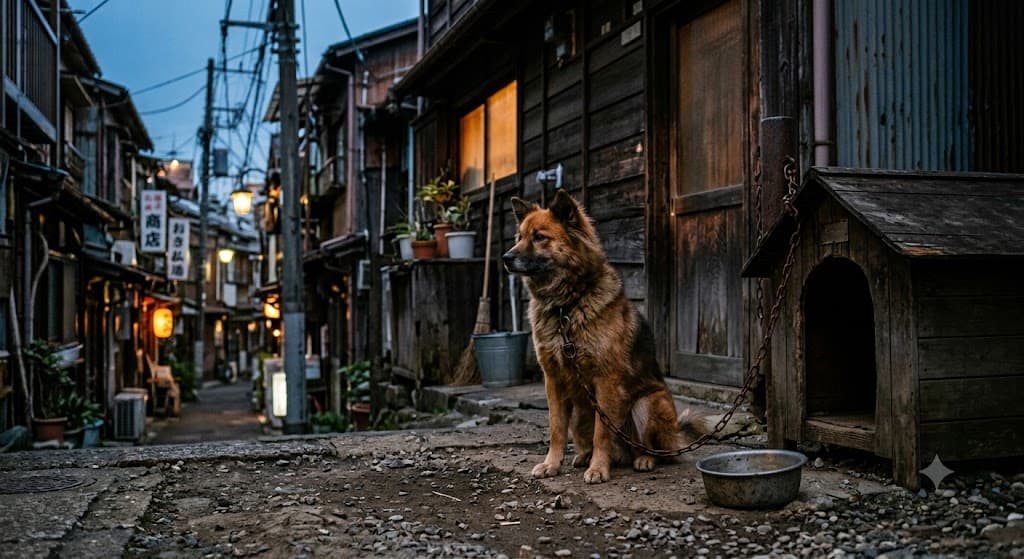
I grew up in the 下町 (Shitamachi: the old working-class flatlands of Tokyo), in an era when a dog lived outside. There was a kennel by the gate or in the corner of a yard, a chain, and a dog that barked at the postman and at nothing. It was a 番犬 (Banken: a guard dog), not a companion. Nobody bought food for it. It ate 残飯 (Zanpan: household leftovers), whatever the family had not finished that evening.
 In the Shōwa-era shitamachi, a dog lived outside on a chain, fed on household leftovers — the image the name Pochi still carries.
Here is the thing that has always amused me. Everyone in Japan knows that a dog is called ポチ (Pochi). It is the name in the joke, the name in the textbook example sentence, the name a child draws under a crayon dog. And yet the dogs I actually knew were named 白 (Shiro: white), コロ (Koro), 太郎 (Tarō). In all those years of walking past chained dogs on the way home, I am not sure I ever met one actually called Pochi.
That gap — a name everybody knows and almost nobody uses — is the interesting part. A name that famous is not a name anymore. It is a symbol. And when Tatsuki Fujimoto attaches a version of it to the small chainsaw-headed creature that Denji keeps, feeds, and cannot afford to feed properly, he is not choosing a cute sound at random. He is reaching into a hundred and fifty years of Japanese assumptions about what a dog is and what a dog is for.
Where Pochi Actually Comes From
The Meiji Import Theory
 The ポチ袋 (Pochi-bukuro) preserves the older meaning of ぽち — a small dot, a modest amount — the likely native root of the dog name.
Japan had dogs, and Japanese names for them, long before the modern era: 白 (Shiro), 黒 (Kuro: black), ぶち (Buchi: spotted), 太郎 (Tarō). What Japan did not have was ポチ. The name shows up with the 明治時代 (Meiji Jidai: the era from 1868, when Japan opened to the West and modernized at speed), and it arrives alongside the fashion for 洋犬 (Yōken: Western dogs) — the foreign breeds kept by diplomats, merchants, and the newly Westernized upper class in the treaty ports.
The most popular explanation you will hear in Japan is that Pochi is a mangling of a foreign word overheard from foreigners talking to their dogs. The French petit (small) is the usual candidate. English spotty or patchy also gets nominated, as does pooch. These theories are attractive precisely because they fit the Meiji mood: a country hungry for anything Western, borrowing sounds it half-understood and making them its own — the same impulse that gave Japan beer halls, brass bands, and men in bowler hats.
The Boring Explanation That Is Probably Right
There is a far less romantic possibility. In older Japanese, ぽち (pochi) simply means a small dot, a speck, a tiny amount — the same ぽち that survives in ポチ袋 (Pochi-bukuro: the small envelope you slip a modest amount of money into for a New Year's gift or a tip). It is a word for a little bit. Calling a small spotted dog "Little Spot" needs no French at all.
Both explanations may be true at once, and that is the honest answer. A native word meaning "a small dot" would have sat very comfortably in the ear of a Meiji Tokyoite who kept hearing foreigners call something that sounded like petit across the fence. Loanwords rarely arrive clean; they land where the language already has a soft spot for them. I would not want to defend either theory to the death — but I would defend the observation that Pochi is a modern name, born in the exact decades when Japan was busy deciding which parts of the West to swallow.
The Dog Who Says "Dig Here"
The name was then cemented by children's literature. Anyone raised in Japan knows 花咲か爺さん (Hanasaka Jiisan: "The Old Man Who Made the Trees Bloom"), the folktale in which a kind old couple's dog leads them to buried gold, barking 「ここ掘れワンワン」(Koko hore wan-wan: "Dig here! Woof woof!"). In the older tellings the dog is called Shiro. In the picture books and school readers of the modern era, the dog in that story — and the dog in a hundred other stories — quietly becomes Pochi.
This is how a name becomes an archetype. Not through use, but through repetition in the shared material of childhood: readers, songs, cartoons, example sentences in grammar drills. By the postwar decades of 昭和 (Shōwa: the era from 1926 to 1989), ポチ was less a name than a category. It meant the dog, in the same way that 太郎 (Tarō) means the boy.
The Dog as Insult
Which brings us to the part of the vocabulary that Chainsaw Man is really using. In Japanese, calling a person 犬 (Inu: dog) is not affectionate. It means a lackey, a running dog, someone who does what he is told for scraps and who does not bite back. In the opening of the series, this is precisely the register Denji lives in: the men who own his debt speak to him as though he were an animal on a chain, and they say so out loud. He is fed just enough to keep working, exactly like the guard dogs of my childhood, eating whatever the household did not want.
Fujimoto pushes this until it doubles back on itself. The person is treated as the dog. The dog — the thing with the chainsaw for a face — is the only creature in Denji's life that is treated with tenderness. The first episode's title puts the two nouns side by side and lets the reader work it out.
Why "Pochita" and Not "Pochi"
Now the small linguistic detail that I think most non-Japanese viewers slide past. The creature is not named Pochi. It is named ポチタ (Pochita), and that extra syllable does something specific.
タ (-ta) is one of the classic endings of a Japanese boy's given name: Kenta, Shōta, Yūta, Sōta. Attach it to a generic pet name and the result sits in an odd, tender middle ground — half animal, half kid brother. It is the difference between calling something "Spot" and calling it "Spotty-boy." The name tells you, before the story has to, that this thing is not livestock and not a tool. It is family. In a story where the human is called a dog, the dog is quietly given the ending of a human name.
I confess I am not, by nature, a person who names things. I never named my belongings or my toys; a relative's young daughter gives every one of her stuffed animals a name, a personality, and a role, and I watch that with real puzzlement. But even I can feel the weight of that single syllable. Naming is claiming. Naming is saying: this one is mine, and I will feed it before I feed myself.
What the Chained Dog Left Behind
The Japan I grew up in kept dogs outside. The Japan of today keeps them indoors, in coats, on special diets, in strollers. Contemporary Japanese dogs are named Momo, Koko, Sora, Leo, Marron — names that would not look out of place on a human child, and often are the names of human children. Few people name a dog Pochi anymore. To do so would read as a joke, or as deliberate retro kitsch, in the same way that naming an English dog "Fido" would.
 Today's Japanese dogs live indoors and answer to human-style names; Pochi outlived the practice it was born from.
So Pochi has completed a strange arc: from a possibly-foreign, faintly fashionable Meiji import, to the universal name for the dog by the gate, to a word that now exists almost entirely as a symbol of an era that has ended. The name outlived the practice.
Living outside Japan for a long time has made this sharper for me rather than softer. Where I live now, dogs occupy a completely different social position: many wander the streets, rabies is still a real annual concern, and the split is stark — better-off households keep dogs indoors and adored, while in many ordinary households the dog simply lives outside, loose, on its own recognizance. It is neither the Shōwa guard dog on a chain nor the modern Japanese dog in a coat. Seeing a third arrangement is what made me realize that the first two were arrangements at all, and not simply what a dog is.
And that, I think, is what makes Pochita land the way it does. The name carries the whole chain — literally. It carries the outdoor dog, the leftovers, the loyalty extracted from an animal that has no other option, and the word Japanese people use to insult a man who obeys. Then it adds one syllable of tenderness, and asks you to feel the difference. Devils in this series are born from what humans fear. It is worth noticing that the thing Denji loves is named after the thing everyone calls him.
FAQ
Q: Is Pochi really the most common dog name in Japan?
A: No — and it probably never was, even at its peak. It is the most famous dog name, the one that appears in folktales, textbooks, and jokes, which is a different thing entirely. Actual dogs in Shōwa-era neighborhoods were far more likely to be Shiro, Kuro, Koro, or Tarō, and modern Japanese dogs are given human-style names like Momo or Sora.
Q: Does "Pochi" really come from the French word "petit"?
A: It is a popular theory, and it fits the Meiji period, when Western dogs and Western words arrived together. But there is also an older native word, ぽち, meaning a small dot or a small amount — the same word behind the ポチ袋 gift envelope. The two explanations may have reinforced each other. Treat anyone who states one of them as settled fact with mild suspicion.
Q: Why does the dog imagery matter so much in Chainsaw Man's opening?
A: Because in Japanese, calling a person a dog is an insult with a precise meaning: someone who obeys for scraps and never bites back. The first episode places that insult and an actual beloved dog-like creature side by side. Once you hear the idiom, the pairing stops feeling like a coincidence and starts feeling like the point.
Key Insights to Remember
- A name that everyone recognizes and nobody uses has stopped being a name and become a piece of cultural furniture. ポチ is exactly that. When a modern author reaches for it, they are not reaching for a sound; they are reaching for the entire social arrangement it came wrapped in — the chain, the kennel, the leftovers, the loyalty of an animal with no alternatives.
- Japanese has a habit of taking a foreign fragment it only half-heard and fusing it with a native word it already had, until the seam disappears and nobody can say for certain which parent the child resembles. Pochi may well be one of those fusions. This is not sloppiness. It is the same absorptive reflex that turned Portuguese frying into tempura and Silk Road lions into the guardian dogs at a shrine gate.
- The single syllable that separates ポチ from ポチタ is the whole emotional argument of the character. One is a category; the other is a person. Japanese naming does that work with sounds so small that a translation cannot carry them — which is why so much of what a Japanese audience feels instantly has to be explained to everyone else, and why it is worth explaining.
Sources & References
About the author

Spoiler-free cultural deep-dives into anime, manga & live-action Japanese drama
- ●Tokyo-born, 3rd-generation Edokko (江戸っ子)
- ●Lifelong manga reader & anime viewer since the kaiju era
- ●Writes from outside Japan — distance as a cultural lens
- ●Spoiler-free · sourced · Kanji + Romaji + English
A Tokyo-born, 3rd-generation Edokko writer who has spent years living outside Japan. I use the anime, manga, and live-action Japanese drama you already love as a doorway into the folklore, language, religion, and everyday history behind them — written so even first-time fans can follow along, with sources for every claim.
Enjoy this article?
Get the next spoiler-free cultural deep-dive straight to your inbox.
Related Articles
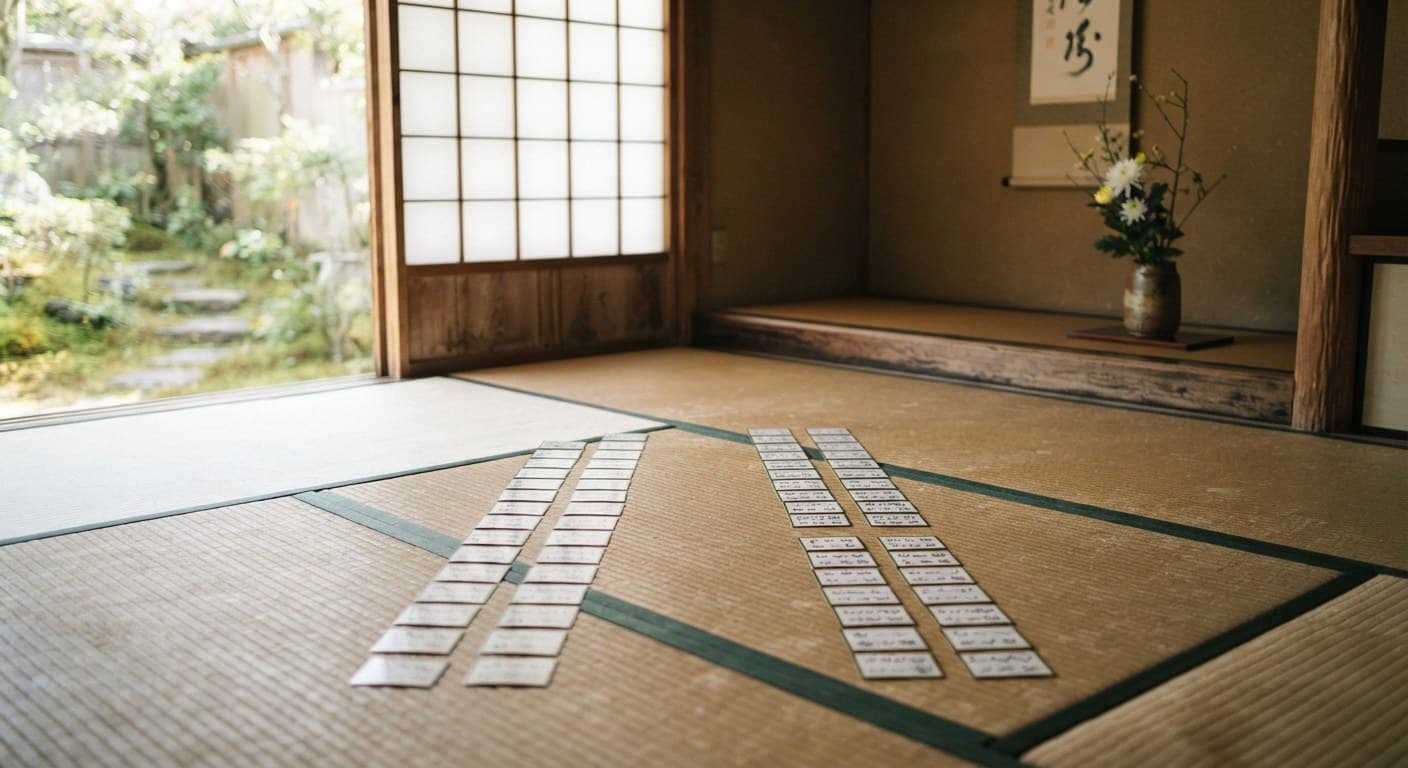
Chihayafuru and the World of Competitive Karuta: The Speed, Silence, and Poetry Behind Japan's Fiercest Card Game
How Chihayafuru reveals competitive karuta, where poems from the 13th-century Hyakunin Isshu meet athletic reflexes and matches turn on hundredths of a second.
7/28/2026

Naruto and Yakuwarigo: The Real Meaning of Dattebayo and Why Translators Invented Believe It!
How Naruto's famous verbal tic dattebayo opens the door to yakuwarigo, Japan's role language system, and why English translators had to invent Believe it!
7/4/2026

Evangelion's Angels and Japan's Decorative Christianity
How Neon Genesis Evangelion's enemies are 使徒 (apostle) in Japanese but Angel in English — and how Japan wears Christianity as aesthetic, not faith.
7/3/2026

Solo Leveling and Te-ate: Why the Japanese Word for Treatment Means Placing the Hand
How Solo Leveling's healing magic opens onto te-ate, the Japanese word for treatment whose root is the simple act of placing a hand on a wound.
6/26/2026
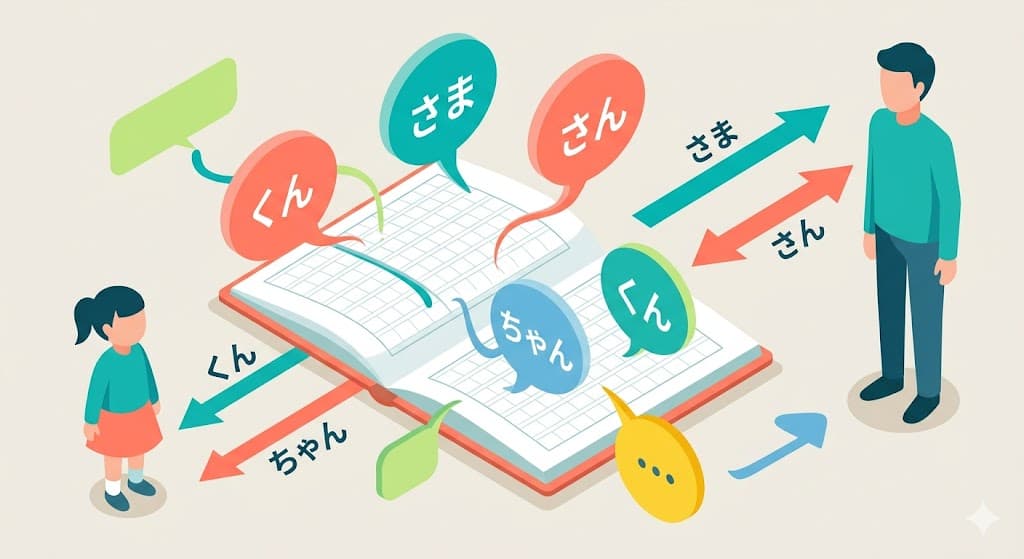
Detective Conan and the -kun You Didn't Expect: How Japanese Honorifics Really Work
How Detective Conan reveals that the honorific -kun is not male-only — an inspector calls teenage Ran 'Ran-kun', a hierarchy English subtitles quietly drop.
6/11/2026

Witch Hat Atelier and Japan's 'Thanks for Your Thanks' Loop
How the 'thanks for your thanks' exchange in Witch Hat Atelier opens a window onto Japan's habit of not letting gratitude end on the first reply.
5/26/2026