Sazae-san Syndrome: The Anime Behind Japan's Sunday Gloom
Sazae-san syndrome is Japan's nickname for Sunday evening gloom. See how a family anime's fixed 6:30 slot and closing janken came to mark the end of Sunday.

Tokyo-born, 3rd-generation Edokko · writing on Japanese culture from outside Japan
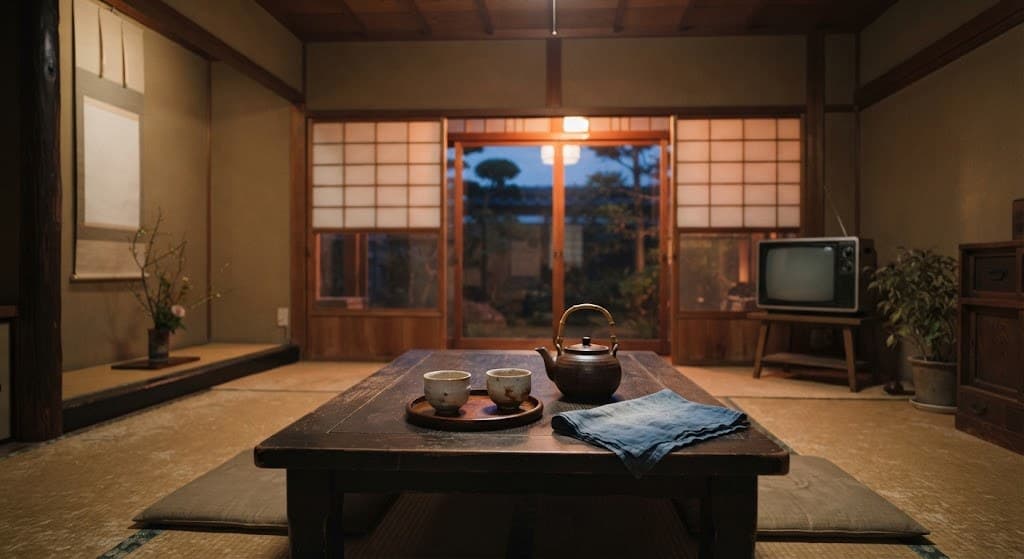
What does the end of a weekend sound like? In Japan, one well-known answer is a cartoon. Sazae-san syndrome is the popular Japanese name for the gloom of Sunday evening, when Monday comes into view. It takes its name from サザエさん(Sazae-san), a family anime that has aired at the same Sunday time since 1969. The show closes each week with a promise of next week and a game of rock-paper-scissors. That small ritual helps explain how a gentle programme about home life gave its name to a mood.
Spoiler-Free Cultural Analysis
This article looks at the broadcast history, closing rituals, and everyday Japanese words behind Sazae-san syndrome. It covers the show's format and schedule only, with no story details from any episode.
Key Takeaways
- Sazae-san syndrome is a popular Japanese nickname for the low mood of Sunday evening and night, when going back to school or work the next day starts to feel real.
- The anime began on 5 October 1969, and its regular time has stayed at Sunday 18:30 Japan time ever since. Because the programme's time almost never changes, it became the byword for the end of Sunday.
- Each episode closes with Sazae asking viewers to watch again next week, then playing janken (rock-paper-scissors) with them. The show's friendliest moment comes just as viewers start to think about the week ahead.
Key Terms Explained
- サザエさん症候群 (Sazae-san shōkōgun) / Sazae-san Syndrome — A nickname for feeling low on Sunday evening at the thought of Monday, named after the anime.
- 憂鬱 (Yūutsu) / Gloom — A heavy, low mood. This is the word Japanese sources use for the feeling.
- 四コマ漫画 (Yonkoma manga) / Four-Panel Comic — A short comic strip told in four panels. Sazae-san began in this form.
- 次回予告 (Jikai yokoku) / Next-Episode Preview — The short segment at the end of a programme that tells you what is coming next time.
- じゃんけん (Janken) / Rock-Paper-Scissors — The hand game. Sazae plays it with viewers at the very end of each episode.
- 視聴率 (Shichōritsu) / Audience Rating — A figure showing how much of the audience was watching a programme.
- 代名詞 (Daimeishi) / Byword — Literally a "pronoun", and also the word for something so closely tied to an idea that it stands for that idea.
Two Sundays in One Life
I was born and raised in Tokyo, the third generation of my family to be an 江戸っ子(Edokko: a Tokyoite by birth and upbringing). As a child, I watched Sazae-san on Sunday evenings almost every week. I have read manga and watched anime for as long as I can remember, and this one was simply part of Sunday.
Evenings back then had their own signals. I often played on the banks of the 荒川(Arakawa: a river in Tokyo), two or three minutes' walk from home. When the 夕焼けチャイム(yūyake chaimu: the "sunset chime" that sounds at dusk) rang, it was time to go home. Why Japan once feared dusk for its children is explained in Spirited Away and Kamikakushi: The Folklore Behind the Title.
The gloom came later. It was in my years as a company employee that I felt low on Sunday evenings. Today I live abroad, and Sunday evening feels like nothing special. No chime marks the end of the day here.
When I go back to Tokyo after a long time away, sounds and smells bring Japan back before words do. I mean the tones at pedestrian crossings, station announcements, the chime at a convenience-store door, and cicadas in summer. That is why I read Sazae-san syndrome as a story about sound and timing as much as a story about work.
Related: Spirited Away and Kamikakushi: The Folklore Behind the Title explains this in detail.
How a Family Anime Took Over Sunday Evening
What the Phrase Means
The Japanese Wikipedia entry calls サザエさん症候群 a 俗称(zokushō: an informal, popular name) for feeling low from Sunday evening into the night at the thought of school or work the next day. The English entry on Sazae-san describes a depressed mood on Sunday night after an episode has finished on television. A 2019 Nippon.com article says the same: as the programme ends, people think about going to work tomorrow, and the 憂鬱(yūutsu: gloom) begins.
Look at the timing in those three descriptions. None of them says the stories are sad. The trigger is the ending.
The Comic Strip Behind the Programme
Sazae-san began as a 四コマ漫画(yonkoma manga: a four-panel comic strip) by 長谷川町子(Hasegawa Machiko: the series' creator). According to the official Hasegawa Machiko site, it started on 22 April 1946 in the newspaper 夕刊フクニチ(Yūkan Fukunichi: an evening paper), when she was 26. From 16 April 1951 it ran in the morning edition of 朝日新聞(Asahi Shimbun: a major daily newspaper), and it stayed there until 21 February 1974.
A Japanese dictionary entry sums up the subject in a line: the daily life of Sazae, a housewife in 世田谷(Setagaya: a ward of Tokyo), with her family and the people around them. That ordinary setting matters. A mood this common needed a programme this ordinary to carry its name.
Sunday 18:30, Year After Year
The anime started on 5 October 1969 on フジテレビ(Fuji Terebi: Fuji Television). Its regular time has been Sunday 18:30 Japan time from the first broadcast. Japanese Wikipedia says no programme has run longer at one unchanged time. Guinness World Records lists Sazae-san as the longest-running animated TV series, at 55 years and 1 day as of 6 October 2024.
The official site still states it plainly: every Sunday at 6:30 p.m. At the time of writing, the next broadcast was listed for Sunday 1 November 2026, 18:30 to 19:00, with three stories. The programme's highest 視聴率(shichōritsu: audience rating) was 39.4%, on 16 September 1979. The research company ビデオリサーチ(Bideo Risāchi: Video Research) measured it as the share of 関東(Kantō: the Tokyo region) households watching live.
Japanese Wikipedia gives four reasons the show became the 代名詞(daimeishi: byword) for Sunday evening. It has run for more than fifty years, people of every generation know it, its start and end times are fixed, and it is very rarely dropped for sports broadcasts. The last two are the ones I would underline. A programme that almost never moves starts to work like a clock.
The Line-Up That Leads to 18:30
Sazae-san does not stand alone. 笑点(Shōten: a weekly comedy panel show) runs on Sunday from 17:30 to 18:00. Guinness World Records counts it as the longest-running weekly TV comedy panel show, broadcast by 日本テレビ(Nihon Terebi: Nippon Television) for 60 years as of 15 May 2026. ちびまる子ちゃん(Chibi Maruko-chan: a Sunday anime) follows at 18:00 with two short stories, and Sazae-san comes at 18:30 with three. Both anime run for 30 minutes. Another side of Chibi Maruko-chan's world is explained in Chibi Maruko-chan and Rajio Taisō: Why Japanese Kids Spend Summer Mornings Doing Radio Calisthenics in a Car Park.
Japanese Wikipedia notes that some people feel the sadness of a holiday ending at the Shōten theme, or at the Chibi Maruko-chan ending song. Others feel it at So in Love, the closing theme of 日曜洋画劇場(Nichiyō Yōga Gekijō: a Sunday film programme). So the name comes from one anime, yet the feeling is tied to a series of sounds. Sunday evening in Japan counts down through its theme tunes, and each person has a different point where the holiday feels over.
Sazae's Preview and the Janken Ritual
Now to the closing rituals, because they show why the name fits this anime. Each episode ends with a 次回予告(jikai yokoku: next-episode preview). It opens with a line from Sazae, voiced by 加藤みどり(Katō Midori: her voice actor): さ〜て、来週のサザエさんは?(Sāte, raishū no Sazae-san wa?: "Now then, what's on next week's Sazae-san?").
The end of the preview is a small performance. Sazae holds sticks with pictures of rock, scissors, and paper, faces the screen, and says 来週もまた見てくださいね〜(Raishū mo mata mite kudasai ne: "Please watch again next week"). Straight after comes the call of じゃんけんポン!(Janken pon!: the words for throwing a hand in rock-paper-scissors), and she shows the viewer one of the three. Then she gives a soft laugh, うふふふふふ(ufufufufu), and waves. She reads out the sponsors, and the programme is over.
The game is newer than you might expect. Japanese Wikipedia dates it to 20 October 1991. Before that, the preview ended with Sazae miming a cookie stuck in her throat. I was born in 1965, so I never saw the janken on my childhood Sundays. It arrived when I was already an adult.
People also pay attention to which hand she shows. In 2020, paper came up five weeks in a row, a first in the game's 29 years. The official site now invites viewers to join in during the broadcast by pressing the "d" button on a Japanese TV remote.
Think about what the ritual actually says. The word in both of Sazae's lines is 来週(raishū: next week). She is being kind, and she is inviting you back. But the only way to reach next week's episode is to live through the week first, and she mentions next week just as Sunday is running out. The cheerful goodbye and the gloom both come from that one word, "next week".
A Symbol, Not a Cause
In 1993, 嘉門達夫(Kamon Tatsuo: a recording artist) expressed the feeling in his single NIPPONのサザエさん(Nippon no Sazae-san). According to Japanese Wikipedia, the lyric card carried a careful note. It said the song uses Sazae-san as a symbol of Sunday evening, and does not claim that the show itself brings on such a mood.
I find that note useful, because it states what the name really does. The anime marks the time. Monday supplies the gloom.
The name is also used beyond Sunday. Japanese Wikipedia says the name also works for people whose days off are not on Sunday. Examples are police, firefighters, and Japan's Self-Defense Forces. Shift workers at large factories and staff at businesses that close on a weekday are included too. For them, the mood simply comes at the end of their own days off.
Why Sunday Carried So Much Weight
School helps explain why one Sunday slot could matter so much. The 学校週5日制(gakkō shū itsukasei: the five-day school week) came in stages. The Japanese reference work Imidas records that Saturdays became days off once a month from September 1992, twice a month from April 1995, and every week from April 2002. For more than two decades after the anime began, Saturday was not a regular day off from school, so Sunday was the one regular day off. I was already working by the time that first change came.
The Same Mood Under Other Names
The feeling is hardly Japan's alone. Japanese Wikipedia says the wider world knows it as Blue Monday. LinkedIn, the job-networking site, surveyed nearly 3,000 Americans, as reported in August 2021. It found 66% of professionals affected by the "Sunday Scaries", meaning stress and anxiousness on Sunday nights before work on Monday. A 2018 internet survey in Japan by 江崎グリコ(Ezaki Guriko: a Japanese confectionery maker) asked 1,200 people about the gloomiest day. Monday was the answer for 77.5% of working men, 86.5% of working women, and 62.8% of homemakers.
What differs is the naming. English gave the mood a day of the week. Japan gave it a housewife in an anime, and the moment her programme ends.
Where the Family Stands in Bronze
You can also visit the world of Sazae-san in person. The 長谷川町子美術館(Hasegawa Machiko Bijutsukan: the Hasegawa Machiko Art Museum) is at 1-30-6 桜新町(Sakurashinmachi: a neighbourhood in Setagaya). On 25 March 2012, bronze statues of the Sazae-san family were set up around the station there.
The Hand She Shows on Sunday
For me, Sazae-san belongs to childhood Sundays, and the gloom belongs to my company years. They were two separate things that happened to share an evening. The syndrome's name joins them, and I think that is why it stuck. You can say the title of a programme and be understood, with no need to describe the feeling.
Sazae herself never says anything sad. She offers a game, laughs, waves, and asks you to come back. The gloom is something we bring ourselves.
My Sunday evenings abroad carry none of that weight now. Even so, I still think about how much of a Japanese week was once held in place by sounds: a chime over the river, a theme tune at the same minute, a voice asking you to watch again next week.
FAQ
Q: What is Sazae-san syndrome? A: It is a popular Japanese nickname for feeling low on Sunday evening and night at the thought of going back to school or work on Monday. It is named after the long-running family anime Sazae-san, which airs on Sunday evening.
Q: Why is it named after Sazae-san? A: The anime became the byword for the end of Sunday. It has run for more than fifty years, people of every generation know it, its times are fixed, and it is very rarely dropped for sports broadcasts.
Q: Is Sazae-san syndrome a medical diagnosis? A: The Japanese sources I used call it a 俗称(zokushō), a popular nickname for a mood. This article treats it as a word about culture and television, not as a medical term.
Q: What time is Sazae-san on TV? A: Every Sunday at 6:30 p.m. Japan time, on Fuji Television. Its regular time has not changed since the first broadcast on 5 October 1969.
Q: What is the rock-paper-scissors game at the end of Sazae-san? A: It is the close of the next-episode preview. Sazae asks viewers to watch again next week, calls "janken pon", and shows rock, scissors, or paper. It replaced an earlier ending on 20 October 1991.
Q: Is Sazae-san syndrome the same as Blue Monday or the Sunday Scaries? A: They describe closely related feelings about the return to work. Unlike the others, the Japanese name comes from a specific programme and the moment it ends on Sunday evening.
Key Insights to Remember: Summary
- Sazae-san syndrome is really about a fixed broadcast time. The anime's Sunday 18:30 time has held since 1969, so its ending became a shared signal that the holiday was running out.
- The closing ritual marks the moment the mood begins. A preview that says "next week" and a friendly game of janken come right when viewers begin to think about Monday.
- The show is the symbol, not the cause. A 1993 single on the subject said so on its lyric card. The gloom itself comes from the week ahead.
If you get the chance to watch Sazae-san on a Sunday, stay to the very end, throw your hand when she calls janken, and notice what that moment does to you. And if you are in Tokyo, ride out to Sakurashinmachi and say hello to the family in bronze.
Sources
- Sazae-san Syndrome — Japanese Wikipedia
- Sazae-san — English Wikipedia
- Sazae-san (TV Anime) — Japanese Wikipedia
- Chibi Maruko-chan and Sazae-san (Japan Glances) — Nippon.com
- Sazae-san Official Site — Fuji Television
- Sazae-san — Digital Daijisen via Kotobank
- Hasegawa Machiko Official Site
- Longest-Running Animated TV Series — Guinness World Records
- Longest-Running Weekly TV Comedy Panel Show — Guinness World Records
- Survey on Gloomy Days of the Week (Ezaki Glico) — Kyodo News PR Wire
- 'Sunday Scaries' Survey — FOX 29
- Five-Day School Week — Imidas
About the author

Spoiler-free cultural deep-dives into anime, manga & live-action Japanese drama
- ●Tokyo-born, 3rd-generation Edokko (江戸っ子)
- ●Lifelong manga reader & anime viewer since the kaiju era
- ●Writes from outside Japan — distance as a cultural lens
- ●Spoiler-free · sourced · Kanji + Romaji + English
A Tokyo-born, 3rd-generation Edokko writer who has spent years living outside Japan. I use the anime, manga, and live-action Japanese drama you already love as a doorway into the folklore, language, religion, and everyday history behind them — written so even first-time fans can follow along, with sources for every claim.
Enjoy this article?
Get the next spoiler-free cultural deep-dive straight to your inbox.
Related Articles

My Neighbor Totoro and the Katori Senko: The Meiji Invention That Gave Japanese Summer Its Smell
How My Neighbor Totoro's summer evokes the katori senko, the Meiji-era mosquito coil whose spiral was imagined in 1895 by the wife of Kincho's founder.
8/8/2026

Anohana and Kingyo-sukui: Why Japan Replaced a Working Net With Paper That Dissolves
How Anohana's summer world explains kingyo-sukui, the festival stall game where Japan swapped a net that worked for a paper scoop designed to fail.
8/2/2026

Chibi Maruko-chan and Rajio Taisō: Why Japanese Kids Spend Summer Mornings Doing Radio Calisthenics in a Car Park
How Chibi Maruko-chan's Shōwa childhood preserves rajio taiso, the summer radio calisthenics Japan imported from an American insurer that dropped it a decade later.
8/1/2026

Rurouni Kenshin and Uchimizu: Why Old Tokyo Cooled Its Streets With a Ladle of Water
How the Meiji-era streets of Rurouni Kenshin open onto uchimizu — a summer custom that began as tea-ceremony courtesy and spread through Edo because of dust.
7/31/2026

Ace of Diamond and the Dirt of Koshien: Why Japan's Losing Teams Scoop Soil Into Their Bags
How Ace of Diamond treats Koshien as a destination, and why eliminated high school players kneel to fill bags with soil that groundskeepers blend by season.
7/30/2026
Neon Genesis Evangelion and the Walkman: Why Shinji Retreats Into His Headphones
Why does Shinji's SDAT cassette player feel so Japanese? From Sony's 1979 Walkman to quiet packed trains and the meiwaku ethic, a Tokyo-born writer unpacks the headphone culture behind Evangelion's most human prop.
7/23/2026