Omamori Explained: Japan's Shrine Charms Through Lucky Star
What is an omamori? Learn what Japan's shrine charms are, the main types, how people keep them, and how old ones are returned, via Lucky Star's shrine family.

Tokyo-born, 3rd-generation Edokko · writing on Japanese culture from outside Japan
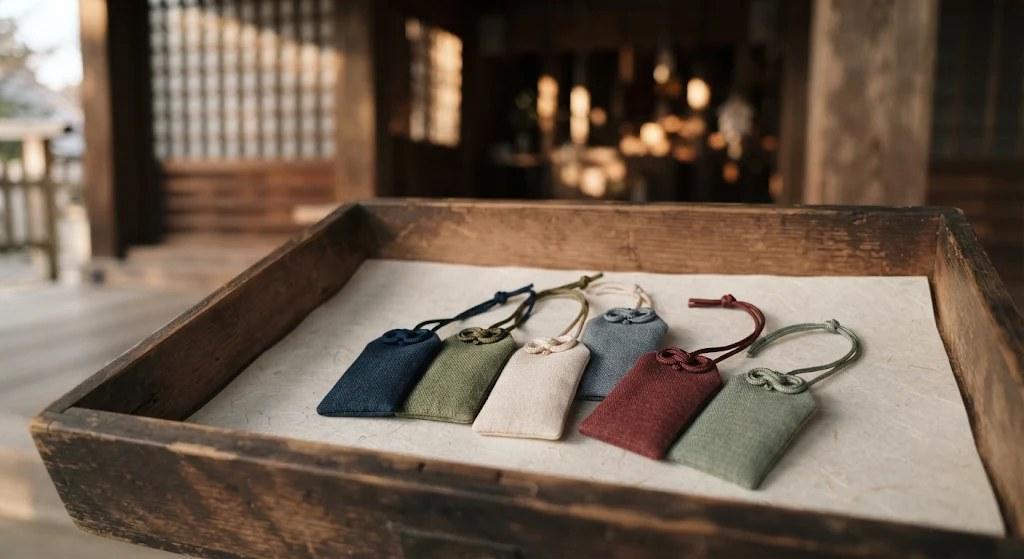
What do you do with a lucky charm once it has done its job? In Japan, the charm is an お守り(omamori: a protective charm from a shrine or temple), and the answer is not "throw it away." In らき☆すた(Raki☆Suta: Lucky Star), two of the girls grow up in a family that runs a shrine, and at New Year, when people crowd into shrines, the two are kept busy helping out. Seen from their side of the counter, a small charm turns into a whole cycle of wishes, keeping, and letting go.
Spoiler-Free Cultural Analysis
This article looks at the real customs behind omamori: what they are, the main types, how people keep them, and what happens to old ones. It refers only to the premise of Lucky Star and one episode synopsis, with no plot details.
Key Takeaways
- An omamori is a small charm bearing the name of a deity, or the image or sacred letters of a Buddhist figure. Holding it is believed to bring the protection of the gods and Buddhas.
- Each charm is made for one kind of wish. Shrines today offer charms for traffic safety, health, success in education, safe childbirth, and even luck in love.
- Old charms are not rubbish. At Meiji Jingu, people return them once they have served their purpose or are more than a year old, and the shrine burns them in a sacred fire.
- Lucky Star places the Hiiragi sisters in a shrine family, and a real shrine that appears in the anime, Washinomiya, drew huge New Year crowds in 2009.
Key Terms Explained
- お守り (Omamori) / Protective Charm — A small charm from a shrine or temple, carried or kept for protection and for a particular wish.
- お札 (Ofuda) / Household Talisman — A paper slip or wooden plaque that represents divine protection of the home, kept or displayed indoors.
- 授与所 (Juyosho) / Amulet Office — The counter at a shrine where omamori and ofuda are offered.
- 古神符納札所 (Koshinpu Nosatsusho) / Box to Return Old Amulets — The place at a shrine where people bring back charms and talismans they no longer need.
- 初詣 (Hatsumōde) / First Shrine Visit — The first visit to a shrine or temple in the New Year.
- 絵馬 (Ema) / Votive Plaque — A small wooden plaque on which visitors write a wish and hang it at a shrine.
- 合格祈願 (Gōkaku Kigan) / Prayer to Pass an Exam — A prayer for success in an entrance exam, typically made before the exam.
A Charm in the Desk Drawer
When I was a child, my parents often bought me an omamori at a shrine or temple. They cost about 100 yen, and to me they were treasures. I never put mine on my ランドセル(randoseru: the backpack Japanese primary-school children carry). I kept them in a drawer instead, tucked away with care. At some point they disappeared. I think I lost them during a move.
I remember one more thing clearly. My parents once opened one of my charms, and inside there were tiny grain-like pieces. Even so, the charm did not feel any less special. It felt special to me then, and it still does now that I am an adult.
Charms were part of a larger landscape. Before sports matches and entrance exams, I went to shrines to make a 必勝祈願(hisshō kigan: a prayer for victory) or a 合格祈願(gōkaku kigan: a prayer to pass an exam). Rows of ema hanging at a shrine, and 願掛けのだるま(gankake no daruma: a round doll used when making a wish), were familiar sights from childhood. Every New Year I went to a shrine for hatsumōde and drew an おみくじ(omikuji: a paper fortune). At home and at my relatives' houses there was a 神棚(kamidana: a small household Shinto shelf), with ofuda on it, and an old 仏壇(butsudan: a household Buddhist altar). We children were taught that these were things you do not touch without good reason.
I have never paid much attention to 厄年(yakudoshi: the ages said to invite misfortune), and I have never had a 厄払い(yakubarai: a purification against bad luck) at a shrine. My relationship with all of this has been relaxed rather than devout. Yet the omamori has always stayed in its own special place, and Lucky Star made me think about where that feeling comes from.
What an Omamori Is, and Where It Goes When It Is Done
Lucky Star and the Shrine at New Year
Lucky Star is based on a 四コマ漫画(yonkoma manga: a four-panel comic strip) by 美水かがみ(Yoshimizu Kagami: the series' creator). An anime guide describes it as a story centred on 泉こなた(Izumi Konata: Konata Izumi), an otaku girl, and 柊かがみ(Hiiragi Kagami: Kagami Hiiragi), an ordinary girl who answers Konata's jokes with sharp comebacks. It shows the easygoing, uneventful everyday life of high school girls, played for laughs.
The official synopsis of episode 12, お祭りへいこう(Omatsuri e Ikō: Let's Go to the Festival), opens at the turn of the year. The end of the year and the New Year bring all kinds of events, hatsumōde among them. The Hiiragi sisters are run off their feet helping out at their family's shrine. For most characters in an anime, New Year is a day out. For the Hiiragi family, it is a working day.
The shrine world on screen has a real counterpart. Anime News Network reported in 2007 that the cast and fans would visit the real-life Washinomiya shrine that appears in the anime, at an event on December 2 titled "Lucky ☆ Star's Brunch and Official Shrine Visit in Washinomiya." In 2009 it reported that, according to the local prefectural police, 420,000 people visited the Washinomiya shrine during the first three days of the year, 120,000 more than the previous year's estimated high.
Those numbers say a lot about how fans connect with the series. For these fans, the place itself is the reason to go. And the place they went is a shrine, where people traditionally come at New Year to make wishes for the year ahead.
A Charm Written With a Name
The ブリタニカ国際大百科事典(Buritanika Kokusai Daihyakka Jiten: Britannica International Encyclopaedia), via Kotobank, explains that an omamori is also called 護符(gofu), 霊符(reifu), 守札(mamorifuda), or 守護札(shugofu), all words for a protective charm. It is a charm bearing the name of a deity, a Buddha, or a 菩薩(bosatsu: a bodhisattva). Others carry images of heavenly beings and demon gods, or 種子(shuji: sacred Sanskrit letters standing for a Buddhist figure) and 真言(shingon: mantras). The name "omamori" comes from the belief that whoever holds it is protected by the gods and Buddhas.
The 國學院大學(Kokugakuin Daigaku: Kokugakuin University) glossary of basic Shinto terms gives a similar picture. It describes the omamori as a small personal tablet or amulet on which the name of a deity is written, made of wood, paper, or metal, and worn constantly on the person for divine protection.
The word "personal" matters. An omamori is not a decoration for the shrine. It leaves the shrine and goes home with you.
One Charm, One Wish
The encyclopaedia also says that omamori come in many types, according to the purpose of the prayer. Its examples are charms against fire, against theft, and against epidemic disease, and charms for safe childbirth.
Today's shrines continue that idea in modern form. The multilingual signs of 明治神宮(Meiji Jingū: Meiji Jingu), published by the 観光庁(Kankōchō: Japan Tourism Agency), describe its juyosho as the place where omamori and ofuda are available. There are omamori for traffic safety, health, or success in education. Meiji Jingu also offers the sowa mamori, a special charm for luck in love. It is infused with the aroma of camphor trees and inspired by the Meoto Kusu, a pair of "husband and wife" camphor trees.
The signs at 宗像大社(Munakata Taisha: a Shinto shrine), in the same Japan Tourism Agency collection, say that omamori are available at shrines across Japan. At Munakata Taisha, the most popular type is the charm for road safety. Other charms are meant to ensure good health, safe pregnancy and delivery, good academic results, and so on.
Put the old list and the new list side by side and the pattern is clear. Fire and theft give way to traffic and exams, but the principle stays the same. You do not buy "luck" in general. You choose the charm that matches the worry you have right now.
Omamori and Ofuda
Both Meiji Jingu and Munakata Taisha offer two kinds of protection at the same counter. The omamori is the one you carry. The ofuda protects the home. Munakata Taisha describes it as an inscription on a slip of paper or on a wooden plaque that you can display in the home.
The encyclopaedia's description of how charms are used covers both. Some are carried on the body at all times, some are swallowed, some are placed in a room, and some are pasted onto doors or pillars. In my childhood home, the ofuda sat on the kamidana, and nobody touched it lightly. The omamori, on the other hand, came into my hands, and into a drawer.
How People Keep Them
The Kokugakuin glossary says an omamori is worn constantly on the person.
My own way was different. I never hung mine on my school bag. Instead, I kept each one carefully in a drawer and thought of it as special. That feeling did not depend on whether the charm was in sight.
Returning Old Charms
So what happens when a charm has done its job? Meiji Jingu has a 古神符納札所(Koshinpu Nosatsusho), translated on its sign as "Box to Return Old Amulets." According to the sign, charms are usually returned once they have served their purpose, or if they are more than a year old. The returned items are then burned in a sacred fire. The sign also makes clear that the box is not for rubbish.
I should be honest here. I have never returned an omamori to a shrine or temple. Mine have always vanished at some point, the way my childhood charms were lost in a move. When a charm disappears, I take the loss as a sign that the charm has done its job. It is the same feeling as a ミサンガ(misanga: a woven thread bracelet) breaking: people say that when it snaps, the wish comes true.
The shrine's way and my way look different, yet they share one idea. A charm has a working life, and when that life ends, it should be let go with respect, not simply thrown away.
The Charm on the Other Side of the Counter
Lucky Star does not make a big story of omamori. It simply shows two sisters working at their family's shrine while everyone else is out celebrating New Year. That small detail reminds me that every charm I ever kept in a drawer first passed through someone's hands at a counter. Another small object that anime turns into a sign of connection is covered in Your Name and Kumihimo: The Real Craft Behind Mitsuha's Braided Cord.
For me, the omamori has always been part of a relaxed mix: hatsumōde at a shrine, bean-throwing at 節分(setsubun: a traditional seasonal festival), cake at Christmas, Buddhist funerals, and weddings in a church or at a shrine. None of it felt contradictory. Inside that mix, the omamori is one of the few things I have always treated as special.
If you rewatch the New Year episode, look at it from the Hiiragi sisters' side. And if you visit a shrine in Japan, look for the juyosho, choose one charm for the wish you actually have, and when its job is done, look for the place where it can be returned.
FAQ
Q: What is an omamori? A: An omamori is a small protective charm from a Japanese shrine or temple. Japanese references describe it as a charm bearing the name of a deity, or the image or sacred letters of a Buddhist figure, which is believed to bring protection to whoever holds it.
Q: What types of omamori are there? A: Each charm is made for a particular wish. Older types include protection against fire, theft, and epidemic disease, and charms for safe childbirth. Major shrines today offer charms for traffic safety, health, success in education, safe pregnancy and delivery, and luck in love.
Q: What should I do with an old omamori? A: Do not throw it out with the rubbish. At Meiji Jingu, for example, people return old charms to a dedicated box once they have served their purpose or are more than a year old, and the shrine burns them in a sacred fire.
Q: What is the difference between an omamori and an ofuda? A: An omamori is a personal charm you carry with you. An ofuda is a paper slip or wooden plaque that represents divine protection of the home and is displayed or kept indoors.
Key Insights to Remember: Summary
- An omamori is personal by design. It carries the name of a deity or a Buddhist figure, and it is meant to go home with you and stay close, not to sit in the shrine.
- Charms are chosen by wish, not by general luck. The list has changed from fire and theft to traffic and exams, but the idea of one charm for one worry has stayed the same.
- A charm has a working life. Shrines take old charms back and burn them in a sacred fire, and even people like me who never return them tend to feel that a lost charm has simply done its job. Lucky Star's shrine family reminds us who stands behind the counter at the start of that cycle.
Sources
- Lucky Star Program Page — Anime eiga.com
- Lucky Star Episode List — TheTVDB
- Lucky Star Cast, Fans to Visit Real-Life Shrine — Anime News Network
- Final New Year Tally for Lucky Star Shrine: 420,000 — Anime News Network
- Omamori — Britannica International Encyclopaedia via Kotobank
- O-mamori — Basic Terms of Shinto, Kokugakuin University
- Juyosho, Amulet Office (Meiji Jingu) — Japan Tourism Agency Multilingual Commentary Database
- Meiji Jingu Multilingual Commentary — Japan Tourism Agency
- Omamori at Munakata Taisha — Japan Tourism Agency Multilingual Commentary Database
- Munakata Taisha Multilingual Commentary — Japan Tourism Agency
- Koshinpu Nosatsusho, Box to Return Old Amulets (Meiji Jingu) — Japan Tourism Agency Multilingual Commentary Database
About the author

Spoiler-free cultural deep-dives into anime, manga & live-action Japanese drama
- ●Tokyo-born, 3rd-generation Edokko (江戸っ子)
- ●Lifelong manga reader & anime viewer since the kaiju era
- ●Writes from outside Japan — distance as a cultural lens
- ●Spoiler-free · sourced · Kanji + Romaji + English
A Tokyo-born, 3rd-generation Edokko writer who has spent years living outside Japan. I use the anime, manga, and live-action Japanese drama you already love as a doorway into the folklore, language, religion, and everyday history behind them — written so even first-time fans can follow along, with sources for every claim.
Enjoy this article?
Get the next spoiler-free cultural deep-dive straight to your inbox.
Related Articles
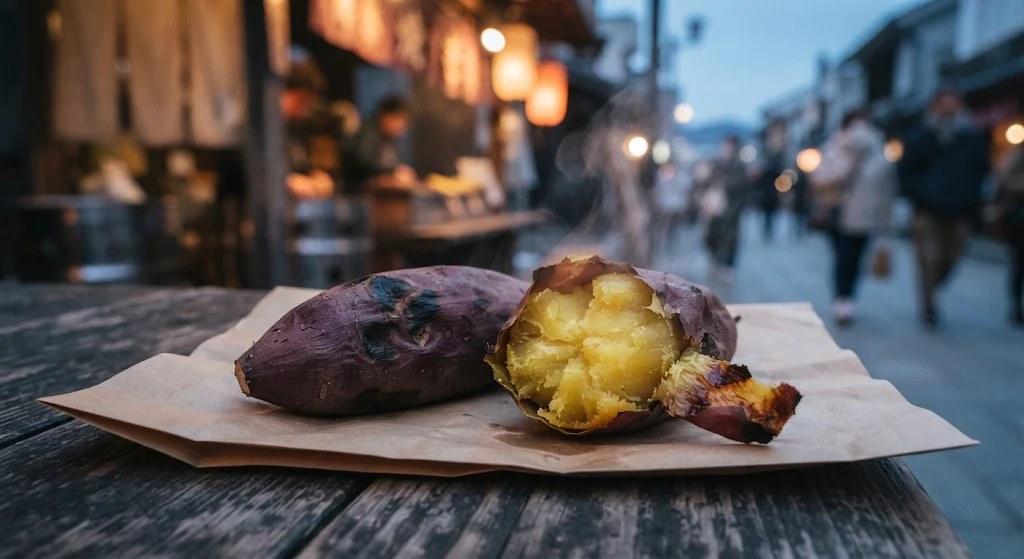
Yakiimo: Why Japan's Roasted Sweet Potato Means Winter
What is yakiimo? See why Japan's roasted sweet potato, the seller's call and the warm paper-wrapped potato still mean winter, from Edo to Crayon Shin-chan.
11/12/2026
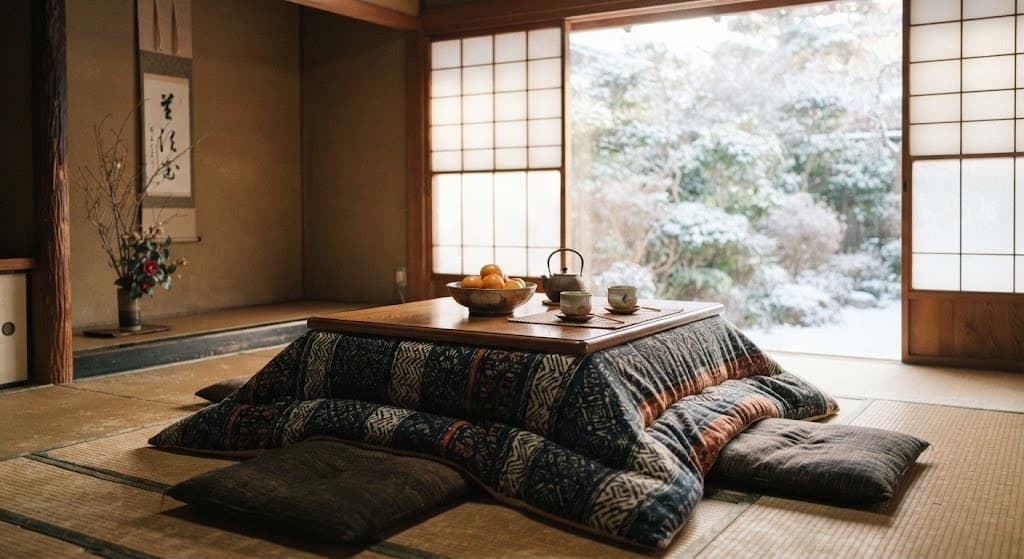
Kotatsu in Crayon Shin-chan: Why the Noharas Won't Get Out
What is a kotatsu? Through Crayon Shin-chan's Nohara family, see why Japan's heated table sits at the centre of winter home life and when it traditionally comes out for the season.
11/5/2026
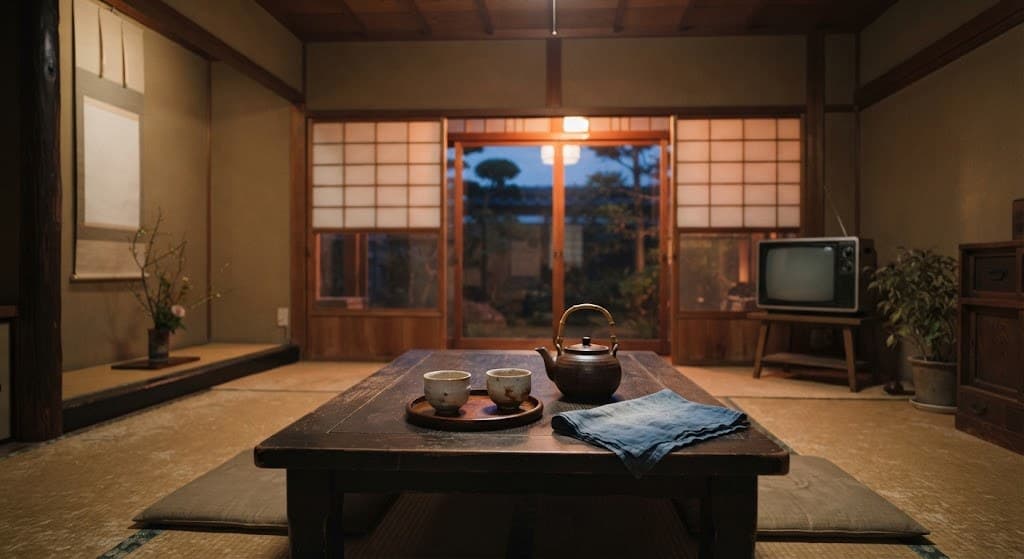
Sazae-san Syndrome: The Anime Behind Japan's Sunday Gloom
Sazae-san syndrome is Japan's nickname for Sunday evening gloom. See how a family anime's fixed 6:30 slot and closing janken came to mark the end of Sunday.
10/31/2026

Totoro and Katori Senko: The Meiji Coil That Gave Summer Its Smell
For fans of My Neighbor Totoro: the story of the katori senko, the Meiji-era mosquito coil whose spiral was imagined in 1895 by the wife of Kincho's founder.
8/8/2026

Anohana and Kingyo-sukui: Why a Working Net Became Dissolving Paper
How Anohana's summer world explains kingyo-sukui, the festival goldfish-scooping stall game, and why Japan swapped a net that worked for a paper scoop designed to fail, a change that dates from the Taishō era.
8/2/2026

Chibi Maruko-chan and Rajio Taisō: Japan's Summer Radio Calisthenics
How Chibi Maruko-chan's Shōwa childhood preserves rajio taiso, the summer radio calisthenics Japan imported from an American insurer that dropped it a decade later, and why the stamp card keeps children turning up in the early morning.
8/1/2026