Yakiimo: Why Japan's Roasted Sweet Potato Means Winter
What is yakiimo? See why Japan's roasted sweet potato, the seller's call and the warm paper-wrapped potato still mean winter, from Edo to Crayon Shin-chan.

Tokyo-born, 3rd-generation Edokko · writing on Japanese culture from outside Japan
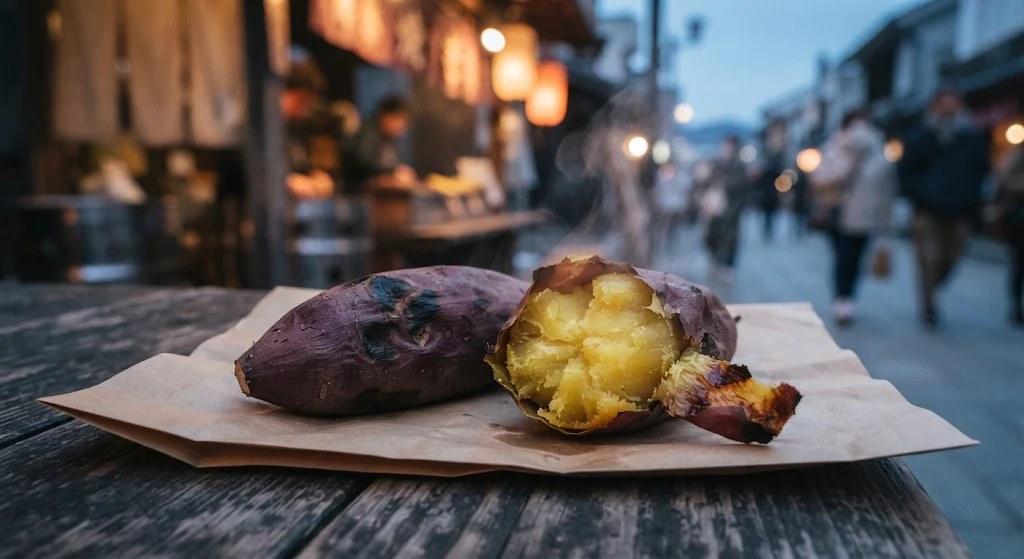
Why would a children's comedy stage a showdown between two men selling roasted sweet potatoes? In Japan, the question hardly needs asking. 焼き芋(yakiimo: roasted sweet potato) is a winter street food, and for many Japanese viewers the season arrives with a seller's voice in the street and a hot bundle in their hands. When クレヨンしんちゃん(Kureyon Shinchan: Crayon Shin-chan) built an episode around a pair of rival yakiimo sellers, it was drawing on that shared feeling.
Spoiler-Free Cultural Analysis
This article looks at the history, language, and street customs behind yakiimo and the Crayon Shin-chan episode about two competing sellers. It covers only the premise given in the official and broadcast listings, with no description of how the contest ends.
Key Takeaways
- Yakiimo is officially a winter word. Japanese dictionaries list it as a 季語(kigo: a season word used in haiku) for winter, and Edo-period street sellers counted roasted sweet potatoes among their winter goods.
- In 江戸(Edo: the old name for Tokyo), yakiimo was cheap and sweet, sold as a snack or a late-night bite from the huts of the town gatekeepers. Sweet potatoes from 川越(Kawagoe: a town near Edo) were prized as the real thing.
- The Crayon Shin-chan episode "Gekiatsu! Yakiimo Taiketsu da zo" pits a seller known for his fine voice against a rival from the next town, and the voice is the detail that ties the episode to Japanese viewers' winter memories.
Key Terms Explained
- 焼き芋 (Yakiimo) / Roasted Sweet Potato — A whole sweet potato roasted until soft, sold hot from shops and mobile carts.
- 石焼き芋 (Ishiyaki-imo) / Stone-Roasted Sweet Potato — Sweet potatoes roasted among hot stones. Sellers of this kind appeared after the Second World War.
- 壺焼き芋 (Tsuboyaki-imo) / Pot-Roasted Sweet Potato — Sweet potatoes roasted inside a large pot, a style that came before stone roasting.
- 棒手振り (Botefuri) / Pole-Carrying Street Seller — An Edo-period seller who carried goods in boxes hung from a pole across the shoulders.
- 木戸番 (Kidoban) / Gatekeeper — The keeper of the gate at the entrance to each town district in Edo, who often sold yakiimo as a side job.
- 十三里 (Jūsanri) / Thirteen Ri — An Edo nickname for yakiimo, built on a pun about chestnuts. A 里(ri) is an old unit of distance.
- 八里半 (Hachiri-han) / Eight and a Half Ri — The words painted on the lantern signs of Edo yakiimo shops, used alongside the jūsanri slogan.
- 季語 (Kigo) / Season Word — A word that tells the reader which season a haiku belongs to.
- 川越いも (Kawagoe Imo) / Kawagoe Sweet Potato — Sweet potatoes grown around Kawagoe, sold in Edo as the genuine article.
A Truck in the Winter Evening
I grew up in the 下町(shitamachi: Tokyo's old working-class neighbourhoods), and for me, yakiimo is first of all a sound. On winter evenings, and later into the night, the call of the ishiyaki-imo truck came drifting down the street. I heard it more times than I can count. Again and again, I went out with my parents or my siblings to buy one.
The potato came wrapped in newspaper. I think it cost about 100 yen, though my memory of the price is hazy. What stays with me is the warmth coming through the paper.
Winter in the shitamachi was full of things like that. The 木枯らし(kogarashi: the first cold, dry wind of winter) blew through the streets, and at home there was the こたつ(kotatsu: a low table with a heater and a quilt). At night, I sometimes heard the clack of 拍子木(hyōshigi: wooden clappers) and a voice calling 火の用心(hi no yōjin: "beware of fire"). The 中華まん(chūkaman: steamed buns with savoury fillings) was the taste I linked most with winter, and yakiimo sat right beside it.
Now that I have lived abroad for many years, I notice that when I go back to Tokyo, sounds and smells remind me of Japan before words do. So when I learned that Crayon Shin-chan had given a yakiimo seller a fine voice, I understood at once what the episode was reaching for.
Related: Kotatsu in Crayon Shin-chan: Why the Noharas Won't Get Out explains this in detail.
Why Yakiimo Still Feels Like Winter in Japan
Two Sellers, One Good Voice
According to the official episode page from テレビ朝日(Terebi Asahi: TV Asahi, the broadcaster), 「激アツ!焼き芋対決だゾ」(Gekiatsu! Yakiimo Taiketsu da zo: "Red-Hot! The Roasted Sweet Potato Showdown") aired on 30 November 2018. Its main figure is 井茂三(Imozō), a yakiimo seller praised for his fine voice. However, he cannot seem to beat a rival seller. しんのすけ(Shinnosuke: the series' young hero) and his friends cheer Imozō on, but it looks as if he will lose again.
A TV listings site adds a little more of the setup. Shinnosuke and the others meet Imozō in a park, where he sells yakiimo from a mobile stall. He explains that every day at three o'clock his rival comes over from the next town, and a "yakiimo battle" begins: whoever sells ten potatoes first wins. TV Asahi later included the same story in 「激うま!秋の食べつくしSP」(Gekiuma! Aki no Tabetsukushi SP: a special on eating through autumn's best food), broadcast on 5 November 2022.
The name is a small joke in itself. "Imozō" starts with いも(imo: potato). The rival's name is written differently in different listings, so I will leave it out here.
A Winter Word in the Dictionary
Yakiimo does not only feel like winter; Japanese dictionaries say so. デジタル大辞泉(Dejitaru Daijisen: a major Japanese dictionary) and 精選版 日本国語大辞典(Seisenban Nihon Kokugo Daijiten: a standard dictionary of the Japanese language) both define yakiimo as roasted sweet potato, mention pot-roasted and stone-roasted styles, and mark it as a winter kigo.
That label matters. A kigo is a shared cue: write the word in a haiku, and readers know the season without being told. Yakiimo sits on the same list of seasonal markers as the cold wind and the kotatsu. When an anime brings a yakiimo seller onto the screen, the audience feels the season the same way. Crayon Shin-chan uses the kotatsu as a winter cue too, which I look at in Kotatsu in Crayon Shin-chan: Why the Noharas Won't Get Out.
Night Snacks at the Town Gates
The sweet potato itself came to Japan by a long route. A booklet from the 川越市(Kawagoe-shi: Kawagoe City) government explains that it reached Okinawa, then called 琉球(Ryūkyū), in 1605, then moved on to Kagoshima, the old province of 薩摩(Satsuma). In 1735, the scholar 青木昆陽(Aoki Kon'yō) grew it successfully at three trial sites, including the 小石川薬園(Koishikawa Yakuen: the shogunate's herb garden), and helped spread it through the 関東(Kantō: the Tokyo region).
Selling yakiimo in the street began early. According to the summary of the 世界大百科事典(Sekai Dai Hyakka Jiten: a Japanese encyclopedia) on Kotobank, an online Japanese reference site, the oldest record is from 1719. 申維翰(Shin Yu-han), a member of the 朝鮮通信使(Chōsen Tsūshinshi: the Korean diplomatic missions to Japan), noted yakiimo being sold by the road at 日岡(Hioka) in 京都(Kyōto). Yakiimo appeared in Edo around the 寛政(Kansei) era, 1789 to 1801, and a shop near 弁慶橋(Benkei-bashi: Benkei Bridge) in 神田(Kanda) became well known.
Here is the part I find most telling. The Kawagoe booklet explains that each town district in Edo had a gate called a 木戸(kido) at its entrance. In the gatekeeper's hut, the keeper sold yakiimo as a side job, for people to eat as an afternoon snack or a late-night meal. The encyclopedia also says that one reason yakiimo spread was that the 番太郎(bantarō: a lowly town watchman) sold it as a side business.
Why yakiimo? The booklet gives two reasons. The sweet potato was one of the few sweet foods ordinary people could eat, and it was very cheap. So in Edo, yakiimo was a small, cheap comfort sold from a hut by the gate. I cannot read that without thinking of the clappers and the "hi no yōjin" calls of my own childhood winters.
Eight and a Half Ri, Thirteen Ri
The Kawagoe booklet describes how Edo yakiimo shops advertised. Their lantern signs read 八里半(hachiri-han: eight and a half ri), and they also used the slogan 「栗(九里)より(四里)うまい十三里」(Kuri yori umai jūsanri: "Thirteen ri, tastier than chestnuts"). The slogan's joke works through sound. 栗(kuri: chestnut) sounds like 九里(ku-ri: nine ri), and より(yori: than) sounds like 四里(yo-ri: four ri). Nine plus four makes thirteen.
The booklet gives several possible origins for the jūsanri slogan, all of them guesses. One is that yakiimo tastes close to chestnut, and that "the genuine Kawagoe potato is tastier still." Another is that the distance from the 札の辻(Fuda-no-tsuji: a crossroads in Kawagoe) to 日本橋(Nihonbashi: the starting point of Edo's roads) was thought to be thirteen ri. A third links it to the "thirteen merits of the sweet potato" listed in the Chinese farming text 農政全書(Nōsei Zensho).
Kawagoe potatoes were hugely popular in Edo as 本場物(honbamono: the genuine article from the true source). The booklet explains that Kawagoe was close to Edo and could use boats on the 新河岸川(Shingashi-gawa: the Shingashi River). The reputation lasted. In 1902, the 東京風俗志(Tōkyō Fūzoku-shi: a record of Tokyo customs) noted that there were a great many yakiimo shops, and that Kawagoe was famous for its sweet potatoes.
From Shoulder Poles to Small Trucks
The seller in the street has a long history of his own. Writing for nippon.com, Kobayashi Akira explains that in the Edo period, in cities like Edo and Osaka, street sellers known as botefuri carried boxes hung from a pole across their shoulders. His list of seasonal goods sold by these sellers gives roasted sweet potatoes, mandarins, and cod for winter.
Some of these sellers sang. The same article mentions chili pepper sellers who were famous in Edo for a song praising their ingredients. Selling in the street was something you heard as well as saw. Such sellers, he adds, could still be seen well into the twentieth century, though more and more of them used bicycles or small trucks.
Yakiimo shops changed with the seasons, too. The Kotobank summary notes that from the 明治(Meiji) era on, many shops sold ice in summer and roasted sweet potatoes in an iron pan for the rest of the year. Pot roasting came later, in the 昭和(Shōwa) era, and the stone-roasting ishiyaki-imo seller appeared after the Second World War. The cart and the truck carried an old street custom into modern Japan.
What the Episode Asks You to Hear
Seen against that history, the episode's choice of detail makes sense. Imozō is not praised for his recipe or his price. He is praised for his voice. In my memory, that is the part of yakiimo that reaches me first, before I see the truck.
The contest itself fits the trade, too. Two sellers, the same hour every day, and a race to sell ten potatoes. It is a comic version of what street selling always was: a voice competing for attention in the cold air.
The Voice Before the Taste
For me, yakiimo has never been a dessert so much as a signal. A voice in the street on a winter evening, a bundle of newspaper in my hands, my family around me. Edo had its version at the town gates, and Crayon Shin-chan has its version at three o'clock every day.
If you hear a yakiimo seller in an anime, a film, or a drama, take it as a sign that the story has reached winter. You will hear the season, not just a sales pitch. And if the writers give the seller a good voice, as they did with Imozō, they are counting on Japanese viewers to remember their own winter evenings.
Abroad, I can now buy Japanese sweet potatoes in the shops, and a small yakiimo shop recently opened near my home. I am glad of it. Still, in my memory, yakiimo begins with a voice in the street.
FAQ
Q: What is yakiimo? A: Yakiimo is a roasted sweet potato, sold hot from shops and mobile carts in Japan. Styles include pot-roasted tsuboyaki-imo and stone-roasted ishiyaki-imo. Japanese dictionaries list it as a winter season word.
Q: Why is yakiimo associated with winter in Japan? A: It has been a winter food for a long time. Edo street sellers counted roasted sweet potatoes among their winter goods, and from the Meiji era many shops sold ice in summer and yakiimo the rest of the year. Dictionaries mark the word as a winter kigo, one of the season words used in haiku.
Q: What does "jūsanri" mean? A: It is an Edo nickname for yakiimo, from the slogan "kuri yori umai jūsanri." Kuri (chestnut) sounds like "nine ri" and yori (than) sounds like "four ri," which add up to thirteen. The pun calls yakiimo tastier than chestnuts, and one theory links the thirteen ri to the distance from Kawagoe to Nihonbashi.
Q: Which Crayon Shin-chan episode is about yakiimo sellers? A: "Gekiatsu! Yakiimo Taiketsu da zo," which TV Asahi aired on 30 November 2018. It features Imozō, a seller known for his good voice, and a rival from the next town. TV Asahi later included it in an autumn food special on 5 November 2022.
Key Insights to Remember: Summary
- Yakiimo's link to winter is written into the language. Edo street sellers sold it as a winter good, and dictionaries still list it as a winter kigo, so a yakiimo seller on screen tells Japanese viewers the season at once.
- Edo made yakiimo a cheap, sweet comfort for ordinary people, sold as a snack or a late-night meal from the town gatekeepers' huts. Kawagoe gave it a name and a reputation through the jūsanri pun and the prestige of the genuine Kawagoe potato.
- Crayon Shin-chan's yakiimo episode centres on a seller praised for his voice. That choice reflects a long street tradition in which goods were heard before they were seen, and it is why the episode feels like winter to Japanese viewers.
Sources
- Episode Synopsis, 30 November 2018 — Crayon Shin-chan Official Site, TV Asahi
- Episode Synopsis, 5 November 2022 — Crayon Shin-chan Official Site, TV Asahi
- Crayon Shin-chan Broadcast Listing, 30 November 2018 — The Television
- Yakiimo — Kotobank
- Kawagoe Ingredients — Kawagoe City
- Street Vendors of the Edo Period — nippon.com
About the author

Spoiler-free cultural deep-dives into anime, manga & live-action Japanese drama
- ●Tokyo-born, 3rd-generation Edokko (江戸っ子)
- ●Lifelong manga reader & anime viewer since the kaiju era
- ●Writes from outside Japan — distance as a cultural lens
- ●Spoiler-free · sourced · Kanji + Romaji + English
A Tokyo-born, 3rd-generation Edokko writer who has spent years living outside Japan. I use the anime, manga, and live-action Japanese drama you already love as a doorway into the folklore, language, religion, and everyday history behind them — written so even first-time fans can follow along, with sources for every claim.
Enjoy this article?
Get the next spoiler-free cultural deep-dive straight to your inbox.
Related Articles
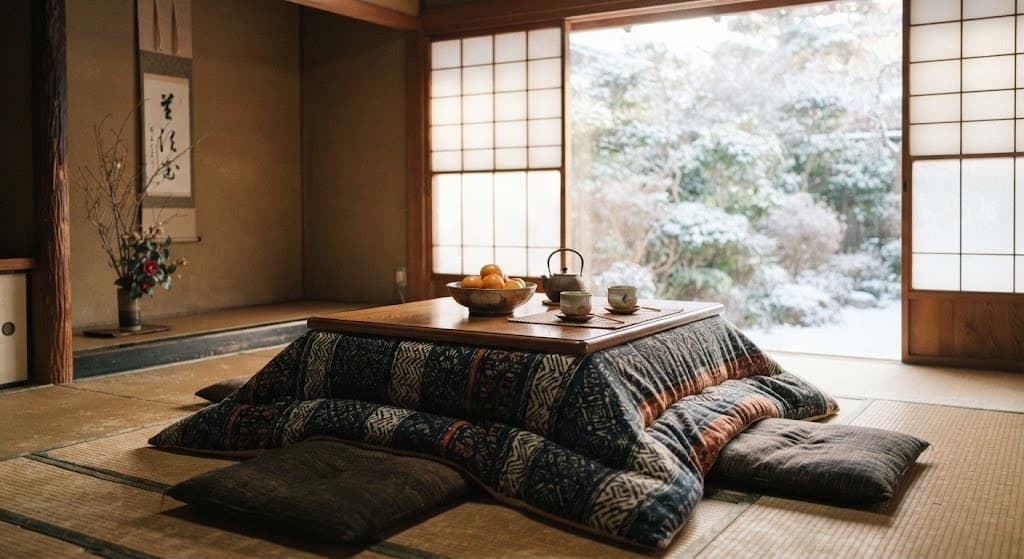
Kotatsu in Crayon Shin-chan: Why the Noharas Won't Get Out
What is a kotatsu? Through Crayon Shin-chan's Nohara family, see why Japan's heated table sits at the centre of winter home life and when it traditionally comes out for the season.
11/5/2026
Sazae-san Syndrome: The Anime Behind Japan's Sunday Gloom
Sazae-san syndrome is Japan's nickname for Sunday evening gloom. See how a family anime's fixed 6:30 slot and closing janken came to mark the end of Sunday.
10/31/2026

Totoro and Katori Senko: The Meiji Coil That Gave Summer Its Smell
For fans of My Neighbor Totoro: the story of the katori senko, the Meiji-era mosquito coil whose spiral was imagined in 1895 by the wife of Kincho's founder.
8/8/2026

Anohana and Kingyo-sukui: Why a Working Net Became Dissolving Paper
How Anohana's summer world explains kingyo-sukui, the festival goldfish-scooping stall game, and why Japan swapped a net that worked for a paper scoop designed to fail, a change that dates from the Taishō era.
8/2/2026

Chibi Maruko-chan and Rajio Taisō: Japan's Summer Radio Calisthenics
How Chibi Maruko-chan's Shōwa childhood preserves rajio taiso, the summer radio calisthenics Japan imported from an American insurer that dropped it a decade later, and why the stamp card keeps children turning up in the early morning.
8/1/2026

Rurouni Kenshin and Uchimizu: Why Old Tokyo Cooled Its Streets
How the Meiji-era streets of Rurouni Kenshin open onto uchimizu — a summer custom that began as tea-ceremony courtesy and spread through Edo because of dust.
7/31/2026