Touch and the Alps Stand of Koshien: Why Japan Unbolts Stadium Seats for a School Brass Band
How Touch's high-school baseball world leads to Koshien's Alps Stand, named by a cartoonist, and why seats are removed each August for school brass bands.

Tokyo-born, 3rd-generation Edokko · writing on Japanese culture from outside Japan

Every August, a Japanese stadium takes out some of its seats so that a school brass band has somewhere to stand.
That sentence sounds like a small operational detail. It is actually the clearest evidence I know of how seriously this country treats a sporting event for teenagers. Touch, Mitsuru Adachi's manga about a high-school baseball team and the people around it, is set against this world, and overseas readers often assume the crowd scenes are exaggerated. They are not. If anything they are restrained.
Spoiler-Free Cultural Analysis
This article covers the real history of Koshien Stadium's Alps Stand and the cheering culture behind it, with no plot revelations from Touch or any other work. Nothing here goes beyond publicly known premises.
Key Takeaways
- The Alps Stand at Koshien was named by a satirical cartoonist who looked at a crowd of spectators in white shirts and saw a snow-capped mountain range, and the joke became the section's official name.
- During the high-school tournament the stadium physically removes seats at the front of the Alps Stand so that each school's cheering squad and brass band can take up position, and reinstalls them afterwards for professional games.
- The lower and middle tiers of the Alps Stand are not sold to the general public during the tournament; they are reserved for people connected to the competing schools, which is why the section reads as two solid blocks of colour on television.
Key Terms Explained
甲子園 (Kōshien) / Koshien — Hanshin Koshien Stadium, opened 1 August 1924, and by extension the national high-school baseball tournament held there.
アルプススタンド (Arupusu Sutando) / Alps Stand — the tiered seating along the lines between the infield stand and the outfield, where school supporters sit.
応援団 (Ōendan) / Cheering Squad — the organised supporters' group, distinct from ordinary spectators, with its own leaders, choreography and rules.
吹奏楽部 (Suisōgakubu) / Brass Band Club — the school wind band, which in August becomes part of the baseball team's equipment.
The Summer I Understood the Sound Before the Game
What I remember from childhood is not a match. It is the noise arriving through a window in Adachi, in the middle of a hot afternoon, from a television I was not watching.
High-school baseball has a particular sound in Japan, and it is not the crack of a bat. It is a brass band playing the same eight bars over and over, punctuated by a whistle and by several hundred people shouting a syllable in unison. You can identify it from another room, through a wall, at a volume where no individual instrument is distinguishable.
I did not play baseball and did not follow it. But that sound was August, in the same way that cicadas were August. It belonged to the season rather than to the sport, and I suspect that is true for a large number of Japanese people who could not name a single player.
Years later, living outside Japan, I heard a recording of it and felt the specific physical sensation of a hot afternoon in a house with the windows open. Whatever else I absorbed from living abroad, the seasonal wiring stayed exactly where it was.
The Cartoonist Who Named a Grandstand
A joke that became the official name
Koshien Stadium opened on 1 August 1924, built for Hanshin Electric Railway. In 1929 the stands were expanded, and shortly afterwards, during the summer middle-school baseball tournament, the ground filled to capacity with spectators wearing white shirts.
Okamoto Ippei, a popular satirical cartoonist of the period, drew that scene. His caption ran, in the clipped katakana style of the day, along the lines of: that stand looks wonderfully high again — it is an Alps stand — there must be permanent snow up at the top.
The nickname stuck. It was originally only a nickname, and it is now the section's official name. Somewhere in there is a small lesson about Japanese naming: the affectionate joke outlives the formal designation, and eventually becomes it.
There was a companion joke that did not survive. After the same expansion, the outfield stand was dubbed the Himalaya Stand in the Asahi Shimbun. Nobody adopted it, and it disappeared. Names need to be earned by the crowd, not assigned by the newspaper.
What the Alps Stand physically is
The section has a feature unusual among the home grounds of professional Japanese teams: it is separated from the infield stand, and its seating is backless benches rather than individual chairs. Koshien is the only such stadium among NPB home grounds.
That bench format is not nostalgia. It is what allows a section to be occupied by an organised group rather than by individuals who bought tickets separately. You cannot run a synchronised cheering routine from rows of moulded plastic seats with armrests.
Why the Stadium Rebuilds Itself Every August
Here is the detail that I think tells the whole story.
For the high-school tournament, seats at the front of the Alps Stand are removed. The purpose is explicit: to make it easier for the competing schools' cheering squads and brass bands to take up position. After the tournament, the seats are put back and the stadium returns to its professional configuration.
The changeover is scheduled around the professional season. The Hanshin Tigers depart on a long road trip, and in the days before the tournament opens, the seating is converted. Professional-configuration Alps seating uses the space of three high-school-configuration places for two people, so the seat count and layout genuinely differ between the two modes.
Consider what that means. A professional baseball club vacates its own stadium, and the seating is physically rebuilt, so that school wind bands have room to play. Not metaphorically prioritised. Unbolted and carried out.
Who is allowed to sit there
During the tournament, the lower and middle tiers of the Alps Stand are sold only to people connected with the competing schools. They are not available to the general public, and movement between the Alps Stand and the infield stand is restricted.
This is why the television image looks the way it does. Two large, solid blocks of a single school colour, moving together, each with a band embedded in it. That is not enthusiasm producing an accidental effect. It is a ticketing policy producing an intended one.
For a reader of Touch or any of Adachi's baseball work, this reframes the crowd. Those stands are not full of neutral spectators who came to watch good baseball. They are full of people from two specific schools, most of whom know somebody on the field, arranged in the seats by an institution that decided the arrangement mattered.
What the Brass Band Is Actually Doing
Outside Japan, a school band at a sports event usually plays between plays or at intervals. At Koshien the band plays more or less continuously while its school is batting, and stops when the school is fielding.
That rule is the key to the whole soundscape. The noise is not celebration; it is accompaniment to a specific half of the innings. If you listen to a broadcast, you can tell which side is at bat without seeing the screen.
The repertoire is its own subject. Bands play arrangements of pop songs, anime themes, film scores and traditional cheer tunes, and particular schools become associated with particular pieces over decades. A tune played by one school's band for forty summers acquires a meaning that has nothing to do with its original lyrics.
And the players in that band are students. They are not professionals hired for the occasion; they are members of the wind band club, who spend August in a concrete stand in direct sun, playing the same passages for hours because their school's baseball team is at bat.
What This Looks Like From Outside
I have lived away from Japan long enough to have lost the assumption that any of this is normal.
Some of it, seen coldly, is questionable. Teenagers play in extreme August heat. Bands sit in unshaded concrete for entire games. The emotional weight placed on a single elimination tournament is enormous, and the losing team's players are filmed weeping while an entire country watches. It is not obvious that this is a healthy way to organise a children's sport, and the criticism inside Japan has been growing for years.
At the same time, I cannot pretend not to find it moving. A school sends its band, and its students, and its old graduates, and they occupy a section of a stadium that was reconfigured to receive them, and they make a noise that a child in another prefecture will remember for fifty years as the sound of summer.
Touch works, for readers who have never been to Japan, precisely because Adachi does not explain any of this. The stands are simply full and loud, because in his world they always were. Knowing that the seats were unbolted to make it possible does not add drama to the story. It adds something else: the knowledge that the setting was built, deliberately, by people who decided it should exist.
FAQ
Q: Is the Alps Stand exclusive to high-school baseball? A: No. It is a permanent section of Koshien Stadium used for professional Hanshin Tigers games as well, where it is ordinary outfield-line bench seating. What changes during the high-school tournament is the configuration and the ticketing: some front seats are removed for the cheering squads and bands, the lower and middle tiers are reserved for people connected with the competing schools, and access to and from the infield stand is restricted.
Q: Why do the bands only play when their school is batting? A: It is a convention of Japanese high-school baseball cheering rather than a formal rule of the sport, and it produces the alternating soundscape that makes the broadcasts recognisable. Practically, it also means the fielding side is not playing under a wall of noise from its own supporters. If you are watching without commentary, the band tells you which half of the inning you are in.
Q: Where does the name Alps Stand come from? A: From a cartoon. After the stands were expanded in 1929, the satirical cartoonist Okamoto Ippei drew the ground packed with spectators in white shirts and captioned it with a remark about the stand looking so high that there must be permanent snow at the top. The nickname spread, and it is now the section's official name. A parallel attempt to name the outfield stand the Himalaya Stand, in the Asahi Shimbun, never caught on.
Key Insights to Remember
-
Infrastructure reveals priorities more honestly than rhetoric does. Any country can say it values youth sport. Koshien removes seats from a professional stadium, on a schedule built around a professional team's road trip, so that school brass bands can stand where the seats were. That is an unusually literal statement of what matters, and it has been repeated every August for decades.
-
The crowd is a designed object. Reserving the lower and middle Alps tiers for people connected with the competing schools turns a stand into a single expressive unit rather than a collection of ticket holders. The televised image of two blocks of colour moving in time is the output of a seating policy. Once you know that, you cannot watch the footage the same way.
-
Names given in affection outlast names given by authority. A cartoonist's joke about snow on a grandstand became the official designation of a section of Japan's most famous stadium, while the newspaper's attempt to christen the outfield the Himalaya Stand vanished. The crowd names things, and the institution eventually catches up.
Sources
About the author

Spoiler-free cultural deep-dives into anime, manga & live-action Japanese drama
- ●Tokyo-born, 3rd-generation Edokko (江戸っ子)
- ●Lifelong manga reader & anime viewer since the kaiju era
- ●Writes from outside Japan — distance as a cultural lens
- ●Spoiler-free · sourced · Kanji + Romaji + English
A Tokyo-born, 3rd-generation Edokko writer who has spent years living outside Japan. I use the anime, manga, and live-action Japanese drama you already love as a doorway into the folklore, language, religion, and everyday history behind them — written so even first-time fans can follow along, with sources for every claim.
Enjoy this article?
Get the next spoiler-free cultural deep-dive straight to your inbox.
Related Articles
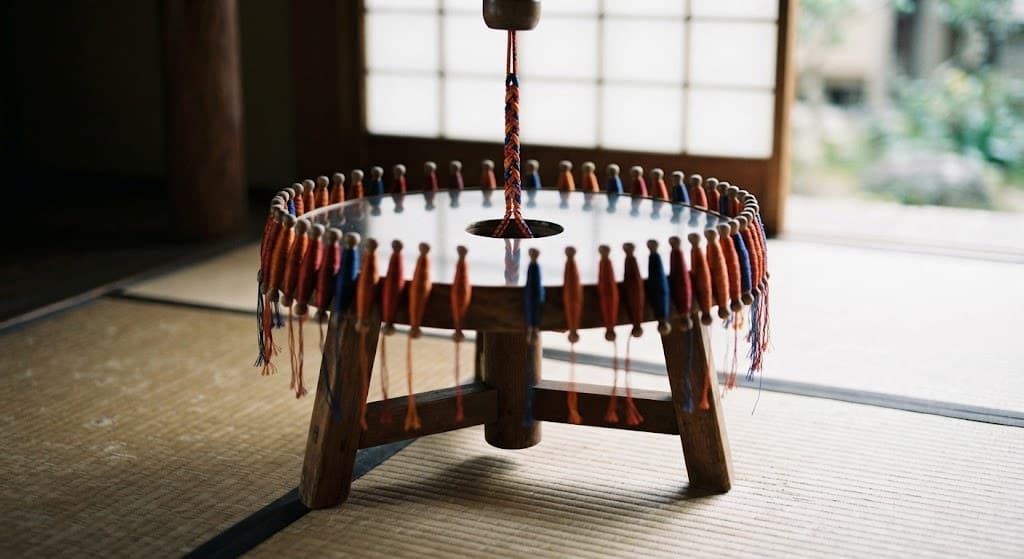
Your Name and Kumihimo: The Real Japanese Craft Behind Mitsuha's Braided Cord
How Your Name dramatizes kumihimo as a picture of musubi, and the real braided-cord craft behind it, from samurai armor to the modern kimono obijime.
10/12/2026

Summer Wars and Hanafuda: The Flower Cards That Built Nintendo Before Video Games
How Summer Wars puts a deck designed to survive a gambling ban on the table, and why Nintendo spent its first 86 years making those flower cards by hand.
8/13/2026

In This Corner of the World and Japan's Noon Silence on August 15: The Minute a Whole Country Stops
How In This Corner of the World, set in wartime Kure, connects to Japan's mokutō, the noon silence each August 15 timed to the 1945 surrender broadcast.
8/12/2026

Sailor Moon and the Sailor Fuku: Why Japan Put a Skirt on a British Naval Uniform
How the sailor uniform behind Sailor Moon reached Japan — a British naval design adopted in 1920 so girls could do gymnastics, and the school that first paired the top with a skirt.
8/6/2026

Silver Spoon and Japan's Agricultural High Schools: The Real Nōgyō Kōkō Behind Ooezo
How Silver Spoon draws on Japan's real agricultural high schools — around 300 of them — and why their student farming clubs were deliberately modelled on an American organisation after the war.
8/5/2026

Doraemon and Jiyū Kenkyū: Why Every Japanese Child Must Invent a Science Project Each August
How Doraemon turns Nobita's summer homework panic into comedy — and why jiyū kenkyū, the open-ended August research project, was once a real school subject on the Japanese timetable.
8/3/2026